Agility Robotics Robotics
Embodied AI and automation systems
Models
1
Featured
0
Use Cases
0
Tech Modules
0
Company Overview
Key facts about Agility Robotics.
Agility Robotics
Salem, Oregon, operates its official website at agilityrobotics.com
Headquarters
Salem, Oregon, operates its official website at agilityrobotics.com
Founded
2015
Employees
300+
Social
1 channels
Follow Agility Robotics
Get a weekly email only when reviewed, source-backed updates about this profile are available. No price or availability alerts.
Strategic Snapshot
How this brand positions its humanoid systems.
Build reliable robots that deliver measurable value in real-world environments.
Human-Centric Design
Developing bipedal robots that function effectively in environments built for human use, without requiring redesign of existing infrastructure.
Operational Efficiency
Optimizing logistics and labor-intensive workflows by leveraging robots capable of repetitive, high-precision tasks over extended durations.
Innovative Robotics Engineering
Integrating state-of-the-art technology to enhance robotic agility, safety, and adaptability across various physical spaces and industries.
Agility Robotics Product Portfolio
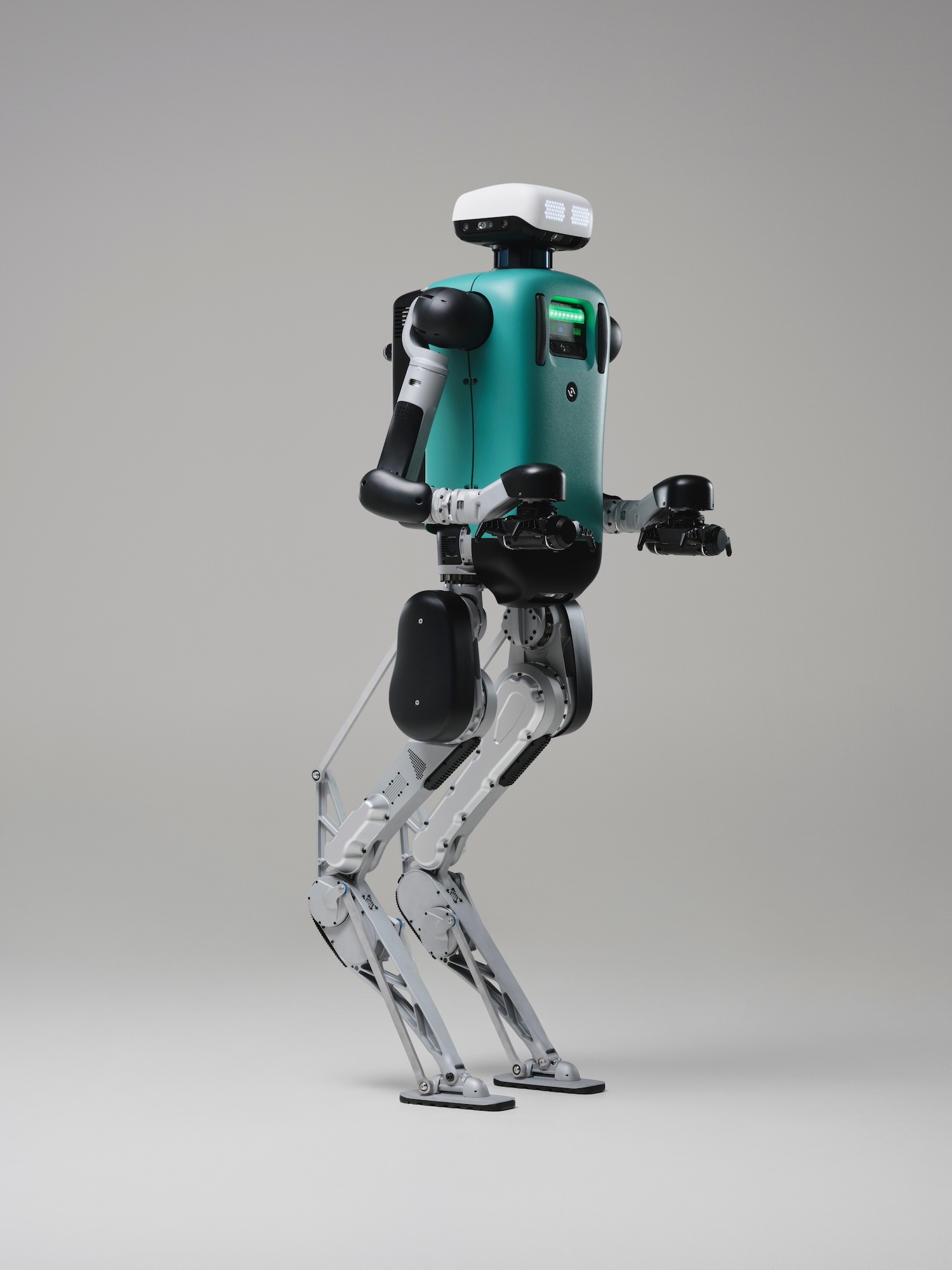
Digit
Digit is Agility Robotics' commercially deployed bipedal humanoid for industrial material-handling workflows in facilities designed around people.
Country-specific purchase options
The complete robot catalog remains available worldwide. Seller options below require published evidence of service in your selected country.
HumanoidHub affiliate-program partnerships
These are HumanoidHub’s affiliate relationships. Participation does not establish manufacturer endorsement, authorization or exclusivity. Seller relationship labels reflect independently reviewed evidence.
Choose a purchase country to check affiliate-program offers.
Latest from Agility Robotics
Unitree designs R1 humanoid robot to be agile and affordable - The Robot Report
Last month, it obtained Series C funding that brought its its valuation to about 12 billion yuan ($1.7 billion U.S.). The race to build commercially successful humanoids is still competitive, with new entrants weekly. Founded in 2016, Unitree has developed legged robots for consumer and industrial use. Last month, it obtained Series C funding that brought its its valuation to about 12 billion yuan ($1.7 billion U.S.). The race to build commercially successful humanoids is still competitive, with new entrants weekly. Last week, EngineAI raised about $139 million as it moves toward mass production of its robots. The R1 is lighter and more agile than the G1. For humanoid robots to find wide adoption, the developers and manufacturers will need to make them affordable and useful. Unitree last week unveiled its R1, with the standard model priced at $5,900 — a fraction of what most other humanoids currently cost. The R1 humanoid stands 1.2 m (3.9 ft.) tall and weighs about 25 kg (55.1 lb.), making it slightly smaller than the G1, which weighed 35 kg (77.1 lb.), and enabling it to move with “lifelike” agility. Unitree posted a video (above) of the R1 performing actions such as side flips, handstands, and boxing moves. A dexterous hand is optional for the educational variant of the R1. The new robot runs on a lithium battery and has an eight-core CPU. The educational version also has the option of adding NVIDIA Jetson Orin for 40 to 100 TOPS (trillions of operations per second). Unitree said it will post more customization options to its website. Unlike the humanoids from, say, Boston Dynamics or Agility Robotics, Unitree’s R1 is remote-controlled.
Agility’s New Factory Can Build Thousands of Humanoids a Year - IEEE Spectrum
Agility Robotics has announced the opening of a 6,500 square-meter factory dedicated to building its Digit humanoid robot. The factory is located in Oregon... At peak capacity, RoboFab ... will be able to produce “more than 10,000 robots per year,” ...
Robot Videos: Sanctuary AI Robot, 1X EVE Humanoid, and More - IEEE Spectrum
Humanoid robots from Sanctuary AI and 1X are featured in this edition of Video Friday, a collection of robotics videos showcasing the latest developments from various robotics companies and researchers. As with every single cooking video, there’s a lot of background prep that’s required for this robot to cook an entire meal, but I would utterly demolish those fries. Please send us your events for inclusion. Enjoy today’s videos! I think suggesting that robots can’t fall is much less useful than instead suggesting that robots can fall and get quickly and easily get back up again. Agility Robotics is doing its best to answer the (very common) question of “Okay, but what can humanoid robots actually do?” ...
Agility Robotics Unveils Upgraded Digit Walking Robot - IEEE Spectrum
Last time we saw Agility Robotics’ Digit biped, it was picking up a box from a Ford delivery van and autonomously dropping it off on a porch... A new video posted today shows what’s new with the latest version of Digit—Digit v2.
Agility’s Latest Digit Robot Prepares for Its First Job - IEEE Spectrum
This morning at the ProMat conference in Chicago, [Agility Robotics](https://agilityrobotics.com/) is introducing the latest iteration of Digit, its bipedal multipurpose robot designed for near-term commercial success in warehouse and logistics operations. This version of Digit adds a head (for human-robot interaction) along with manipulators intended for the very first task that Digit will be performing, one that Agility hopes will be its entry point to a sustainable and profitable business bringing bipedal robots into the workplace.
Hello, Electric Atlas - IEEE Spectrum
Boston Dynamics’ new electric humanoid has been simultaneously one of the worst and best kept secrets in [robotics](https://spectrum.ieee.org/topic/robotics/) over the last year or so. What I mean is that it seemed obvious, or even inevitable, that Boston Dynamics would take the expertise in humanoids that it developed with Atlas and combine that with its experience productizing a fully electric system like [Spot](https://robotsguide.com/robots/spot). But just because something *seems* inevitable doesn’t mean it actually *is* inevitable, and Boston Dynamics has done an admirable job of carrying on as normal while building a fully electric humanoid from scratch. And here it is: It’s all new, it’s all electric, and some of those movements make me slightly uncomfortable (we’ll get into that in a bit). The blog post accompanying the video is sparse on technical detail, but let’s go through the most interesting parts: > A decade ago, we were one of the only companies putting real R&D effort into[humanoid robots](). Now the landscape in the robotics industry is very different. In 2010, we took a look at all the humanoid robots then in existence. You could, I suppose, argue that Honda was putting real R&D effort into [ASIMO](https://robotsguide.com/robots/asimo) back then, but yeah, pretty much all those other humanoid robots came from research rather than industry. Now, it feels like we’re up to our eyeballs in commercial humanoids, but over the past couple of years, as [startups](https://spectrum.ieee.org/tag/startups) have appeared out of nowhere with [brand new humanoid robots](https://spectrum.ieee.org/ai-robots), Boston Dynamics (to most outward appearances) was just keepin’ on with that R&D. Today’s announcement certainly changes that. > We are confident in our plan to not just create an impressive R&D project, but to deliver a valuable solution. This journey will start with Hyundai—in addition to investing in us, the[Hyundai]()team is building the next generation of automotive manufacturing capabilities, and it will serve as a perfect testing ground for new Atlas applications. Boston Dynamics This is all par for the course now, but it’s also not particularly meaningful without more information. “We will give our robots new capabilities through machine learning and AI” is what every humanoid robotics company (and most other [robotics companies](https://spectrum.ieee.org/tag/robotics-companies)) are saying, but I’m not sure that we’re there yet, because there’s an “okay but how?” that needs to happen first. I’m not saying that it *won’t* happen, just pointing out that until it *does* happen, it *hasn’t* happened. > The humanoid form factor is a useful design for robots working in a world designed for people. However, that form factor doesn’t limit our vision of how a bipedal robot can move, what tools it needs to succeed, and how it can help people accomplish more. [Agility Robotics](https://agilityrobotics.com/) has a similar philosophy with [Digit](https://robotsguide.com/robots/digit), which has a mostly humanoid form factor to operate in human environments but also uses a non-human leg design because Agility believes that it works better. Atlas is a bit more human-like with its overall design, but there are some striking differences, including both range of motion and the head, both of which we’ll be talking more about.
Build with Agility Robotics
Start procurement discussions, compare model fit, and connect to official channels.