NEURA Robotics Robotics
Embodied AI and automation systems
Models
3
Featured
0
Use Cases
0
Tech Modules
0
Company Overview
Key facts about NEURA Robotics.
NEURA Robotics
Metzingen, Germany
Headquarters
Metzingen, Germany
Founded
2019
Employees
358+
Social
1 channels
Follow NEURA Robotics
Get a weekly email only when reviewed, source-backed updates about this profile are available. No price or availability alerts.
Strategic Snapshot
How this brand positions its humanoid systems.
Build reliable robots that deliver measurable value in real-world environments.
Advanced AI Integration
Development of robotics systems powered by sophisticated artificial intelligence, enabling intuitive decision-making and seamless interaction.
Human-Centric Design
Robots engineered to safely and efficiently work in close proximity with humans, designed to augment tasks rather than replace them.
High Customizability
Ability to adapt robot functionalities to a diverse range of industries and applications, ensuring a tailored and effective performance.
NEURA Robotics Product Portfolio

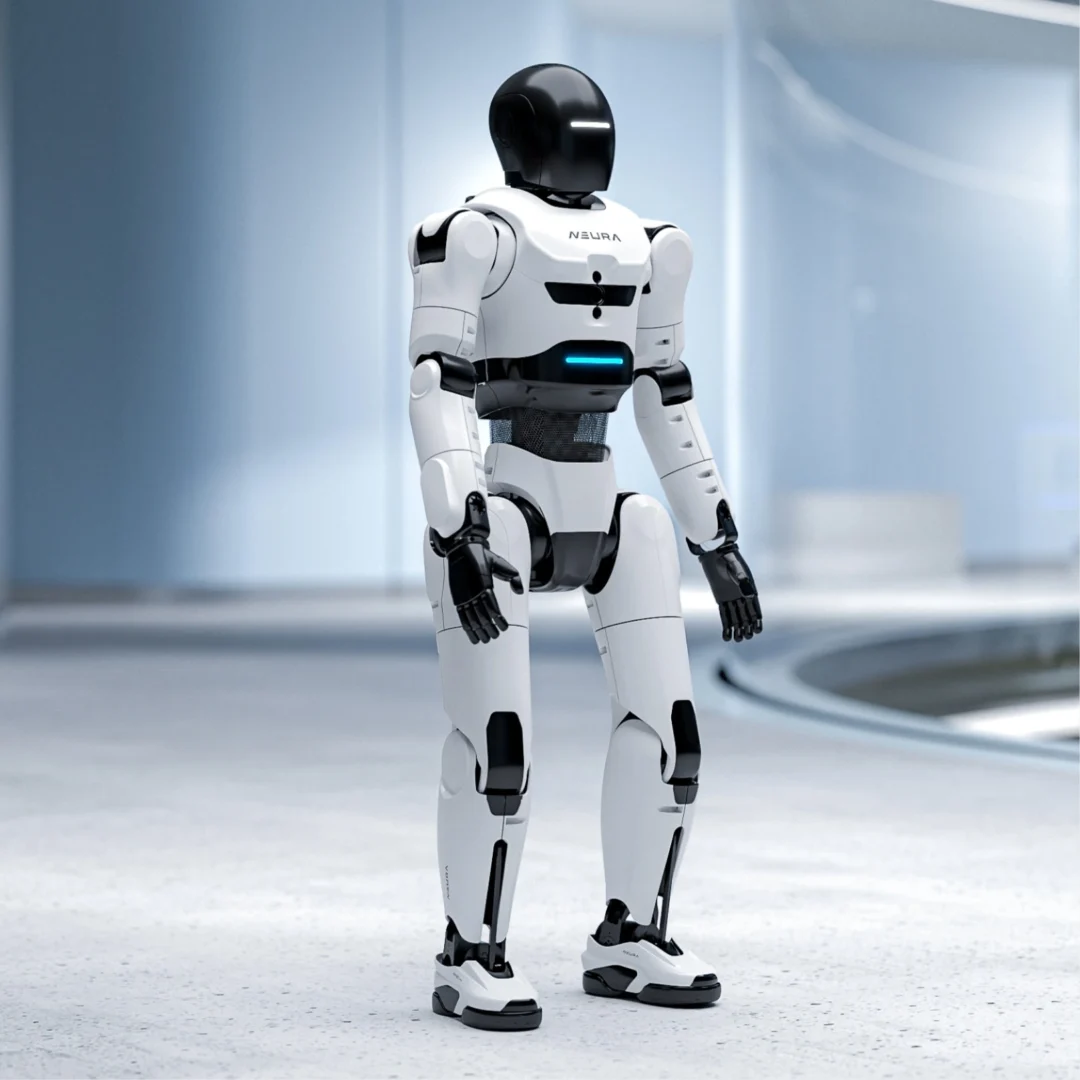
NEURA 4NE1
NEURA 4NE1 is a full-size humanoid robot platform from NEURA Robotics aimed at industrial and logistics tasks, with NVIDIA Thor compute and a reservation-based rollout.
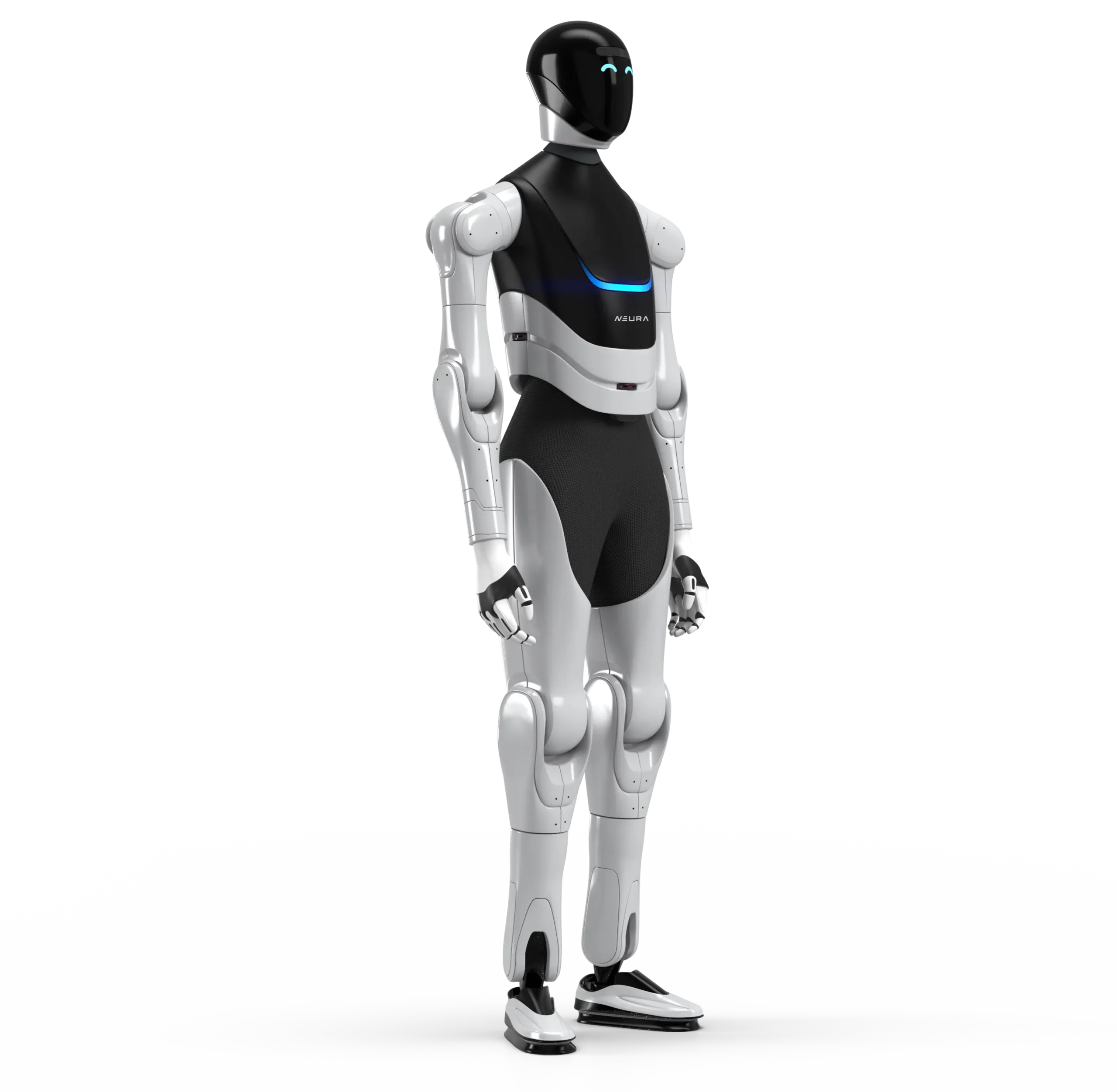
NEURA 4NE1 Mini
NEURA 4NE1 Mini is a compact humanoid robot from NEURA Robotics aimed at education and research, offered in Standard and Pro configurations.
MAiRA
MAiRA is a 7‑axis collaborative robot arm from NEURA Robotics designed for industrial automation with integrated AI perception and voice interaction.
Country-specific purchase options
The complete robot catalog remains available worldwide. Seller options below require published evidence of service in your selected country.
HumanoidHub affiliate-program partnerships
These are HumanoidHub’s affiliate relationships. Participation does not establish manufacturer endorsement, authorization or exclusivity. Seller relationship labels reflect independently reviewed evidence.
Choose a purchase country to check affiliate-program offers.
Latest from NEURA Robotics
NEURA Robotics launches latest cognitive robots, Neuraverse ecosystem - The Robot Report
They include the world premiere of the third generation of its 4NE1 humanoid robot, the market launch of the MiPA cognitive household and service robot, and its Neuraverse open robotics ecosystem. NEURA Robotics is exhibiting with partners at Automatica its latest-generation humanoid, service, and mobile robots, as well as Neuraverse. “With 4NE1, humanoid robotics becomes scalable for the first time,” said NEURA. NEURA Robotics described MiPA as “the world’s first cognitive household and service robot suitable for real everyday use.” It said it developed the mobile manipulator to address the shortage of skilled workers and to make robot technology affordable for private households for the first time. MiPA’s cognitive abilities are based on NEURA’s industrial AI architecture and can be expanded via the Neuraverse. Partners can develop applications or “skills” for the two-armed platform, such as vacuuming, unloading the dishwasher, tidying rooms, or health monitoring. The robot, which is intended to be affordable to households, also has an integrated camera, temperature, and environmental sensors. Customers can now reserve MiPA, which NEURA said will soon be available for order. The company plans to begin deliveries this year. “MiPA marks a turning point, as it brings household robotics out of high-tech laboratories and into people’s daily lives,” said Reger.
AI Robot Startup Neura Robotics Valued at €4 Billion After Tether Investment - Bloomberg
German startup Neura Robotics is raising about €1 billion ($1.2 billion) in a funding round backed by stablecoin issuer Tether Holdings SA to develop an artificial-intelligence-powered humanoid robot. A humanoid robot demonstrates handling laundry at the Neura Robotics booth at the IFA Consumer Electronics and Home Appliances trade fair in Berlin, Germany, on Sept.
Neura Robotics CEO discusses funding, humanoid robots, and competition - The Robot Report
We’ve showed MAiRA building with blocks and then the same functionality with a humanoid with two arms, but the accuracy is not there. In my opinion, the issue to be solved is actually closing the loop with having enough sensor integration to close the simulation-to-reality gap. We’re working hard to get there. The new Gen 3 will have more sensor capabilities and more power in its legs to be a bit more efficient. We’ll show it at Automatica in Munich. The MIPA service robot. Source: Neura Robotics We’ve showed MAiRA building with blocks and then the same functionality with a humanoid with two arms, but the accuracy is not there. In my opinion, the issue to be solved is actually closing the loop with having enough sensor integration to close the simulation-to-reality gap. We’re working hard to get there. The new Gen 3 will have more sensor capabilities and more power in its legs to be a bit more efficient. We’ll show it at Automatica in Munich. The MIPA service robot. Source: Neura Robotics In the race toward general-purpose robots, developers are focusing on different parts of the technology stack. Neura Robotics GmbH has been developing “cognitive robotics” including collaborative robot arms, mobile service robots, and a humanoid. Reger: We are investing in building our robot manufacturing right now. We’re the source of most components, which is good. We’re also releasing the Neuraverse platform for everyone, and we’re hiring a lot of people. We have very ambitious targets, and we don’t just want to participate in the humanoid sector; we want to win. Reger: We have some partnerships in the humanoid sector, and we’re working with Delta Electronics. There are some partnerships with automotive groups, but for now, they want to keep it to themselves. Our go-to-market strategy is that we’re an enablement company. We’re building our teams around them, not to compete. Neura has developed a wide range of systems for industries including manufacturing. Source: Neura Robotics
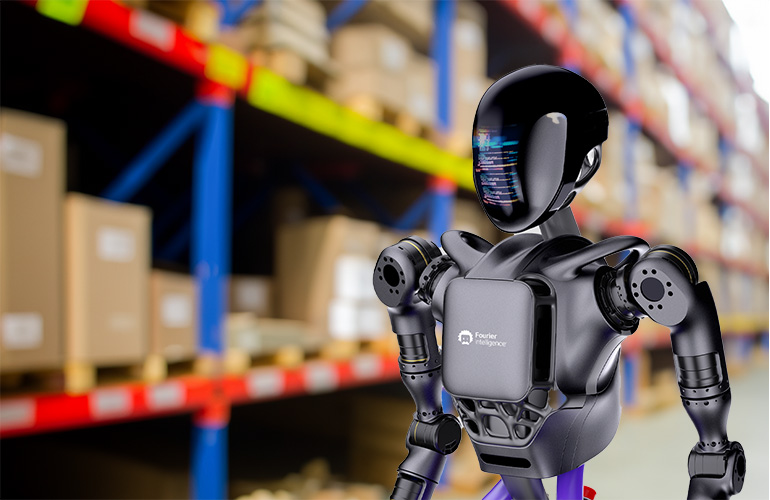
Fourier Intelligence launches production version of GR-1 humanoid robot - The Robot Report
No price has yet been announced for the production unit. Humanoid robots got a lot of attention this past year, as developers including Apptronik, Boston Dynamics, Figure AI, Sanctuary AI, Tesla, and Unitree demonstrated progress with dexterous manipulation and bipedal locomotion. Most are initially intended for applications in logistics and manufacturing, and Agility Robotics is in commercial trials with Amazon and GXO Logistics. The global market for humanoid robots could experience a compound annual growth rate (CAGR) of 46.5%, from $1.7 billion in 2023 to $36.1 billion by 2030, projected MarketDigits. It noted demand in healthcare and search-and-recue use cases.
ROS / Open Source Solutions Archives - The Robot Report
“It unifies vision, reasoning, action, and simulation,” said Lebaredian in a press briefing. “The ‘big bang’ of physical AI has arrived, with $20 billion invested in humanoid robots.” The latest Isaac Lab-Arena release unlocks large-scale task setup and policy evaluation, simplifying environment composition and accelerating complex task creation to help developers evaluate various tasks in parallel. The latest Isaac Lab-Arena release simplifies environment composition and accelerates complex task creation to help developers evaluate various tasks in parallel. Source: NVIDIA ## AI, models power the next generation of humanoids [...] ## Unitree humanoid the reference for NVIDIA Isaac GR00T NVIDIA also announced the NVIDIA Isaac GR00T Reference Humanoid Robot, an open humanoid robot reference design built on NVIDIA Jetson Thor and the NVIDIA Isaac GR00T development platform. The company said this will help democratize access to advanced hardware and software without requiring expensive, proprietary platforms as interest in general-purpose humanoids increases. NVIDIA combined a full-size robot body with dexterous manipulation, sensing, control, and onboard AI compute: [...] ## AI, models power the next generation of humanoids Building humanoid robots is one of robotics’ greatest challenges, noted NVIDIA. Replicating human mobility, dexterity, and reasoning requires tightly integrating advanced AI, perception and real-time control into a safe, reliable and autonomous system. Leaders including 1X, AGIBOT, Agility, Agile Robots, Boston Dynamics, Figure, Hexagon Robotics, Humanoid, Mentee, and NEURA Robotics are building the next generation of humanoids using Cosmos world models, Isaac Sim and Isaac Lab to accelerate the development and validation of their robots.
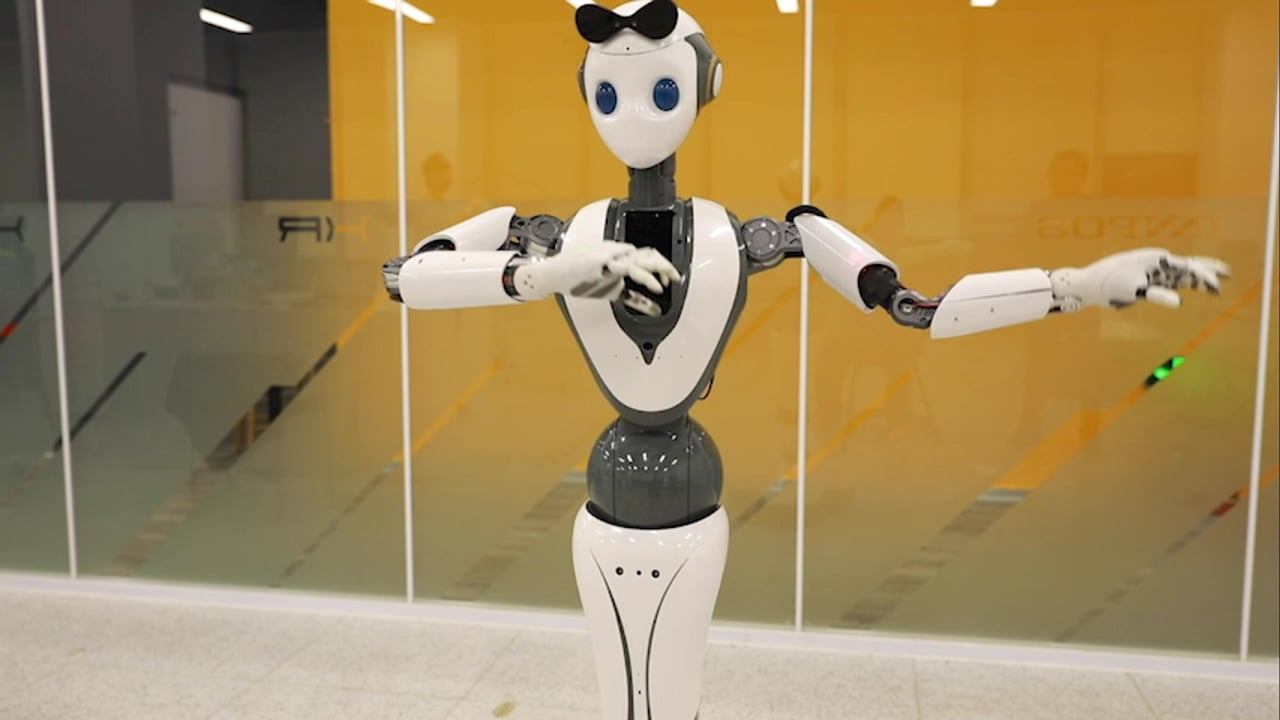
CloudMinds demoes XR-1 humanoid robot using 5G, scales up for fleets
### Tell Us What You Think! Cancel reply This site uses Akismet to reduce spam. Learn how your comment data is processed. #### Related Articles Read More > Allison Okamura and Ayoung Kim won the 2026 Robotics Medal and Rising Star Medal awards. ##### MassRobotics announces the winners of 2026 Robotics Medal and Rising Star awards A Gatik autonomous truck. ##### Gatik to bring autonomous freight to PepsiCo’s North American supply chain front and side images of a researcher equipped with AI training devices. ##### Inside XRZero-G0, a new 2,000-hour open dataset for robotics research NEURA Robotics' 4NE1 humanoid robot and MAV mobile robots in a concept automotive assembly line. ##### NEURA Robotics to raise up to $1.4B in Series C funding for physical AI [...] - RBR50 Winners 2024 - RBR50 Winners 2023 - RBR50 Winners 2022 - RBR50 Winners 2021 Resources + Automated Warehouse Research Reports + Digital Issues + eBooks + Publications - Automated Warehouse - Collaborative Robotics Trends + Search Robotics Database + Videos + Webinars / Digital Events Events + RoboBusiness + Robotics Summit & Expo + DeviceTalks + R&D 100 + Robotics Weeks Podcast + Episodes Advertise Subscribe [...] “AI is still lagging human intelligence in a big way, but we don’t want to hinder performance for customers,” he said. “We work very closely with state-of-the-art machine learning, deep learning, and imitation learning, but our unique contribution is gathering data in the field to feed the algorithms. For something that the robot can’t handle in the beginning, it can become smarter with supervised learning in HARIX.” “A few days or weeks later, the robot can handle more tasks and gets smarter as it gathers more data,” Zhang said. “A combination of human annotation and semi-supervised learning with some automation of these processes is the trend.”
Build with NEURA Robotics
Start procurement discussions, compare model fit, and connect to official channels.