4XRobots expands into US market with focus on greenhouse automation - Robotics & Automation News
NecessaryAlways Enabled Necessary cookies are absolutely essential for the website to function properly. These cookies ensure basic functionalities and security features of the website, anonymously.
Key takeaways
- Humanoid robots have moved from high‑profile demos to early‑stage commercial use in early 2026.
- At CES 2026, companies such as Figure AI demonstrated that its Figure 02 units can run 10‑hour shifts on BMW’s X3 line, having already handled 90 000 parts for 30 000 vehicles, while Boston Dynamics unveiled a production‑ready Atlas that will be built in tens of thousands of units per year for Hyundai’s Savannah plant.
- Tesla began training its Optimus Gen 2 models at the Austin Gigafactory using imitation learning, and the company now ranks among the top five humanoid suppliers with roughly 5 percent of global installations.
- A market‑tracking report shows that total humanoid deployments reached 16 000 units in 2025, dominated by Chinese firms—AgiBot (31 % share with more than 5 000 X2/G2 units), Unitree (27 %) and UBTech (just over 5 %).
- Hyundai and Siemens reported a proof‑of‑concept logistics deployment, and Schaeffler signed a five‑year plan to place hundreds of humanoids in factories beginning in 2026‑27.
NecessaryAlways Enabled
Necessary cookies are absolutely essential for the website to function properly. These cookies ensure basic functionalities and security features of the website, anonymously. Others
Other uncategorized cookies are those that are being analyzed and have not been classified into a category as yet.
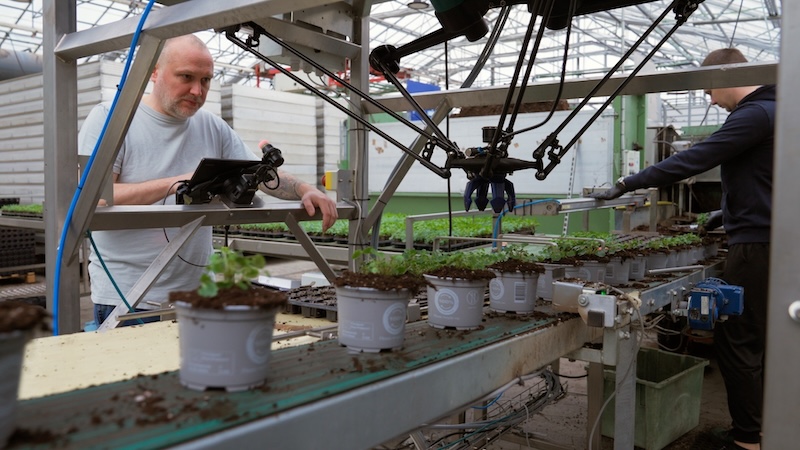
SAVE & ACCEPT “This is not hard automation that forces growers to rebuild their facilities and is only accessible to the elite and large greenhouse operators,” Chambers said.
“Our robot both fits into the space humans already work in and easily replaces that dull, dirty and dangerous work with a robot in a matter of days. It’s collaborative, modular, and designed for real-world operations.
“And the best part is you can turn your seasonal workers into full time robot operators and tenders. This is the right robot at the right time to handle the perfect storm of conditions driving business outcomes in the horticultural space.”
Building partnerships through A3
New robots, funding, and signals. Every Thursday.
Unsubscribe anytime.