5G A Underpins the Intelligent Evolution of Humanoid Robots by Providing Network-level Support
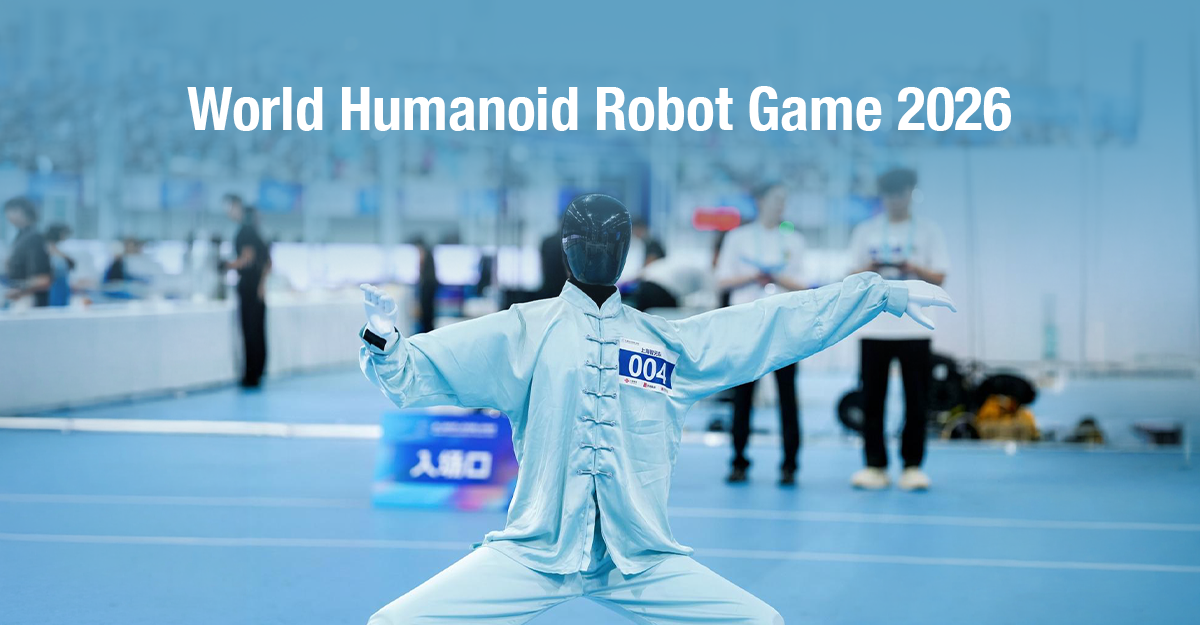
0 September 8, 2026 The second edition of the World Humanoid Robot Games was held in Beijing from August 22 to 26, 2026. Over the five‑day event, 2,056 humanoid robots participated in 51 events in 1,301 matches.
Key takeaways
- The most recent developments in humanoid robotics center on three major advances.
- NVIDIA has unveiled a new AI controller called SONIC that translates movement targets into robot commands, dramatically expanding the motion repertoire of humanoid platforms and promising faster, more reliable teaching of human‑like actions.
- Meanwhile, Chinese automaker XPeng has commissioned an automated production line in Guangzhou that can build its IRON humanoid robot at scale; the robot, equipped with three in‑house Turing AI chips delivering up to 2,250 TOPS, walked off the line under its own power and is slated for mass production by the end of 2026, with ambitions of reaching a million units per year by 2030.
- In parallel, the 2026 World Humanoid Robot Games in Beijing showcased over 2,000 robots competing in 51 events, highlighting the role of 5G‑A networks in providing low‑latency, high‑bandwidth support for autonomous reasoning and collaborative operation, and underscoring the industry’s push toward large‑scale deployment across industrial, household and logistics applications.
0
September 8, 2026
The second edition of the World Humanoid Robot Games was held in Beijing from August 22 to 26, 2026. Over the five‑day event, 2,056 humanoid robots participated in 51 events in 1,301 matches. Notable improvements were achieved in terms of event scale, robot completion capability and competition performance.
As joint innovation partners of 5G Capital, Huawei and China Unicom Beijing delivered a comprehensive assurance system built on 5G‑A network technologies for the Games, catering to differentiated service requirements from general spectators, media outlets, and various types of humanoid robots. Currently, the humanoid‑robot industry is confronted with multi‑dimensional challenges including model capability, supply of real‑scene training data, and on‑device computing‑power constraints. During the 2026 World Robot Conference (WRC), scenario‑oriented demonstrations covering industrial, household and logistics use cases showcased advances in humanoid robots’ autonomous reasoning and collaborative operation capabilities. Meanwhile, they also revealed notable shortcomings in current‑generation robot standalone intelligence: robots are heavily reliant on structured environments and adapt to fixed‑point tasks via imitation learning; long‑horizon tasks must be split into multiple short‑task segments with considerable latency for task reasoning. ## Conclusion
By 2030, global deployment of humanoid robots will reach the million‑unit scale. A suite of brand‑new business opportunities including DaaS, RaaS and SaaS will emerge around intelligent robots and dexterous hands. A single humanoid robot can consume hundreds times more token‑based computing resources than an ordinary consumer device. New business platforms will be deeply integrated with 5G‑A networks. Taking DaaS and SaaS as examples: DaaS will drive demand for tens of millions of hours of heterogeneous robot data collection and massive‑scale data governance; SaaS enables users to access scenario‑specific application services for various vertical industries over 5G‑A networks.
New robots, funding, and signals. Every Thursday.
Unsubscribe anytime.
Mentioned in this article