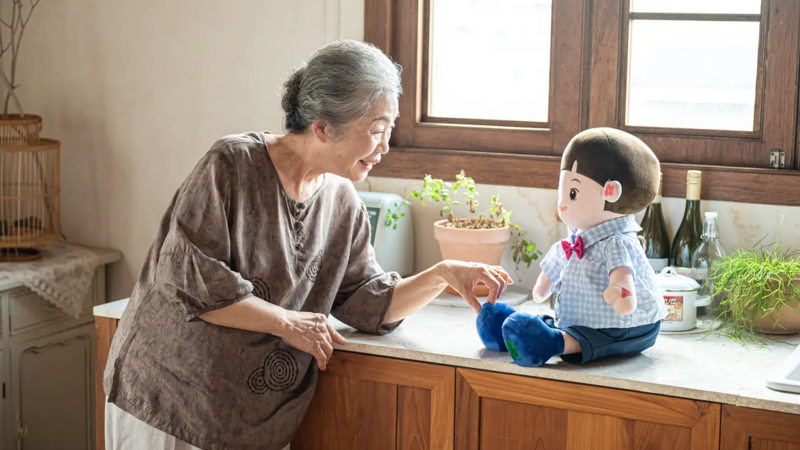
AI-Powered companion robots help ease loneliness among the elderly in East Asia
As of November 2025, over 12,000 Hyodol robots have been deployed to elderly people living alone across South Korea, primarily distributed through government and public welfare programs.
Key takeaways
- In August 2025 Ubtech unveiled the Walker S2, an industrial‑grade humanoid that can autonomously swap its own battery, and demonstrated the robot in a multi‑robot training program at a smart factory.
- A few weeks later, in October 2025 Deep Robotics introduced the DR02, the first all‑weather humanoid with IP66 dust and water resistance, aimed at outdoor security, logistics and industrial inspection in hazardous construction environments.
- The same month SoftBank completed a $5.4 billion acquisition of ABB’s robotics assets and, together with Yaskawa Electric, rolled out an edge‑AI office robot that navigates using building‑management data and sensor feeds.
- In November 2025 Agile Robots SE launched Agile ONE, its first industrial humanoid designed to work safely alongside humans, while The Robot Report highlighted a surge of new humanoid models, including Agile ONE and a range of niche offerings such as 1X’s consumer‑ready Neo, a $20 k household robot that claims privacy safeguards and can perform tasks like loading dishwashers.
- Also in September 2025 Saudi‑based Humanoid released the HMND 01 Alpha, a bipedal robot that can begin walking within 48 hours of assembly and has already secured 19,500 pre‑orders and multiple proof‑of‑concept deployments for 2026.
Buyer next steps
Compare source-backed options on HumanoidHub
Use HumanoidHub catalog records and buyer guides to verify robot availability, source links, and shortlist fit before contacting manufacturers.
As of November 2025, over 12,000 Hyodol robots have been deployed to elderly people living alone across South Korea, primarily distributed through government and public welfare programs. Kim adds that around 1,000 more have been purchased directly by families, with the latest model priced at 1.3 million won (approximately $879). Today, the PARO robot companion is used in more than 30 countries, from Japan to Denmark, and a similar global expansion is already underway for Hyodol. The Korean company is now adapting its AI to different cultural nuances as it prepares to enter the broader market, with a commercial launch planned for 2026. This isn’t an isolated case. In a 2024 study, Lee reported dozens of seniors giving their robots affectionate nicknames, buying them baby clothes, and tucking them in at night. She also noted that this growing affection correlates with improved mental health, citing a study she carried out on 69 older adults that showed users had reduced depression and improved cognitive scores after using Hyodol for six weeks. “We found that users with mild cognitive impairment who regularly used the robot
New robots, funding, and signals. Every Thursday.
Unsubscribe anytime.