Boston Dynamics is training an AI-powered humanoid robot to do factory work - CBS News
With rapid advances in artificial intelligence, computer scientists and engineers are making progress in developing robots that look and act like humans. A global race is underway to develop humanoid robots for widespread use.
Key takeaways
- Humanoid robots are moving from prototype labs toward commercial use this year.
- In early January 2026 the New York Post reported that Agility’s Digit V4 – billed as the world’s first commercially deployed humanoid – is being sold to early adopters for about $20,000, with deliveries slated for later in 2026, and that 1X’s NEO Gamma, a 5‑foot‑6‑inch, camera‑infused humanoid, is already taking pre‑orders.
- Chinese firms are pulling ahead in early‑stage production; CNBC noted that Unitree’s newly unveiled H2 humanoid, which can dance, is part of a broader push that could see China scaling commercial humanoids faster than the United States, and that the company is preparing an IPO that could value it near $7 billion.
- Investment in the sector surged, with Forbes documenting $4.6 billion poured into humanoid robotics in 2025 – almost three times the previous year’s total – and analysts now project the market could reach $5 trillion by 2050.
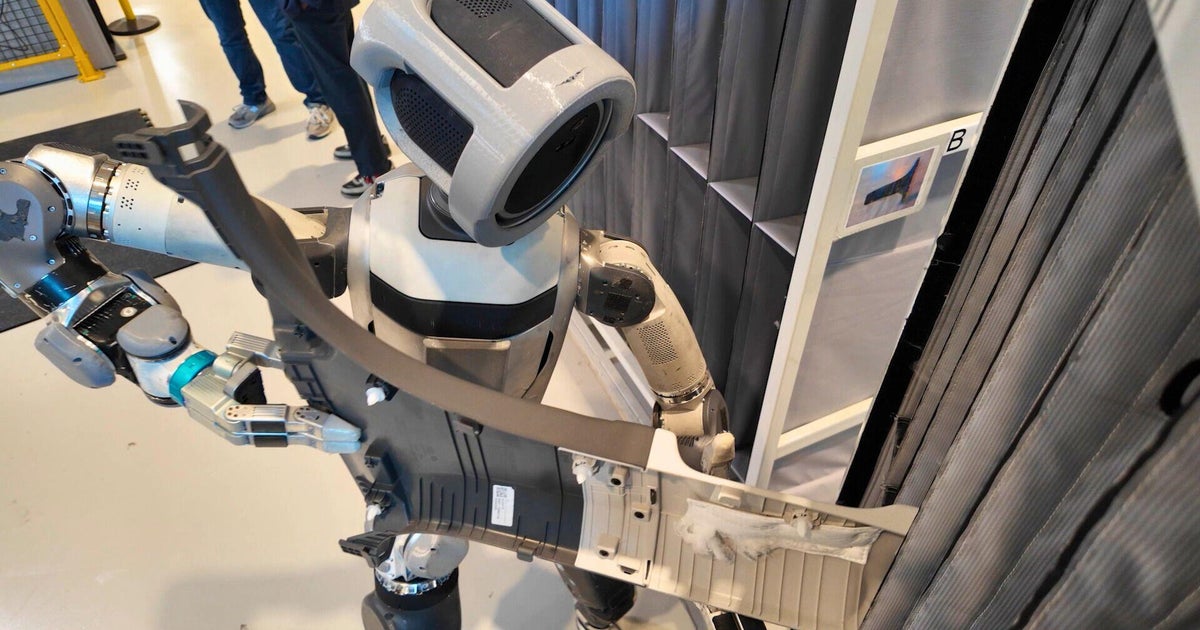
- Boston Dynamics, backed by Hyundai, has upgraded its Atlas robot with an all‑electric body and Nvidia‑powered AI, enabling the machine to perform complex factory tasks, a development highlighted by CBS News.
With rapid advances in artificial intelligence, computer scientists and engineers are making progress in developing robots that look and act like humans. A global race is underway to develop humanoid robots for widespread use.
Boston Dynamics has established itself as a frontrunner in the field. With support from South Korean carmaker Hyundai, which owns an 88% stake in Boston Dynamics, the Massachusetts company is testing a new generation of its humanoid robot, Atlas. When 60 Minutes visited Boston Dynamics' headquarters in 2021, Atlas was a bulky, hydraulic robot that could run and jump. Back then, Atlas relied on algorithms written by engineers. The Atlas of today is sleeker, with an all-electric body and an AI brain powered by Nvidia's advanced microchips, making it smart enough to master hard-to-believe feats. Boston Dynamics CEO Robert Playter spearheaded the company's humanoid development.
"There's a lot of excitement in the industry right now about the potential of building robots that are smart enough to really become general purpose," he said.
Goldman Sachs predicts the market for humanoids will reach $38 billion within the decade. Boston Dynamics and other U.S. robot makers are fighting to come out on top. State-supported Chinese companies are also in the race.
New robots, funding, and signals. Every Thursday.
Unsubscribe anytime.
Mentioned in this article