China’s humanoid robots moving in as Asia’s workforce ages out - Asia Times
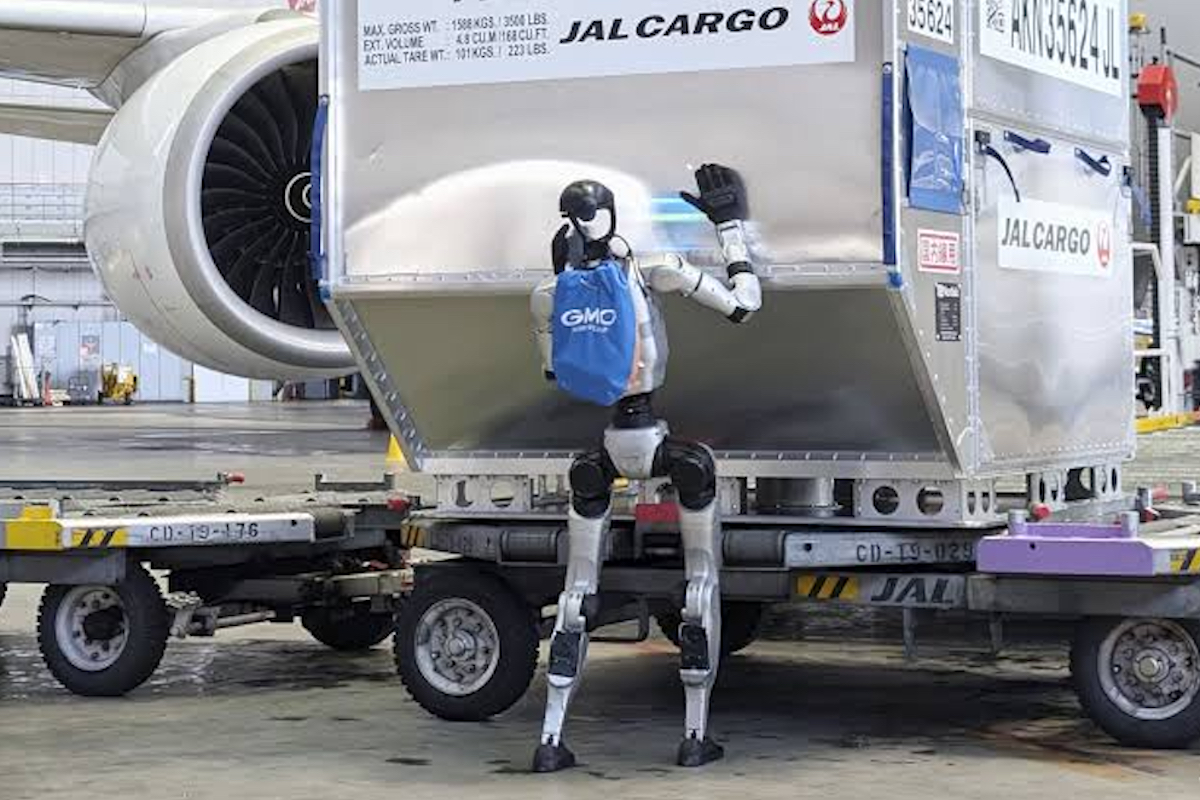
As Japan faces a critical labor shortage and an aging workforce, it is turning to Chinese-made humanoid robots to handle baggage — a pragmatic move where biological limits override geopolitical friction on the airport floor.
Key takeaways
- The most recent coverage shows that humanoid robots are moving from laboratory demos to commercial deployment across several sectors.
- Chinese EV maker BYD announced plans to place humanoid robots in every car showroom, joining rivals such as Tesla, which expects to start producing its Optimus model this summer, while the Chinese market already accounts for more than 80 % of global humanoid shipments.
- In the United States, Agility Robotics is heading to Wall Street through a SPAC merger that values the company at $2.5 billion, and it has begun installing its Digit robots in nine customer facilities, including Amazon and Toyota, marking the first commercial use of humanoids in U.S. warehouses.
- Nvidia is supporting the safety side of the industry with its Halos software, derived from autonomous‑vehicle technology, to give robots better situational awareness when operating around people.
- Meanwhile, delivery‑robot startup Robot.com is expanding its product line with “R‑noid,” a wheeled humanoid designed for order‑picking, packaging and workstation preparation in logistics, food service and healthcare.
Buyer next steps
Compare source-backed options on HumanoidHub
Use HumanoidHub catalog records and buyer guides to verify robot availability, source links, and shortlist fit before contacting manufacturers.
As Japan faces a critical labor shortage and an aging workforce, it is turning to Chinese-made humanoid robots to handle baggage — a pragmatic move where biological limits override geopolitical friction on the airport floor. When an advanced humanoid can cost a mere US$4,900, “de-risking” becomes a geopolitical luxury that aging societies can no longer afford.
This commentary moves beyond the “Drunken Fist” spectacles of robot exhibitions to explore the brutal reality of Asia’s logistics landscape. I argue that the universal agony of the human spine has become the only true “neutral ground” left in an era of geopolitical friction. At the pragmatic level of the luggage loader, the “China threat” yields to the more immediate threat of a broken supply chain. This shift comes down to simple economics. Thanks to its massive smartphone and EV industries, China has built a hardware supply chain that no one else can match. It successfully brought humanoid robots out of expensive labs and turned them into affordable commercial tools.
With prices starting at roughly $4,900 a unit—making it the most affordable humanoid on the market according to Forbes — the math is simple: it costs a mere fraction of a single foreign worker’s annual wage in Japan. Geopolitical worries naturally take a back seat. Buying Chinese tech is no longer a political debate — it is just basic business survival. Together, these headlines crystallize a new reality for modern Asia: a region that loves the idea of a Smart Nation, but still feeds the fragile human spine into the gears of global logistics. Humanity’s physical limits have outpaced its geopolitical patience.
For the past year, the rise of Chinese humanoid robots was treated as a circus act. Observers marveled at Hangzhou-based Unitree perfecting the “Drunken Fist” – a metaphor I borrow from Hong Kong kung fu films to describe its dynamic, stumbling balance.
But in April 2026, as humanoids conquered a half-marathon in Beijing, the narrative shifted from spectacle to endurance. These stumbles were not entertainment; they were the rigorous calibration of a mechanical doppelgänger.
New robots, funding, and signals. Every Thursday.
Unsubscribe anytime.
Mentioned in this article