China’s ‘new new three’ are redefining high-tech for global good - Global Times
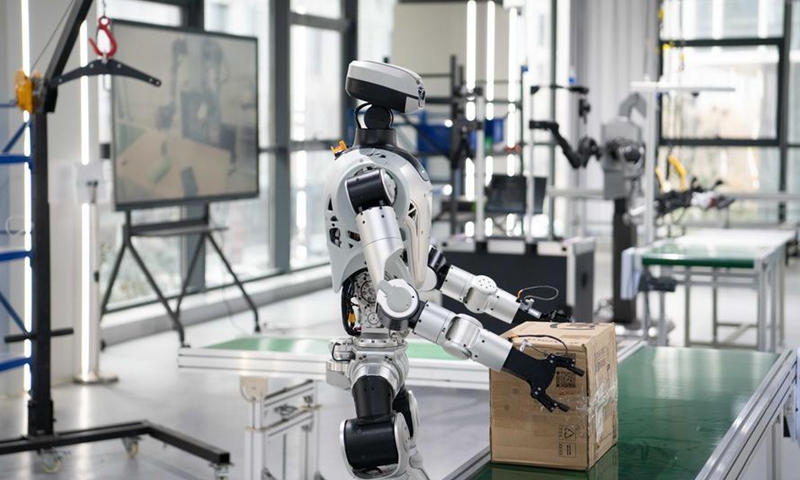
SOURCE / ECONOMY China’s ‘new new three’ are redefining high-tech for global good By Raquel Isamara León de la Rosa Published: Aug 06, 2026 07:28 PM A humanoid robot conducts box-carrying training at a data collection pre-training center for humanoid robots...
Key takeaways
- The most recent headlines show that humanoid robots are at the center of a growing geopolitical and regulatory clash while simultaneously advancing toward broader commercial use.
- In late July 2026 the U.S. government added new foreign‑made humanoid and quadruped robots to the FCC’s “Covered List,” effectively banning their import on national‑security grounds; the move follows a White House decision earlier that month to block next‑generation Chinese mobile robots, including humanoids, from entering the U.S. market.
- Industry analysts warn the ban could slow the U.S. sector, which has relied on low‑cost Chinese models for early adoption in consumer and entertainment settings.
- At the same time, China is accelerating its own high‑tech push.
- A August 6, 2026 report from the Global Times highlights a “new new three” strategy that positions Shanghai’s Zhangjiang Science City as a global hub for humanoid development, with projects focused on social applications such as caregiving, healthcare and hazardous‑task supervision.
SOURCE / ECONOMY
China’s ‘new new three’ are redefining high-tech for global good
By Raquel Isamara León de la Rosa Published: Aug 06, 2026 07:28 PM
A humanoid robot conducts box-carrying training at a data collection pre-training center for humanoid robots in Hefei, East China's Anhui Province, on December 4, 2025. Photo: Xinhua The premise is based on a model where society and its well-being are central to the development of new, sustainable, and globally accessible products and services. In other words, products and services that solve profound problems and reduce barriers to access. For example, quadruped robots and other Chinese robotics projects are developed with a social focus, such as caregiving and healthcare, and even for supervisory tasks that pose a risk to human safety. Therefore, the purpose behind the design and development of these types of goods is crucial to their adoption. In this regard, Shanghai - emerging as a global capital of this technology - through Zhangjiang Science City, has facilitated the incubation and development of university projects through its more than 100 advanced robotics companies. Furthermore, the city's geographic location and global connectivity allow these products to reach the world quickly and efficiently. Similarly, this type of high technology is not simply about commercialization; rather, one of its main actions is how it presents itself as a space for cooperation with other countries. It is important to highlight the role that educational and technological cooperation plays in creating dialogue with counterparts in other countries.
New robots, funding, and signals. Every Thursday.
Unsubscribe anytime.
Mentioned in this article