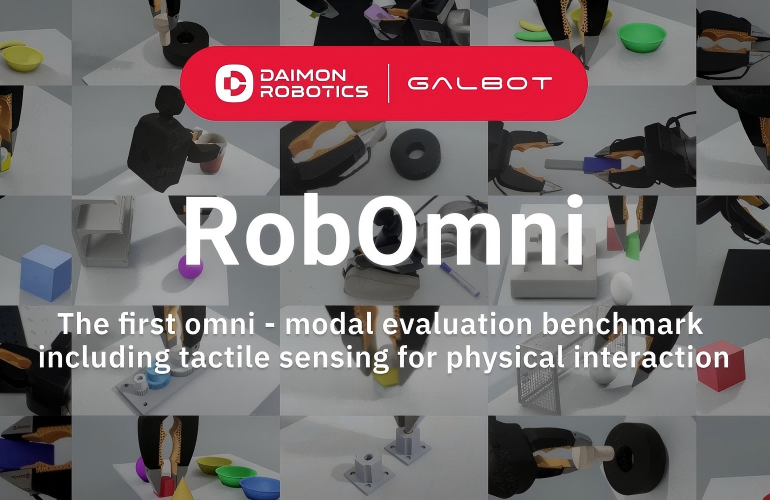
Daimon Robotics and Galbot jointly launches RobOmni for benchmarking tactile perception and dexterous manipulation
### Tell Us What You Think! Cancel reply This site uses Akismet to reduce spam. Learn how your comment data is processed. #### Related Articles Read More > ##### GENISOM AI debuts deployable robotics platforms at ICRA 2026 ##### How humanoids learn to read...
Key takeaways
- Humanoid robot activity is accelerating worldwide.
- In Beijing, Lingyi iTech’s new factory has already produced 300 units and is scaling toward 10,000 this year, with a long‑term goal of 500,000 annually by 2030, a move that could halve the typical $30,000 price tag.
- Chinese authorities are also assigning digital ID numbers to each robot to track safety and lifecycle data, while a government showroom displays models such as the child‑sized Booster T1 and the adult‑sized R1 Pro, whose combined orders have topped 30 million yuan.
- Demand, however, still lags capacity: Omdia reports that just over 13,000 humanoids shipped in 2025, with Morgan Stanley forecasting Chinese sales to rise to about 28,000 units in 2026 and overall shipments potentially exceeding one million by the early 2030s.
- Companies like Matrix Robotics are receiving roughly 1,000 orders for its $99,000 MATRIX‑3 units, and Unitree and AGIBOT each shipped more than 5,000 units last year.
Buyer next steps
Compare source-backed options on HumanoidHub
Use HumanoidHub catalog records and buyer guides to verify robot availability, source links, and shortlist fit before contacting manufacturers.
Tell Us What You Think! Cancel reply
This site uses Akismet to reduce spam. Learn how your comment data is processed.
GENISOM AI debuts deployable robotics platforms at ICRA 2026
How humanoids learn to read the room
GMSL and the growing ecosystem around robotic vision systems
The Convergence in Perception Systems from Cars to Robots
Search The Robot Report large-scale, cross-embodiment parallel evaluation
RobOmni includes a 1:1 digital twin of Daimon’s DM-TacClaw tactile gripper and will later expand to five-finger glove simulation suite. It also includes multiple mainstream robot embodiments, including humanoid robots and robotic arms, enabling cross-embodiment evaluation under one unified framework.
RobOmni also supports large-scale parallel evaluation, allowing multiple evaluations to run simultaneously for scalable, rapid validation and benchmarking.
Supporting multiple training pathways
RobOmni is designed to support both simulation-based development and real-world data workflows.
Mentioned in this article