Delta and United join Southwest to become latest airlines to ban humanoid robots from the sky
### Get inspired with our free Travel Insider newsletter ### Get inspired with our free Travel Insider newsletter Travel Insider I would like to be emailed about offers, events and updates from The Independent.
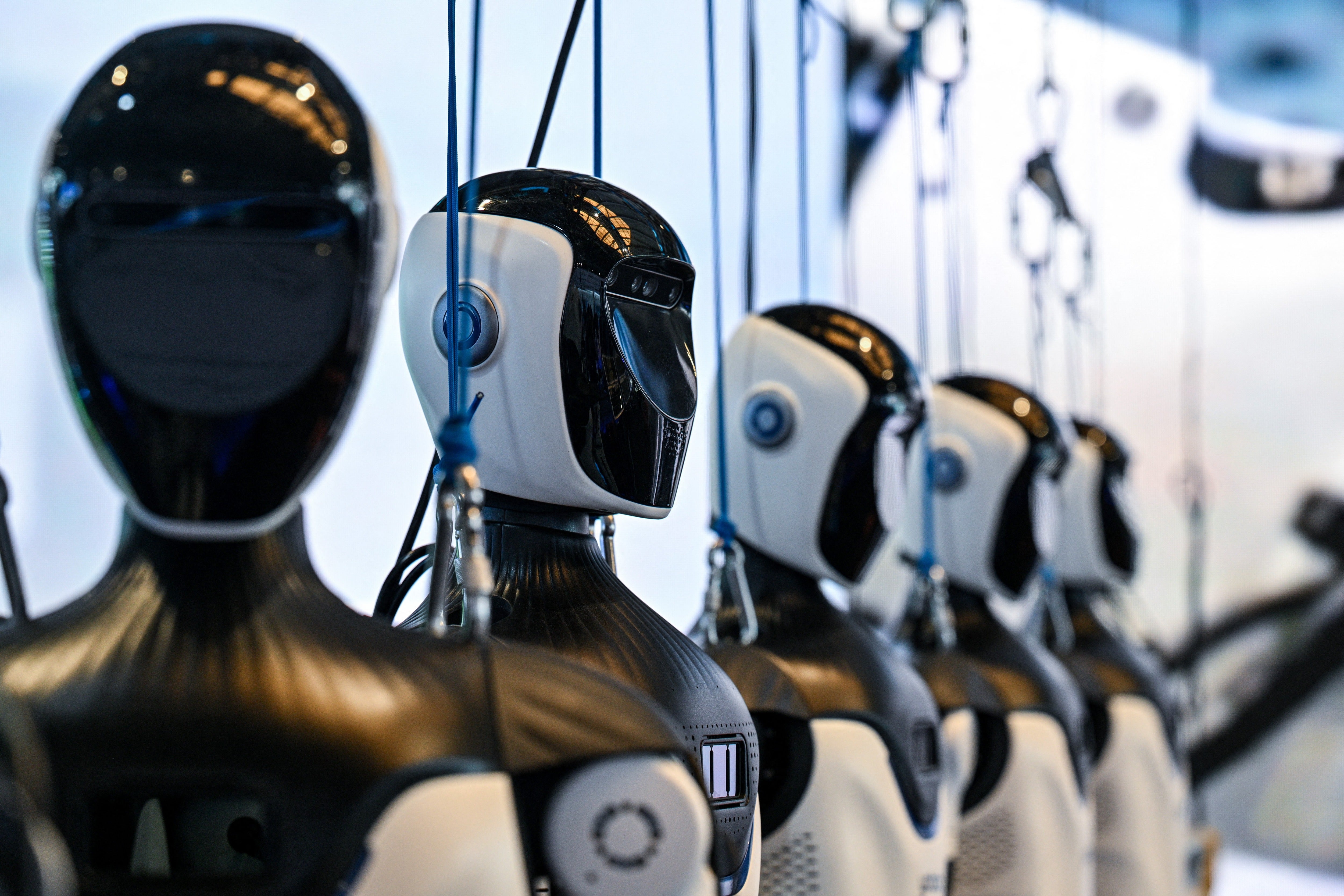
Key takeaways
- The most recent developments show that humanoid robots are becoming both a commercial focus and a geopolitical flashpoint.
- In the United States, the federal government announced a ban on imports of foreign‑made humanoid and quadruped robots, specifically targeting Chinese manufacturers on national‑security grounds, a move that will cut off the dominant Chinese market share—estimated at roughly 85%—from its largest export market (U.S. ban reported in late July 2026).
- At the same time, major U.S. airlines have tightened safety rules: Delta Air Lines and United Airlines have joined Southwest in prohibiting human‑ or animal‑like robotic devices from cabin or checked‑baggage areas, citing battery‑safety concerns (policy updates issued in June and July 2026).
- In China, electric‑vehicle giant BYD confirmed it will unveil its first commercial humanoid robot in August at its Di Space experience centres, planning to place two or three robots in every BYD store within the next few years (announcement made July 28‑29, 2026).
- Meanwhile, Google DeepMind released Gemini Robotics 2, a vision‑language‑action model that can control an entire humanoid body—including walking, balancing and dexterous hand manipulation—using Apptronik’s Apollo 2 platform, highlighting a shift toward foundation‑model intelligence across diverse robot hardware (demo unveiled July 30, 2026).
Get inspired with our free Travel Insider newsletter
Get inspired with our free Travel Insider newsletter
Travel Insider
I would like to be emailed about offers, events and updates from The Independent. Read our Privacy notice
Major American carriers are expanding restrictions on high-tech travel companions, with Delta Air Lines and United Airlines becoming the latest companies to prohibit humanoid and animal-like robots from aircraft cabins and checked baggage.
The decisions follow a similar move by Southwest Airlines in May, which introduced its ban after a passenger boarded a flight with a robotic companion earlier this year. Airlines have cited general safety and operational concerns as carriers act to set boundaries around the emerging technology. Delta Air Lines and United Airlines are the latest companies to prohibit humanoid and animal-like robots from aircraft cabins and checked baggage. The move follows Southwest’s ban on similar devices earlier this year
“Delta does not permit human- or animal-like robotic devices to be transported in the aircraft cabin or as checked baggage,” the airline said in a statement to The Independent. “We continually review emerging technologies and update our policies to maintain the highest safety standards.”
Delta noted that the prohibition applied specifically to devices powered by lithium batteries exceeding standard Federal Aviation Administration watt-hour limits. The carrier also clarified that these devices did not qualify for medical or accessibility exemptions. United instituted its restriction on July 23 as a proactive measure, noting that the policy was not prompted by a specific incident on its flights.
“We believe this change will help further ensure the safety of our customers and crews,” an airline spokesperson told The Independent, adding that lifelike robots often relied on heavy-duty batteries that were already prohibited on flights. The carrier will still allow other automated devices and select toys on board, as long as they adhere to existing baggage limits and battery safety protocols.
Delta implemented a similar policy on June 18, banning any devices built to imitate humans or animals in size, movement, appearance or behavior from both passenger areas and cargo compartments.
New robots, funding, and signals. Every Thursday.
Unsubscribe anytime.
Mentioned in this article