Figure ramps up humanoid robot manufacturing at unprecedented speed - Robotics & Automation News
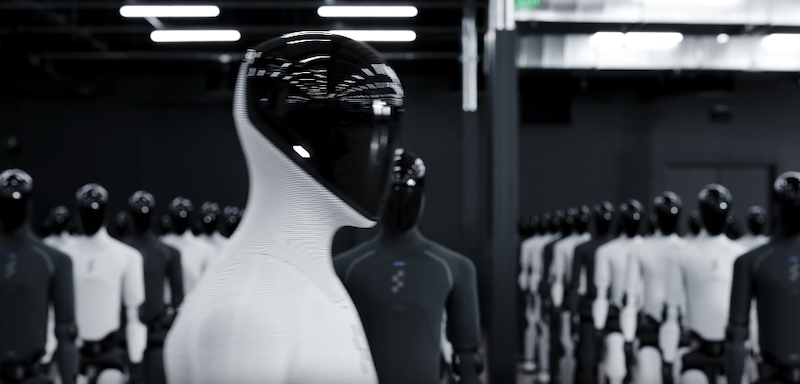
Figure AI now claims to be crossing that threshold. In a recent update, the company revealed that its BotQ manufacturing facility has increased production output of its Figure 03 humanoid robot from one unit per day to one unit per hour – a 24-fold increase...
Key takeaways
- The most recent developments in humanoid robotics show a rapid shift from research prototypes toward scalable production and standardized evaluation.
- Nvidia announced a partnership with Chinese startup Unitree to supply the Isaac Root research platform, integrating Nvidia’s Blackwell AI chip into Unitree’s H2 Plus humanoid body and making the system available to universities such as Stanford and ETH Zurich later this year.
- At the same time Nvidia released an open‑source Isaac GR00T reference design that couples a Unitree H2 Plus chassis, Sharpa five‑fingered hands and Jetson Thor compute for advanced perception and control, aiming to democratize frontier humanoid research.
- Figure AI reported that its BotQ factory has boosted Figure 03 output from one unit per day to one per hour within 120 days, surpassing 350 third‑generation robots and achieving an overall first‑pass yield above 80 percent while deploying internal fleet‑management, OTA updates and diagnostic tools.
- 1X Technologies also began full‑scale production of its low‑noise NEO humanoid at a new Hayward, California plant, targeting domestic‑space applications.
Figure AI now claims to be crossing that threshold.
In a recent update, the company revealed that its BotQ manufacturing facility has increased production output of its Figure 03 humanoid robot from one unit per day to one unit per hour – a 24-fold increase in throughput achieved in less than 120 days.
The company says it has already produced more than 350 third-generation humanoid robots and manufactured over 9,000 actuators across more than 10 different SKUs.
While production figures remain small compared with the automotive industry, they are significant within the still-emerging humanoid robotics sector, where most companies remain focused primarily on R&D and limited pilot deployments. ### Figure’s broader AI ambitions
Alongside manufacturing updates, Figure also revealed new developments involving Helix, the company’s humanoid AI system.
According to Figure, its “System 0” whole-body controller now integrates visual perception data from onboard cameras with proprioceptive state information, enabling robots to navigate stairs and uneven terrain more autonomously.
The company says the system is trained end-to-end using reinforcement learning in simulation before being transferred directly to physical robots without real-world fine-tuning.
This “sim-to-real” transfer problem has long been considered one of the central technical bottlenecks in robotics. The company says its battery production line has achieved a 99.3 percent first-pass yield, while overall robot first-pass yield rates now exceed 80 percent and continue improving weekly.
Although the figures cannot be independently verified, they illustrate the growing industrialization of humanoid robot manufacturing.
Humanoid robots become fleet-managed systems
Another important aspect of Figure’s update concerns operational infrastructure.
The company says it has developed:
internal fleet management systems; over-the-air software update infrastructure; field service management tools; failure diagnostics systems; and “fallback ladders” that allow robots to recover gracefully from non-critical faults.
This may prove just as important as the robots themselves.
Mentioned in this article