Future of Robotics in 2026: Trends, Uses, Jobs, and Predictions
Read the article and explore its original source.
Article
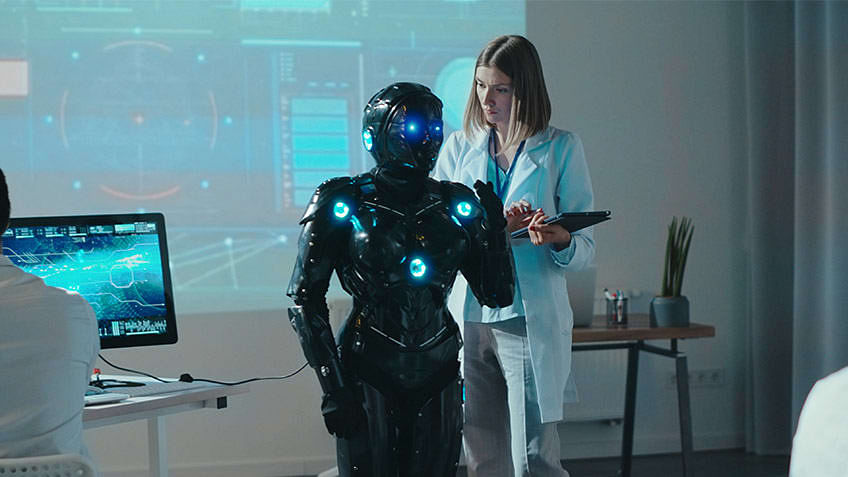
Companies are now testing humanoids for jobs such as moving boxes, handling parts, sorting materials, and supporting production lines. IFR identifies real-world humanoid testing as one of its major robotics trends.
There are still large gaps between an impressive demonstration and dependable daily work. Dexterity, battery life, safety, reliability, and cost remain difficult engineering problems. McKinsey similarly points to mobility, dexterity, battery life, safety, and economics as barriers that must improve before broad deployment becomes realistic.
So the immediate future of humanoid robots is likely to involve controlled commercial deployments and task-specific trials, rather than millions of general-purpose household androids appearing overnight. Research is now testing more ambitious forms of robotic assistance. A 2026 Nature study, for example, examined the feasibility of humanoid robots performing surgical tasks. That is an early research result rather than evidence that autonomous humanoid surgeons are about to replace doctors.
Healthcare will remain one of the areas where precision, reliability, regulation, and human oversight matter most.
Future of Robotics in Agriculture
Farms are difficult places for robots. Terrain changes. Weather changes. Plants differ in size and shape. Fruit bruises. Animals move.
That is exactly why agricultural robotics remains an active research area.
Evidence and editorial ownership
Request a correctionOriginal source
Simplilearn · simplilearn.com
Published September 6, 2026
New robots, industry moves, and funding in your weekly robotics briefing.
Unsubscribe anytime.