Genesis AI introduces GENE-26.5 model for more dexterous robot manipulation
“Together, these innovations overcome the fundamental bottleneck in data that has constrained robotics foundation models, paving the way for a new generation of highly productive general-purpose robots,” asserted Genesis AI.
Key takeaways
- The most recent headlines show a surge of activity around humanoid robots.
- In early May, Figure AI unveiled a video of two of its Helix 02 humanoids making a bed together, highlighting new training that lets the robots open doors, push furniture and drape clothing, though the company has not announced a consumer launch date.
- Figure AI, valued at $39 billion, is racing against rivals such as Tesla’s Optimus and other emerging makers.
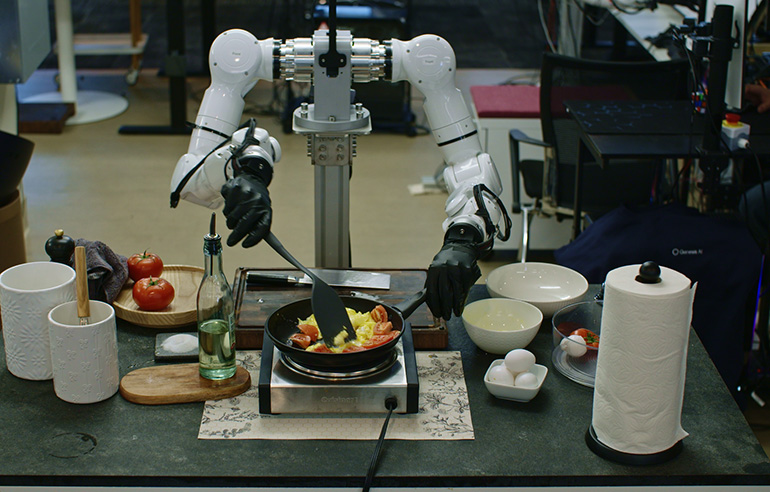
- At the same time, Genesis AI introduced its GENE‑26.5 “brain,” a foundation model paired with a human‑hand‑shaped robotic gripper that it says overcomes the data bottleneck that has limited dexterous manipulation, allowing robots to perform tasks previously possible only with human hands.
- The company demonstrated the system on both Intel and NVIDIA hardware and is building a massive “human skill library” from egocentric video and internet footage to train the model.
“Together, these innovations overcome the fundamental bottleneck in data that has constrained robotics foundation models, paving the way for a new generation of highly productive general-purpose robots,” asserted Genesis AI. “The brain and hand are the two most valuable and complex pieces of robotics, and today we are presenting the industry’s most advanced versions of both,” stated Zhou Xian, co-founder and CEO of Genesis AI. “For the first time ever, we’re enabling robots to do what only human hands could, and do it reliably, at scale.”
The startup emerged from stealth with $105 million in funding last year. Genesis AI said it is a “global full-stack robotics company building general-purpose robots with human-level intelligence and capabilities.” The company said it is engaging with partners to deploy the glove in real-world work environments. By simply wearing the glove while working as usual, everyday tasks can be sources of new categories of training data to build what Genesis AI said could be the world’s largest human skill library.
In addition, Genesis AI’s data engine taps into egocentric video data from humans wearing cameras to capture how they interact with the world, as well as massive amounts of human-based internet videos. The company said its approach will use these data sources to enable its foundation model to learn more efficiently and allow robots to perform more complex tasks.
New robots, funding, and signals. Every Thursday.
Unsubscribe anytime.