Guest article: What CES really told us about robotics in the produce sector
Every year at the Consumer Electronics Show (CES), agriculture shows up alongside autonomous vehicles and AI. And every year the same question comes up: Is this finally the year robots replace farm labor?
Key takeaways
- The most recent reports show that commercial deployments of humanoid robots are finally gaining scale, with global installations reaching about 16,000 units in 2025—a 31 percent share for Shanghai‑based AgiBot and a combined 73 percent of all units held by the top five suppliers, including Unitree, UBTech, Leju and Tesla, which entered the top five with roughly 5 percent market share.
- Chinese firms are also expanding business models, launching robot‑as‑a‑service rentals for live performances, retail and promotions, while lower‑cost platforms aimed at interaction rather than heavy industrial work are emerging.
- In the United States, Boston Dynamics demonstrated its Atlas humanoid performing tasks at Hyundai’s new Georgia plant, and the company announced a partnership with DeepMind to integrate Gemini foundation models into Atlas.
- At CES 2026, the British startup Humanoid unveiled its HMND 01 biped, claiming 25,000 pre‑orders and successful pilots with six Fortune 500 firms.
- Meanwhile, Chinese EV‑maker XPeng’s first public showcase of its IRON humanoid ended in a face‑first fall, underscoring the persistent reliability challenges that industry insiders say still separate prototype hype from economically viable, safe deployment in uncontrolled environments.
Every year at the Consumer Electronics Show (CES), agriculture shows up alongside autonomous vehicles and AI. And every year the same question comes up: Is this finally the year robots replace farm labor?
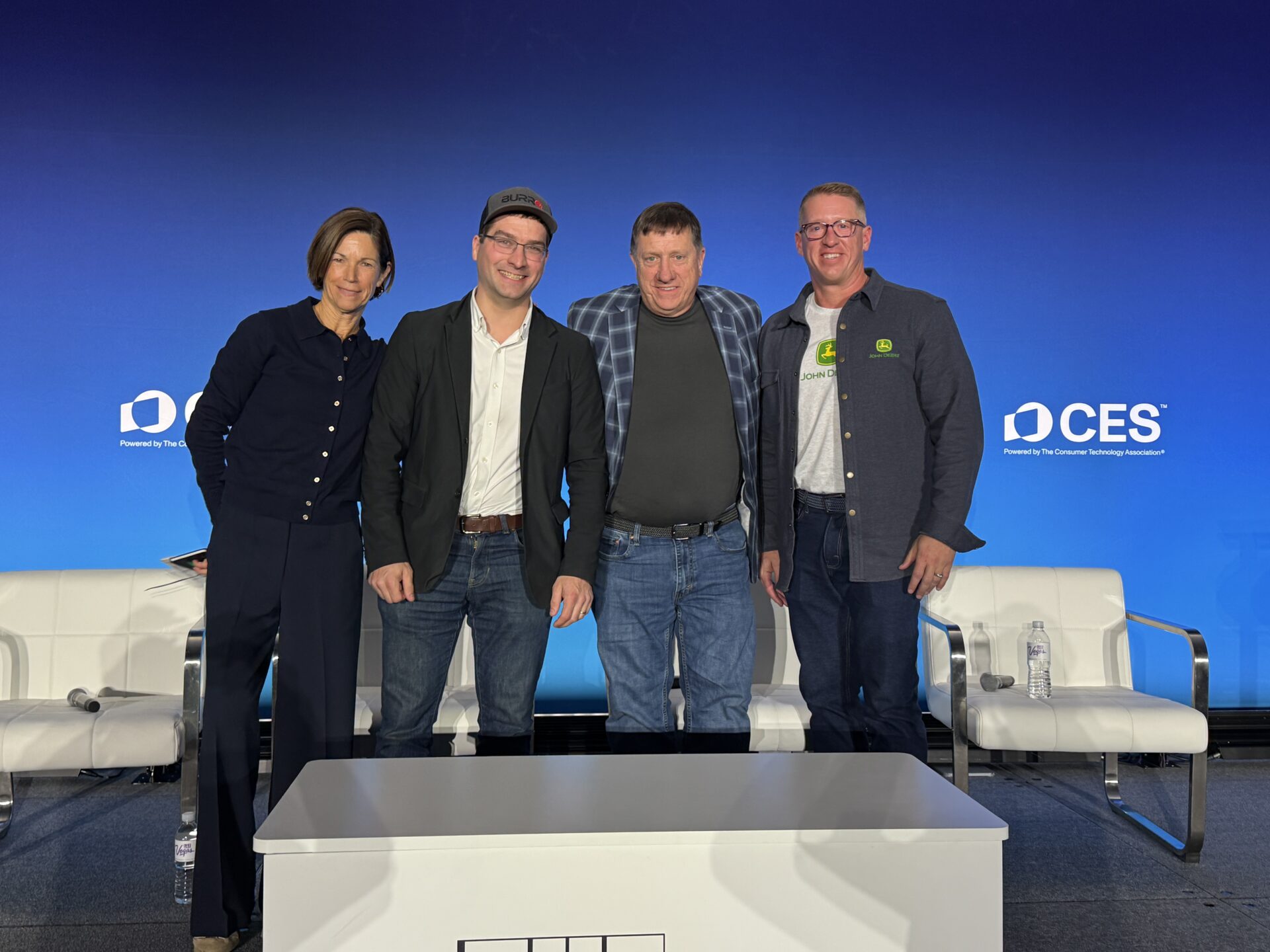
After moderating a panel on robotics and autonomy, the answer is still no. And that is exactly why robotics in the produce industry are finally starting to work.
What came through clearly in the discussion at CES is that the most successful robots are not trying to replace people; they are fixing the parts of produce operations that break most easily.
Produce is unforgiving. Harvest windows are short, quality drops fast. When labor does not show up on time, fruit stays in the field and value disappears.
That reality shaped much of the CES panel discussion. #### The big takeaway? Solve real problems
For startups, the message from CES was clear: Solve real operational problems, design robots to work with people, and expect adoption to be crop-specific. Focus on reliability and integration, not flashy demos.
For investors, the signal is similar. The winners in produce robotics will not be the loudest; they will be the technologies that quietly become part of everyday operations.
Andersen’s closing statement summed it up: “The best robots are the ones growers stop talking about because they just work.”
The future of robotics in produce is not about eliminating labor. It is about making fragile systems more resilient. That reality shaped much of the CES panel discussion.
Robotics that gain traction in produce tend to focus on timing and flow rather than full automation of complex biological tasks.
Selective automation beats universal robots
One of the strongest themes from the panel was that movement matters more than manipulation.
Harvest-assist platforms, autonomous carts in berries, and rolling systems in greenhouses do not replace workers. They remove walking, lifting, and waiting from the workday, making crews more productive, safer, and easier to retain.
Charlie Andersen, CEO of Burro, said, “The goal isn’t to replace people. It’s to take away the worst parts of the job so people can focus on the work that actually matters.”
New robots, funding, and signals. Every Thursday.
Unsubscribe anytime.
Mentioned in this article