Honda’s Avatar Robot brings ASIMO’s humanoid legacy back to life
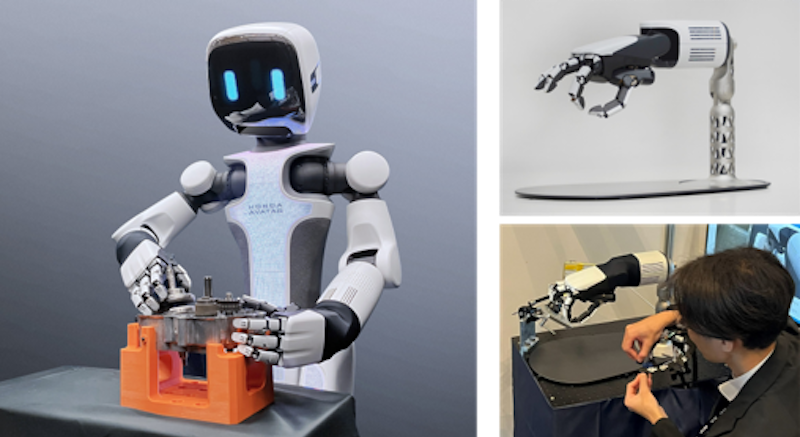
But Honda didn’t abandon humanoid robotics. Instead, much of the technology and expertise accumulated through decades of ASIMO development appears to have migrated into a new generation of research – including the company’s striking Avatar Robot (main pictu...
Key takeaways
- Humanoid robot shipments are surging, with Smart Analytics Global reporting roughly 19,100 units shipped worldwide in the first half of 2026—more than triple the volume a year earlier—and projecting full‑year deliveries near 60,000, potentially climbing to 500,000 by 2030.
- China dominates the market, accounting for about 97 % of H1 shipments, driven by extensive supply‑chain support, new tariff codes, export‑insurance policies and a wave of government programs for real‑scenario training.
- The sector’s most visible commercial players include Unitree Robotics, which shipped over 5,500 units in 2025, announced an IPO on Shanghai’s STAR Market with a target valuation of roughly 61 billion yuan, and introduced a $16,000 G1 model that consumes only $82 a year in electricity.
- In industry settings, Xiaomi’s humanoid is already assembling components in its EV factory, AgiBot’s Elf G2 operates on a 3C production line, and StarDance’s M7 robot serves logistics centres for SF Express and China Post.
- New applications are also emerging: Tau Robotics is piloting a San Francisco household‑cleaning service with $30‑per‑hour humanoids, while Foundation’s “Phantom” robot is being pitched for autonomous border‑patrol duties, though no formal contracts exist yet.
But Honda didn’t abandon humanoid robotics. Instead, much of the technology and expertise accumulated through decades of ASIMO development appears to have migrated into a new generation of research – including the company’s striking Avatar Robot (main picture) and an extraordinarily dexterous new robotic hand.
Honda demonstrated both at Humanoids Summit 2026 in May, where visitors could remotely operate the Avatar Robot and experience the movements of its multi-fingered hand.
The robot is conceived less as an autonomous humanoid worker and more as a physical extension of a human operator. Honda’s long-term idea is that someone could remotely use an Avatar Robot to perform work somewhere they cannot – or should not – physically be. Skip to primary navigation Skip to primary sidebar Skip to secondary sidebar
Robotics & Automation News
Where Innovation Meets Imagination
Honda’s new ‘Avatar’ humanoid robot suggests the spirit of ASIMO is very much alive
by David Edwards
Whatever happened to ASIMO? Honda’s famous humanoid robot (pictured below with what we believe is an actual human female) disappeared from public view several years ago, just before an extraordinary new wave of humanoid development swept through the robotics industry.
New robots, funding, and signals. Every Thursday.
Unsubscribe anytime.
Mentioned in this article