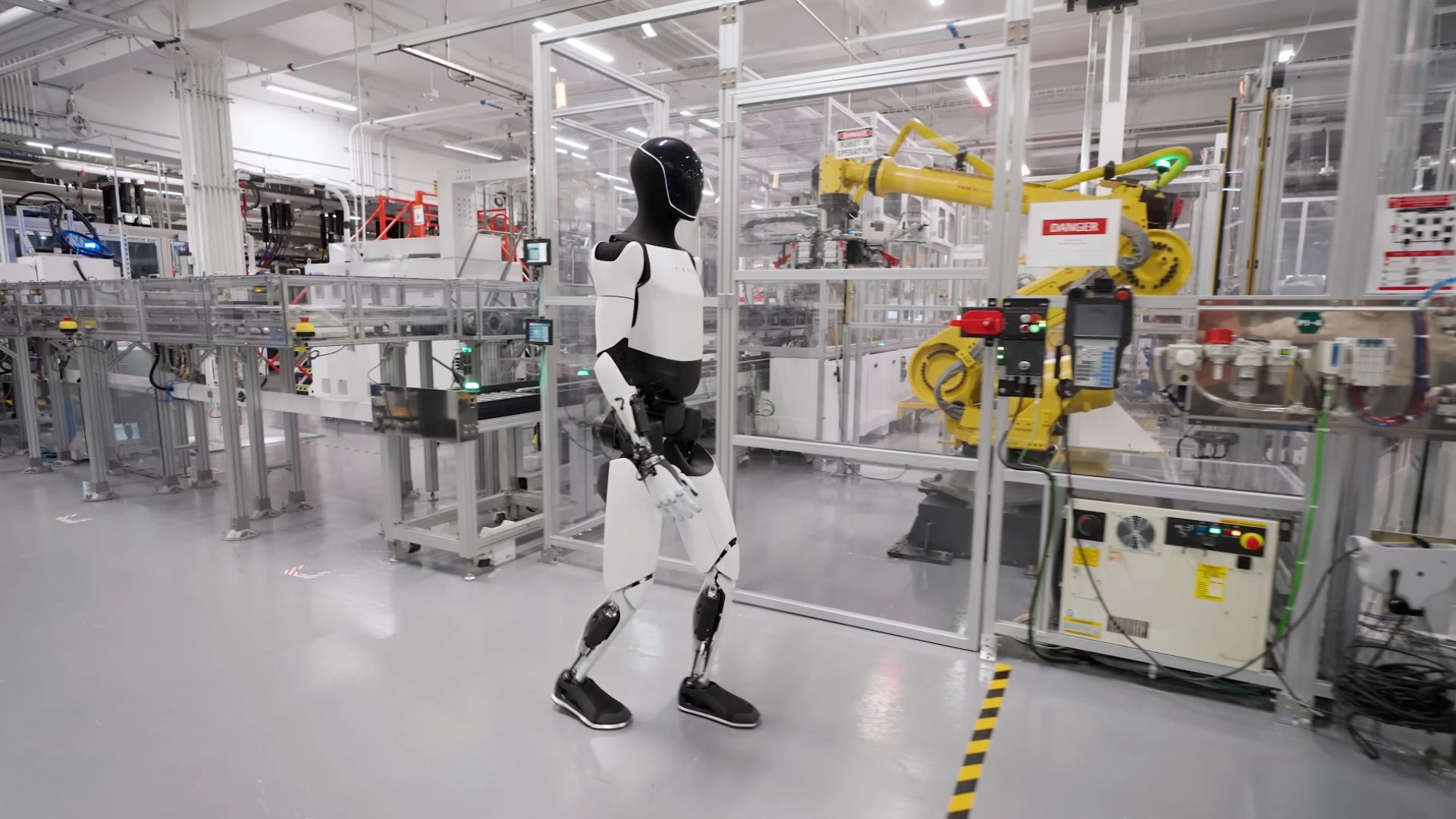
Humanoid robots need these key technologies to work like humans
According to the report, many next-generation humanoids are being designed to recharge autonomously or even replace their own battery packs. Developers are also exploring solid-state batteries, which promise higher energy density and improved safety by repl...
Key takeaways
- The most recent headlines show that humanoid robots are at the center of a growing geopolitical and regulatory clash while simultaneously advancing toward broader commercial use.
- In late July 2026 the U.S. government added new foreign‑made humanoid and quadruped robots to the FCC’s “Covered List,” effectively banning their import on national‑security grounds; the move follows a White House decision earlier that month to block next‑generation Chinese mobile robots, including humanoids, from entering the U.S. market.
- Industry analysts warn the ban could slow the U.S. sector, which has relied on low‑cost Chinese models for early adoption in consumer and entertainment settings.
- At the same time, China is accelerating its own high‑tech push.
- A August 6, 2026 report from the Global Times highlights a “new new three” strategy that positions Shanghai’s Zhangjiang Science City as a global hub for humanoid development, with projects focused on social applications such as caregiving, healthcare and hazardous‑task supervision.
According to the report, many next-generation humanoids are being designed to recharge autonomously or even replace their own battery packs. Developers are also exploring solid-state batteries, which promise higher energy density and improved safety by replacing flammable liquid electrolytes with solid materials.
The guide notes that the commercial humanoid robotics market is expanding rapidly, with dozens of new models entering development worldwide. Alongside robot manufacturers, demand is also growing for suppliers of AI chips, sensors, actuators, precision gearing, and advanced battery technologies. Building a humanoid robot is becoming more achievable as advances in AI, actuators, sensors, and battery technology make sophisticated components increasingly accessible.
A new guide from the ROBO Global Robotics and Automation Index outlines the core technologies required, grouping them into three key systems: the robot’s “brain,” “body,” and “energy” source.
The guide explains how AI processors, cameras, precision actuators, and next-generation solid-state batteries work together to enable human-like movement, perception, and autonomy.
It also highlights the rapid growth of the humanoid robotics market, with new commercial models and supporting technologies expanding opportunities for developers, manufacturers, and investors.
Humanoid robot guide AI and Robotics‘World’s first embodied all-terrain’ humanoid for life beyond the factory unveiled
World’s first autonomous robot that drives aboard moving ship tested by Hyundai
AI and RoboticsWorld’s first autonomous robot that drives aboard moving ship tested by Hyundai
New ergoCub humanoid can adapt to human movements during shared lifting tasks
AI and RoboticsNew ergoCub humanoid can adapt to human movements during shared lifting tasks
Meta’s Muse Code uses Muse Spark 1.2 in a 1,000+ tool-call GPU optimization test
AI and RoboticsMeta’s Muse Code uses Muse Spark 1.2 in a 1,000+ tool-call GPU optimization test
New robots, funding, and signals. Every Thursday.
Unsubscribe anytime.
Mentioned in this article