Japan is facing a dementia crisis – can technology help?
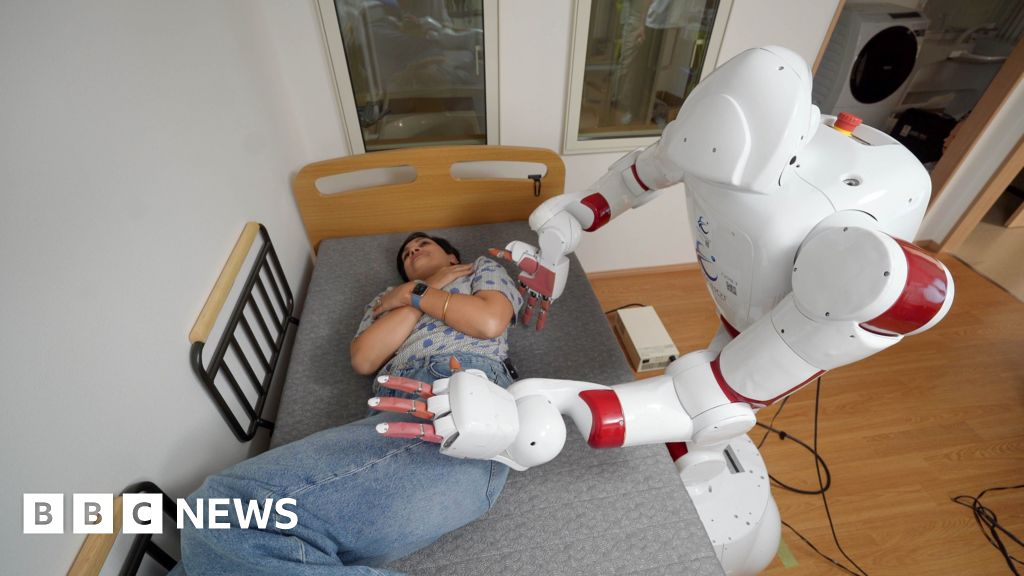
Although humanoid robots are being developed for the near future, Assistant Professor Tamon Miyake says the level of precision and intelligence required will take at last five years before they are safely able to interact with humans.
Key takeaways
- In early December 2025, several major developments signaled rapid progress in the humanoid‑robot sector.
- AGIBOT announced the rollout of its 5,000th mass‑produced humanoid robot, highlighting improvements in stability, reliability and durability that aim to meet a broader range of industrial needs.
- A contemporaneous intelligence report warned that China is poised to dominate the global humanoid‑robot race, citing its leadership in patent filings and projecting eventual deployments of hundreds of millions of units to offset demographic decline.
- In the United States, Google DeepMind partnered with Apptronik to showcase a home‑use humanoid capable of performing everyday chores such as loading a dishwasher and storing groceries, demonstrating the fusion of high‑quality hardware with foundation‑model AI for general‑purpose tasks.
- Chinese firm Unitree released dramatic footage of its larger H2 humanoid engaging in kick‑boxing‑style combat, revealing new teleoperation capabilities and advanced hands that broaden functional scope.
Although humanoid robots are being developed for the near future, Assistant Professor Tamon Miyake says the level of precision and intelligence required will take at last five years before they are safely able to interact with humans.
"It requires full-body sensing and adaptive understanding - how to adjust for each person and situation," he says.
Emotional support is also part of the innovation drive. "Early detection of age-related diseases is key," says Hidenori Fujiwara, a Fujitsu spokesperson. "If doctors can use motion-capture data, they can intervene earlier and help people remain active for longer."
Meanwhile, researchers at Waseda University are developing AIREC, a 150kg humanoid robot designed to be a "future" caregiver. Poketomo, a 12cm tall robot, can be carried around in a bag or can fit into a pocket. It reminds users to take medication, tells you how to prepare in real time for the weather outside and offers conversation for those living alone, which its creators say helps to ease social isolation.
"We're focusing on social issues... and to use new technology to help solve those problems," Miho Kagei, development manager from Sharp told the BBC.
New robots, funding, and signals. Every Thursday.
Unsubscribe anytime.
Mentioned in this article