Musk distracts Tesla investors with fantastical Optimus hype - theregister.com
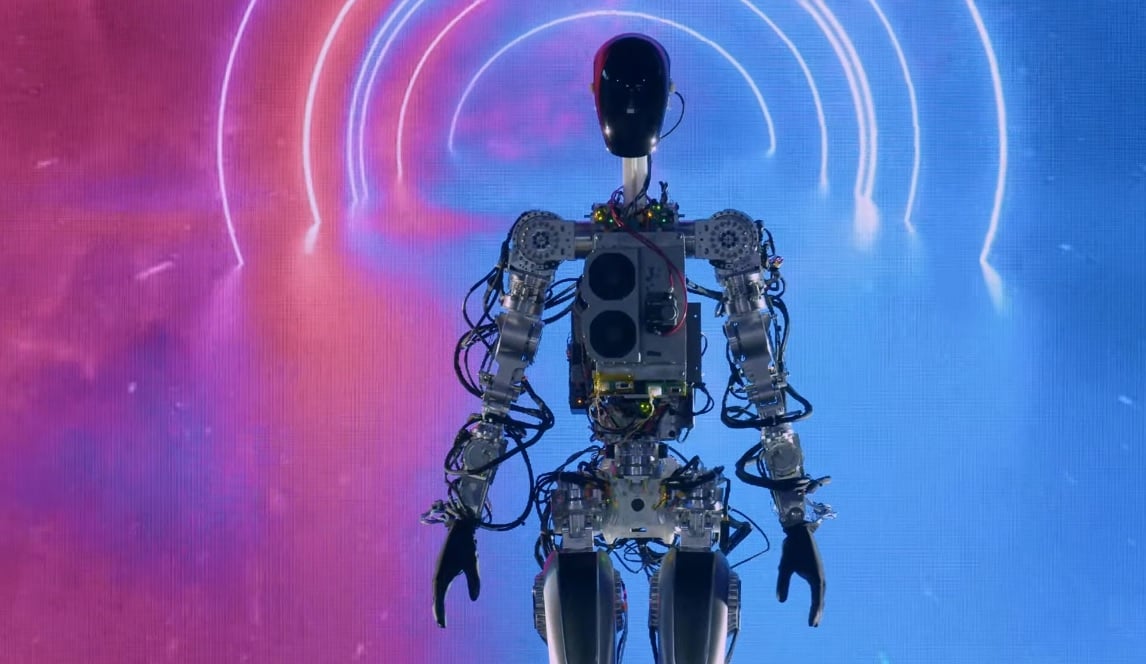
In its October 2025 report, "Humanoid robots: Crossing the chasm from concept to commercial reality," global consultancy McKinsey observes that public demonstrations of humanoid robots don't translate into economically viable autonomous machines.
Key takeaways
- The most recent reports show that commercial deployments of humanoid robots are finally gaining scale, with global installations reaching about 16,000 units in 2025—a 31 percent share for Shanghai‑based AgiBot and a combined 73 percent of all units held by the top five suppliers, including Unitree, UBTech, Leju and Tesla, which entered the top five with roughly 5 percent market share.
- Chinese firms are also expanding business models, launching robot‑as‑a‑service rentals for live performances, retail and promotions, while lower‑cost platforms aimed at interaction rather than heavy industrial work are emerging.
- In the United States, Boston Dynamics demonstrated its Atlas humanoid performing tasks at Hyundai’s new Georgia plant, and the company announced a partnership with DeepMind to integrate Gemini foundation models into Atlas.
- At CES 2026, the British startup Humanoid unveiled its HMND 01 biped, claiming 25,000 pre‑orders and successful pilots with six Fortune 500 firms.
- Meanwhile, Chinese EV‑maker XPeng’s first public showcase of its IRON humanoid ended in a face‑first fall, underscoring the persistent reliability challenges that industry insiders say still separate prototype hype from economically viable, safe deployment in uncontrolled environments.
In its October 2025 report, "Humanoid robots: Crossing the chasm from concept to commercial reality," global consultancy McKinsey observes that public demonstrations of humanoid robots don't translate into economically viable autonomous machines.
"[T]he gap between what is technically demonstrated in pilots and what is commercially viable at scale remains wide," the report says. "The prototypes that are capturing headlines are impressive but still far from delivering consistent, reliable, and economically justifiable performance in real-world settings."
Barriers include the safety implications of free-roaming robots, limited battery life when not tethered to power, lack of manual dexterity and mobility, and cost. Claude Code's prying AIs read off-limits secret files Meta to pour the GDP of Kenya into AI infrastructure push in 2026 AI datacenter boom triples US gas power builds, filling the air with more CO2 IBM says AI is insane in the mainframe as z17 sales surge
Lei Yang, CEO of IntBot, a humanoid robot startup, told The Register in an email that given the rapid advances being made in hardware and AI, he expects Tesla and the robotics industry will be able to deliver humanoid robots in the not-too-distant future. Even if Tesla hits its production milestone of one million units by the end of 2027, the company needs to demonstrate their Optimus can actually perform useful labor alongside other humans for less than it would cost to hire a human. We note that Boston Dynamics and Hyundai have planned for more modest manufacturing capacity amounting to 30,000 humanoid robots per year, mainly for warehouse tasks.
People who work in the robotics industry have doubts that humanoid robots are ready for deployment outside of controlled industrial spaces. That's what we heard at the Humanoids Summit in Mountain View, California. There are many technical, social, and practical barriers that need to be overcome.
New robots, funding, and signals. Every Thursday.
Unsubscribe anytime.
Mentioned in this article