NASA wants to send humanoid robots to the moon | Popular Science
Read the article and explore its original source.
Article
Popular Science Logo Popular Science Logo
NASA wants to send humanoid robots to the moon
By Andrew Paul
Published
Sep 30, 2026 12:01 PM EDT
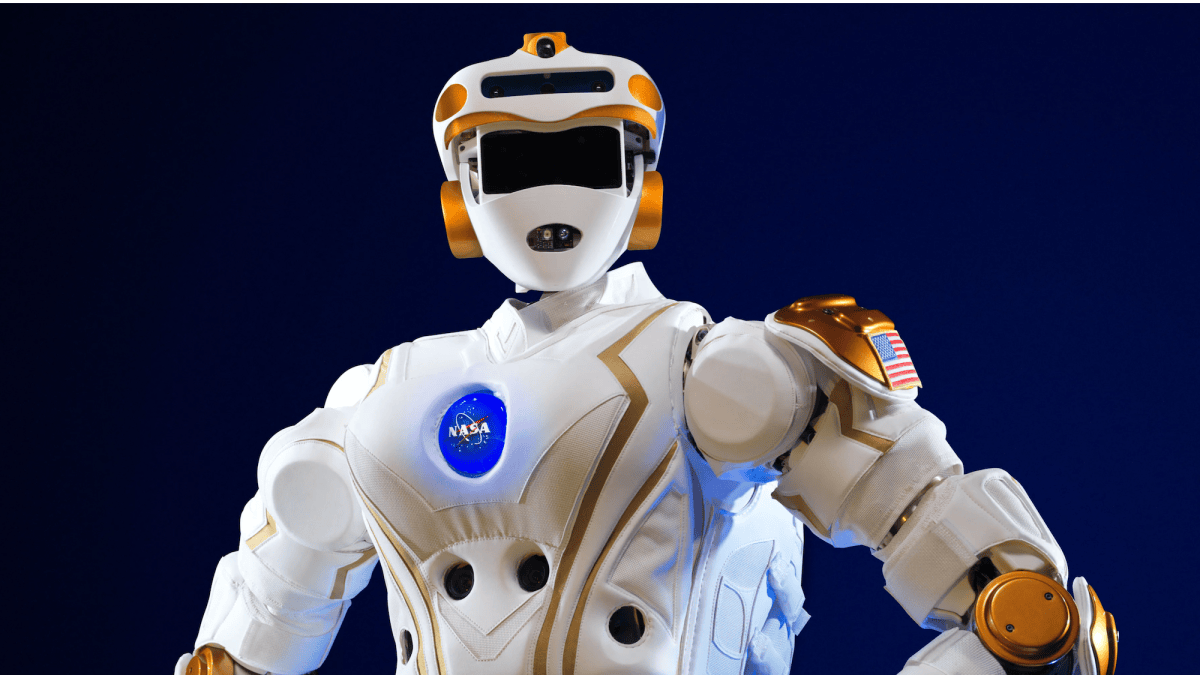
NASA Valkyrie bipedal robot with arms on its hips
Humans won’t be the only ones aboard future NASA missions. At Johnson Space Center in Houston, Texas, researchers on the agency’s Dexterous Robotics Team are working on the next generation of advanced robots to aid crews during their increasingly uncharted journeys to the moon and possibly even Mars. But while job-killing automation is an increasing concern when it comes to robots, NASA’s engineers are focused on the opposite—they’re trying to keep the humans in space not only employed, but alive. ### In groundbreaking first, humanoid robots performed surgery
By Andrew Paul
A humanoid robot is carried by technicians after being knocked out in a kickboxing match at the World Humanoid Robot Games on August 15, 2025 in Beijing, China.
2025 proved humanoid robots are here to stay. And fall down.
By Mack DeGeurin
a hand holding a yellow paper airplane against a blue sky
It’s National Paper Airplane Day: How to make a NASA-approved plane
By Laura Baisas
Fluorescent image of nematode
‘Space worms’ are en route to the International Space Station
By Andrew Paul More recent projects include designing and constructing the Integrated Mobile Evaluation Testbed for Robotics Operations (iMETRO). Based at Johnson Space Center, iMETRO provides both NASA and private companies a place to fine-tune various potential technologies that astronauts will rely on for day-to-day tasks like lunar base maintenance and research experiments. iMETRO includes a range of simulation environments including mode lunarl exploration rovers, living spaces, and a rocky outdoor enclosure that mimics the moon’s surface. This allows developers to identify and solve problems before they ever happen during a mission, especially problems they may not have anticipated.
Evidence and editorial ownership
Request a correctionOriginal source
Popsci · popsci.com
Published October 1, 2026
New robots, industry moves, and funding in your weekly robotics briefing.
Unsubscribe anytime.