New AI brain lets robots move like humans - Fox News
#### Unitree G1 humanoid robot ice skates and Rollerblades #### Are insurance apps watching you? #### Meta tracks workers to train AI agents #### Amtrak data breach exposes millions of customer records #### Waymo teams up with Waze to spot potholes faster #...
Key takeaways
- The most recent headlines show a surge of activity around humanoid robots.
- In early May, Figure AI unveiled a video of two of its Helix 02 humanoids making a bed together, highlighting new training that lets the robots open doors, push furniture and drape clothing, though the company has not announced a consumer launch date.
- Figure AI, valued at $39 billion, is racing against rivals such as Tesla’s Optimus and other emerging makers.
- At the same time, Genesis AI introduced its GENE‑26.5 “brain,” a foundation model paired with a human‑hand‑shaped robotic gripper that it says overcomes the data bottleneck that has limited dexterous manipulation, allowing robots to perform tasks previously possible only with human hands.
- The company demonstrated the system on both Intel and NVIDIA hardware and is building a massive “human skill library” from egocentric video and internet footage to train the model.
Buyer next steps
Compare source-backed options on HumanoidHub
Use HumanoidHub catalog records and buyer guides to verify robot availability, source links, and shortlist fit before contacting manufacturers.
Unitree G1 humanoid robot ice skates and Rollerblades
Are insurance apps watching you?
Meta tracks workers to train AI agents
Amtrak data breach exposes millions of customer records
Waymo teams up with Waze to spot potholes faster
Maryland moves to ban surveillance pricing in grocery stores
Runway-to-Space Challenge brings spaceflight closer
Ameriprise data breach hits 48,000 customers AI VIDEO TECH FAST-TRACKS HUMANOID ROBOT TRAINING
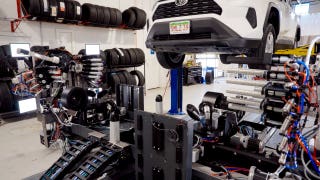
Genesis AI unveiled GENE-26.5, a robotic brain designed to help general-purpose robots perform complex physical tasks with humanlike precision. (Genesis AI)
Why robots struggled before this AI brain
Robots have lacked usable training data for physical tasks. "Robots have always had a data problem," Gervet said. "When you think about the AI chatbots you use on your computer, they have the entire internet to access."
Robots did not have that advantage. "The big problem comes from the fact that unless the robot's hand exactly matches a human's hand, any information you capture about how human hands move won't translate well," Gervet said. #### SIM swap scam drained Florida woman's bank account in minutes
Humanless big rig completes first US freight run
Google search led to a costly scam call
Instantly upgrade your streaming: At home and when traveling
Fake traffic violation text scam uses QR codes to steal payment info
China blocks Meta AI deal over security concerns
United Arab Emirates plans AI-run government within two years
Data broker opt-out steps widows should take in 90 days
DIY identity protection vs paid services: What works in 2026
JetBlue lawsuit raises airline pricing questions
ADT data breach exposes customer information
Fox News AI Newsletter: The AI model that's too dangerous to go public
New robots, funding, and signals. Every Thursday.
Unsubscribe anytime.
Mentioned in this article