Robots Have a Small Problem: They Completely Suck
One robot, designed to do laundry, struggled to fold a stack of towels. Another robot, which was meant to be able to complete a number of tasks in the kitchen, was limited to spinning “back and forth like a confused toddler stuck in a playpen it had never s...
Key takeaways
- Humanoid‑robot news this month is dominated by large‑scale deployment plans and new hardware that aim to move the technology out of labs and into factories and homes.
- Hyundai and its robotics arm, in partnership with Boston Dynamics, announced that it will begin installing AI‑powered Atlas humanoids at its Georgia auto plant, targeting 30,000 units a year from 2028 and eventually rolling the robots out across its global factories; the company says the machines will handle repetitive and dangerous tasks, but its labour union has warned that no robot can be deployed without a formal agreement, warning of potential employment shocks.
- At the same time, Tesla’s Optimus humanoid is being positioned for a consumer launch, with Elon Musk predicting that the robot will achieve “very high reliability” and be capable of most household tasks by the end of 2026.
- In Davos, robotics experts stressed that useful humanoids will require better sensors and AI models to perceive and manipulate the world, noting that breakthroughs could allow robots to take on logistics and service jobs within a few hundred days.
- BionIT Labs introduced “Adam’s Hand,” a dexterous prosthetic‑style gripper for humanoid and service robots that was demonstrated on two robots at CES 2026, while Ford and the UK‑based Humanoid company completed a proof‑of‑concept at Ford’s Innovation Centre in Cologne, showing a wheeled humanoid performing tote handling and dual‑arm manipulation of large car parts.
One robot, designed to do laundry, struggled to fold a stack of towels. Another robot, which was meant to be able to complete a number of tasks in the kitchen, was limited to spinning “back and forth like a confused toddler stuck in a playpen it had never seen before,” as Giz‘s Kyle Barr described it.
The chaotic nature of the event highlights major pain points plaguing the current crop of humanoid robot makers. As the Wall Street Journal reported last month, even insiders are worried that making the transition from building humanoid robots to actually making them do useful things may take a lot longer than promised. The desire for a robot-dominated future is certainly there, from Tesla CEO Elon Musk arguing its Optimus robot could turn his ailing car business into the most valuable company in the world, with demand for humanoid robots quickly becoming “insatiable.”
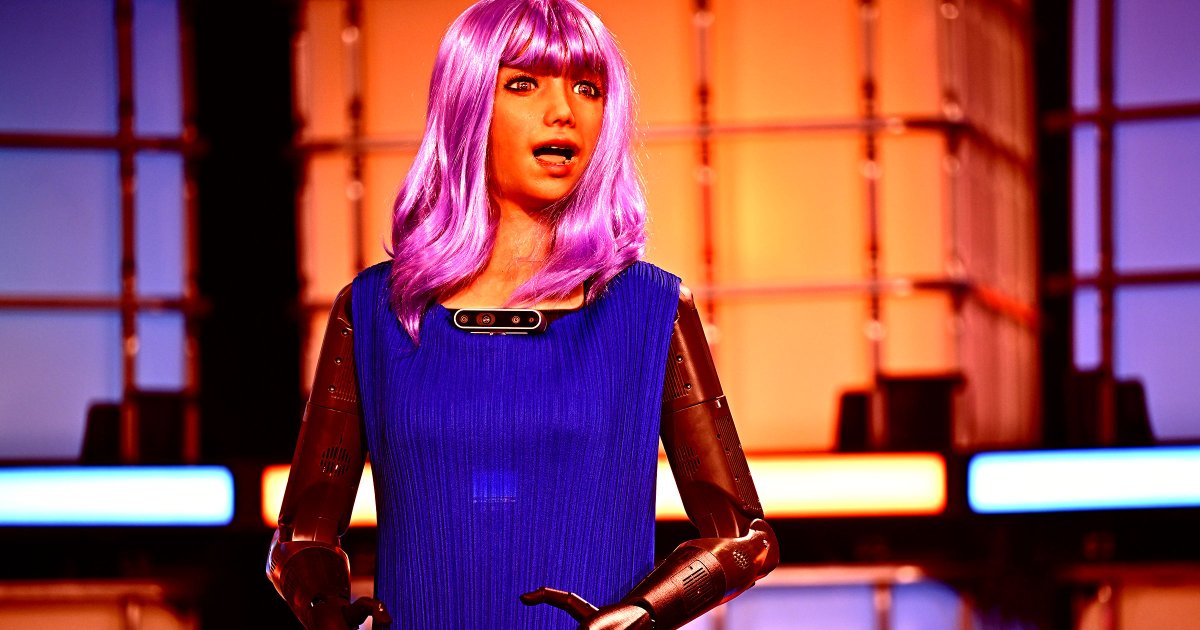
This year’s CES convention in Las Vegas was expectedly chock-full of companies showing off a variety of robots, from bipedal assistants designed to fold towels to battlebots that beat each other up in the ring.
There’s an immense amount of hype surrounding what the tech industry is hoping to be the next hottest thing: AI brought to life through the help of servo motors, actuators, and adorable animated eyes. Robot Clown Show
Robots Have a Small Problem: They Completely Suck
The gap between what's being promised and what robots are capable of today is growing fast.
By Victor Tangermann
Published
Tech leaders are predicting an imminent revolution in the field of robotics, promising a future in which humanoid robots can leverage the power of artificial intelligence to help us out in our day-to-day lives, from folding the laundry to taking care of the elderly.
AI chipmaker Nvidia CEO Jensen Huang even went as far as to prophesize, in January of last year, that the “ChatGPT moment for general robotics is just around the corner” in January of last year.
New robots, funding, and signals. Every Thursday.
Unsubscribe anytime.
Mentioned in this article