Samsung advances in-house humanoid robot development with cost edge
Shallow-π reportedly reduces computational requirements to one-third of conventional VLA systems and enables robots to make 17 decisions per second.
Key takeaways
- Unitree Robotics continues to dominate headlines with its latest “Superman” humanoid, which can leap 2 metres vertically and run at 12.66 m/s—surpassing both the standing‑high‑jump and sprint records of human athletes despite having legs only 0.85 m long.
- The robot, developed in just over three months, is the company’s third major performance breakthrough this year, following the H1 model that previously hit a 10 m/s running speed.
- On the same week that the robot was unveiled, Unitree’s Shanghai IPO surged more than 460 % above the offering price, propelling the firm into a landmark market debut and underscoring investor enthusiasm for China’s burgeoning humanoid sector, which analysts expect to ship 50,000 units in 2026, up from 12,000 in 2025.
- Despite the rapid hardware advances, founder Wang Xingxing cautioned that a “ChatGPT moment” for humanoid robots—where they can generalise across tasks and execute precise movements—may still be a decade away.
- In parallel, U.S. startup Foundation is promoting its Phantom humanoid for border‑security patrols, claiming the robot can navigate rugged terrain and flag potential crossings, although the Department of Homeland Security says no formal contracts are in place.
Buyer next steps
Compare source-backed options on HumanoidHub
Use HumanoidHub catalog records and buyer guides to verify robot availability, source links, and shortlist fit before contacting manufacturers.
Shallow-π reportedly reduces computational requirements to one-third of conventional VLA systems and enables robots to make 17 decisions per second. In factory testing, it achieved a 95 percent success rate on precision water-hose insertion tasks, coordinating 22 degrees of freedom across both arms and hands.
Samsung is also reportedly developing a World Model that can predict the physical consequences of actions before robots execute them, potentially helping machines learn new tasks and adapt to unfamiliar environments.
The company plans to establish a Robot Data Factory at its Gumi campus, using data generated by robots working on semiconductor, smartphone and appliance production lines. Such real-world data could help train AI systems and reduce the sim-to-real gap. ## Samsung’s robot push
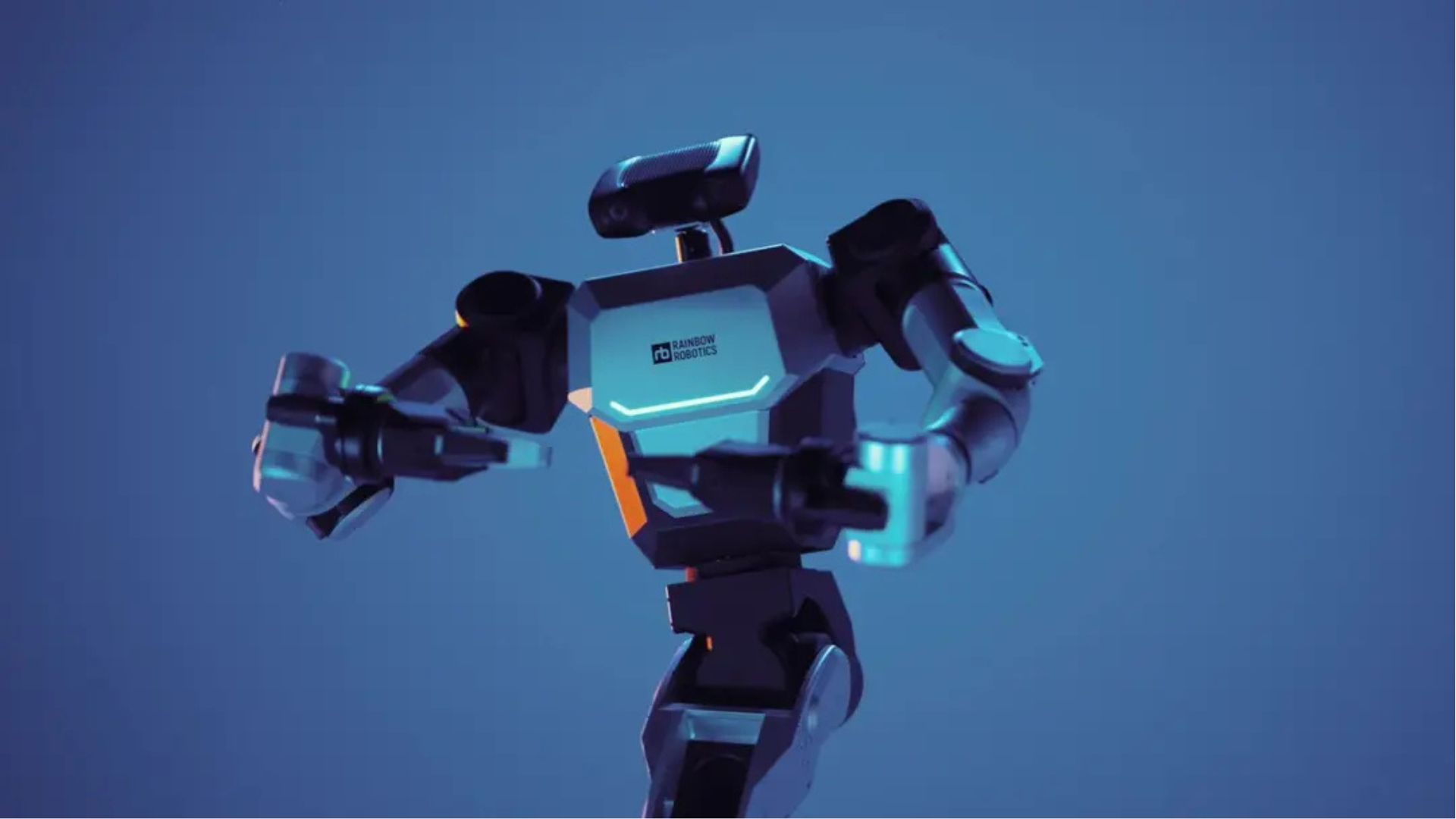
Humanoid robots are expected to become a major industry as advances in artificial intelligence and robotics enable machines to handle increasingly complex tasks. Samsung has already strengthened its position in the sector through a major investment in South Korean robotics company Rainbow Robotics, becoming its largest shareholder.
The report also suggests that Samsung is developing humanoid robots independently within the company. The reported project operates separately from Rainbow Robotics and could benefit from Samsung’s extensive manufacturing capabilities.
According to the reports, Samsung’s in-house humanoid has already demonstrated performance that surpasses several domestic competitors, highlighting the potential advantage of its industrial expertise. Rainbow Robotics remains an important part of Samsung’s robotics strategy following Samsung’s 35 percent controlling stake. Its RB-Y1 wheeled dual-arm robot is reportedly being tested in logistics operations, while the separate in-house humanoid project is described as more advanced. Samsung’s RX division, launched in July 2026, oversees the broader robotics strategy, including core technology development, business execution and international research hubs.
The Blueprint
Get the latest in engineering, tech, space & science - delivered daily to your inbox.
By subscribing, you agree to our Terms of Use and Policies You may unsubscribe at any time.
0COMMENT
Subscribe to
IE
Today!
New robots, funding, and signals. Every Thursday.
Unsubscribe anytime.
Mentioned in this article