Samsung advances in-house humanoid robot development with cost edge
Shallow-π reportedly reduces computational requirements to one-third of conventional VLA systems and enables robots to make 17 decisions per second.
Key takeaways
- The most recent reports show that humanoid robots are moving from high‑profile demos toward limited commercial use while shipment volumes surge.
- Smart Analytics Global recorded roughly 19,100 units shipped worldwide in the first half of 2026 – more than three times the figure a year earlier – and projects full‑year deliveries near 60,000, with some analysts expecting as many as 100,000 units by year‑end.
- China dominates the market, supplying about 97 % of H1 shipments, backed by supportive policies such as new tariff codes for intelligent robots and insurance coverage for export projects.
- Unitree Robotics, the former global leader, is preparing a record‑size IPO on Shanghai’s STAR Market after shipping over 5,500 humanoids in 2025, and its low‑cost G1 model now costs about $16,000 with minimal electricity use.
- In the United States, Tau Robotics has launched a pilot that rents $30‑per‑hour humanoid cleaners to San Francisco households, though analysts say broad home adoption will still take several years.
Shallow-π reportedly reduces computational requirements to one-third of conventional VLA systems and enables robots to make 17 decisions per second. In factory testing, it achieved a 95 percent success rate on precision water-hose insertion tasks, coordinating 22 degrees of freedom across both arms and hands.
Samsung is also reportedly developing a World Model that can predict the physical consequences of actions before robots execute them, potentially helping machines learn new tasks and adapt to unfamiliar environments.
The company plans to establish a Robot Data Factory at its Gumi campus, using data generated by robots working on semiconductor, smartphone and appliance production lines. Such real-world data could help train AI systems and reduce the sim-to-real gap. ## Samsung’s robot push
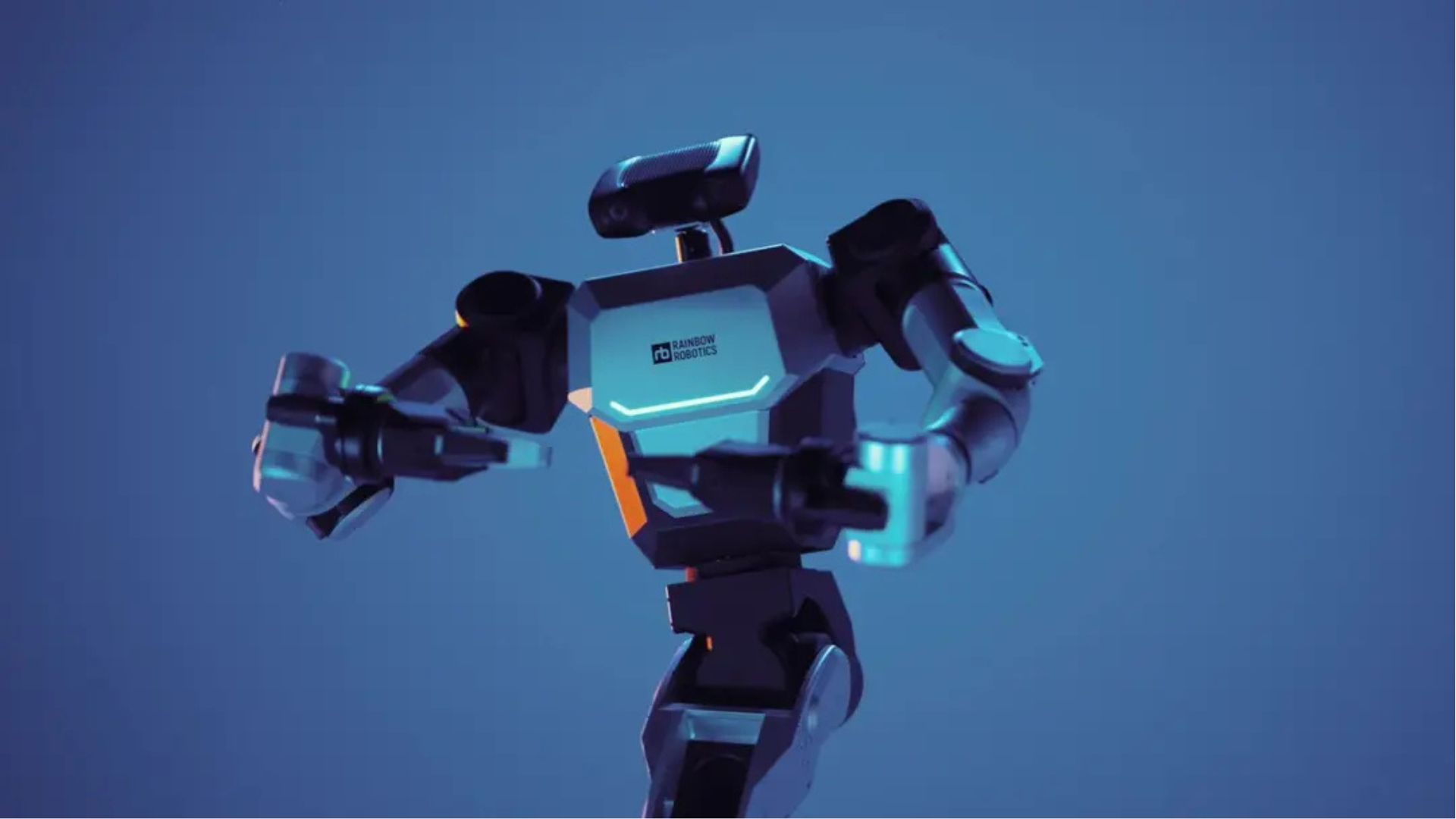
Humanoid robots are expected to become a major industry as advances in artificial intelligence and robotics enable machines to handle increasingly complex tasks. Samsung has already strengthened its position in the sector through a major investment in South Korean robotics company Rainbow Robotics, becoming its largest shareholder.
The report also suggests that Samsung is developing humanoid robots independently within the company. The reported project operates separately from Rainbow Robotics and could benefit from Samsung’s extensive manufacturing capabilities.
According to the reports, Samsung’s in-house humanoid has already demonstrated performance that surpasses several domestic competitors, highlighting the potential advantage of its industrial expertise. ### More from AI and Robotics
See All
BYD unveils 5.2-feet-tall Xiao Di humanoid robot on showroom floors in China
AI and RoboticsBYD unveils 5.2-feet-tall Xiao Di humanoid robot on showroom floors in China
China’s BioflexBot stretches 3.5 times more than human hands to reach confined spaces
AI and RoboticsChina’s BioflexBot stretches 3.5 times more than human hands to reach confined spaces
Google’s new sign-language model lets users sign to search instead of typing
AI and RoboticsGoogle’s new sign-language model lets users sign to search instead of typing
Humanoid robots master crawling, cartwheel and backflips using motion data, animation
AI and RoboticsHumanoid robots master crawling, cartwheel and backflips using motion data, animation
New robots, funding, and signals. Every Thursday.
Unsubscribe anytime.
Mentioned in this article