Sharpa brings dexterous robot hands to Nvidia and Unitree humanoid reference design - Robotics & Automation News
The announcement highlights the growing importance of dexterous manipulation and tactile sensing as the robotics industry seeks to move humanoid robots beyond simple demonstrations and toward practical industrial and commercial applications.
Key takeaways
- Zoomlion’s Z01 humanoid robot drew large crowds at KOMATEK 2026 in Istanbul, where it performed a Tai Chi routine that highlighted the company’s embodied‑AI capabilities and real‑world industrial validation in logistics, inspection and assembly tasks.
- The following day, Nvidia unveiled the Isaac GR00T Reference Humanoid at GTC Taipei, a complete development platform that pairs a Unitree H2 Plus robot with Sharpa’s five‑finger tactile hands and Jetson AGX Thor computing powered by a Blackwell GPU, aimed at accelerating research and slated for commercial availability from Unitree in late 2026.
- At the Robot Technology Japan 2026 exhibition, Agile Robots showcased its Agile ONE humanoid alongside force‑control technology, building on its recent acquisition of thyssenkrupp Automation Engineering and a research partnership with Google DeepMind.
- A CBS 60 Minutes segment aired on June 14, featuring Boston Dynamics’ Atlas learning to operate on a Hyundai factory floor, underscoring the move toward industrial deployment of AI‑powered humanoids.
- In parallel, Figure announced it is ramping up humanoid manufacturing speed and has signed a commercial agreement with Catalyst Brands to deploy humanoids across the retailer’s logistics network, while China is introducing a national digital‑ID system to track the lifecycle of humanoid robots for safety and standardization.
The announcement highlights the growing importance of dexterous manipulation and tactile sensing as the robotics industry seeks to move humanoid robots beyond simple demonstrations and toward practical industrial and commercial applications.
Share this:
Print (Opens in new window) Print Share on Facebook (Opens in new window) Facebook Share on LinkedIn (Opens in new window) LinkedIn Share on Reddit (Opens in new window) Reddit Share on X (Opens in new window) X Share on Tumblr (Opens in new window) Tumblr Share on Pinterest (Opens in new window) Pinterest Share on WhatsApp (Opens in new window) WhatsApp Share on Telegram (Opens in new window) Telegram
The move comes as interest in humanoid robots and physical AI continues to grow, with developers seeking ways to reduce the complexity of integrating hardware, collecting training data, running simulations, and deploying robot capabilities in real-world environments.
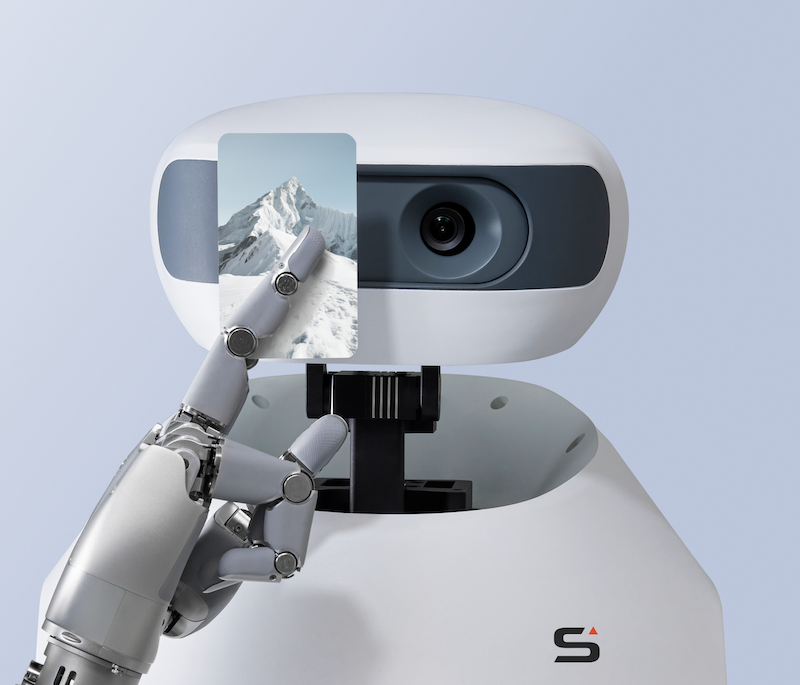
According to Sharpa, the H2 Plus platform combines its Wave robot hands with Unitree’s humanoid robot hardware, Nvidia onboard computing technology, and Nvidia Isaac GR00T development workflows into a single reference design. Skip to primary navigation Skip to primary sidebar Skip to secondary sidebar
Robotics & Automation News
Where Innovation Meets Imagination
Sharpa brings dexterous robot hands to Nvidia and Unitree humanoid reference design
by Sam Francis
Sharpa has announced that its Wave tactile robot hands have been integrated into the Unitree H2 Plus humanoid robot reference design, making it the first dexterous humanoid platform built on Nvidia’s Isaac GR00T development framework to feature the company’s tactile manipulation technology.
New robots, funding, and signals. Every Thursday.
Unsubscribe anytime.
Mentioned in this article