SMART and NUS pioneer neural blueprint for human-like intelligence in soft robots - Robotics & Automation News
“This work redefines what’s possible in soft robotics. We’ve shifted the paradigm from task-specific tuning and capabilities toward a truly generalisable framework with human-like intelligence.
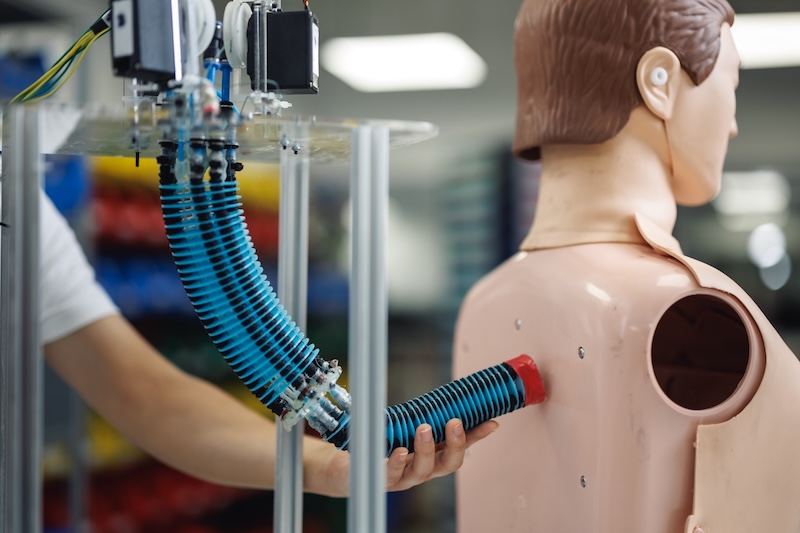
Key takeaways
- Humanoid robots have moved from laboratory demos to commercial pilots in early 2026, with several high‑profile announcements converging at CES 2026 and across the global market. At the show, Boston Dynamics unveiled a production‑ready version of its Atlas platform and revealed a partnership with DeepMind’s Gemini Robotics AI to boost perception and task execution, while Hyundai, its parent company, pledged to manufacture up to 30 000 units annually by 2028 and to field Atlas in high‑precision sequencing by that year. In parallel, Figure AI’s Figure 02 units have already completed 10‑hour shifts on BMW’s X3 line, supporting 30 000 vehicles and handling 90 000 sheet‑metal parts, and the company secured a billion‑dollar Series C round in September 2025. Tesla’s Optimus remains in an early R&D phase, with training at the Austin Gigafactory still limited to simple tasks.
- Funding momentum has accelerated dramatically: Apptronik raised $520 million in a valuation‑exceeding‑$5 billion round that includes Google, B Capital, Mercedes‑Benz and the Qatar Investment Authority, positioning the company to mass‑produce its Apollo humanoid at an estimated $80 000 per unit and to target $1 billion in orders by 2027. The same funding wave placed Apptronik among the top three globally funded humanoid firms, alongside Figure AI, after a separate $935 million raise reported in February 2026.
- Chinese makers are showcasing humanoids as entertainment stars for the Lunar New Year, with Unitree, Agibot, Galbot, Noetix and MagicLab performing on CCTV’s gala and preparing IPOs, while Unitree’s 16‑robot dance troupe from the 2025 gala attracted millions of viewers.
- New design directions are also emerging. Fauna Robotics introduced Sprout, a compact, safety‑first humanoid built for homes, schools and retail, emphasizing natural movement and trust in human‑shared spaces. Meanwhile, Boston Dynamics demonstrated Atlas performing a backflip combined with a cartwheel, underscoring rapid advances in dynamic locomotion.
- Finally, researchers at NUS and SMART reported a neural‑blueprint that endows soft‑robotic systems with human‑like intelligence, a breakthrough that could extend to future humanoid platforms for more adaptable, real‑world operation.
“This work redefines what’s possible in soft robotics. We’ve shifted the paradigm from task-specific tuning and capabilities toward a truly generalisable framework with human-like intelligence. It is a breakthrough that opens the door to scalable, intelligent soft machines capable of operating in real-world environments,” said Professor Cecilia Laschi, Principal Investigator at M3S, Provost’s Chair Professor, Department of Mechanical Engineering at the College of Design and Engineering and Director of the Advanced Robotics Centre at NUS, and co-corresponding author of the paper. NecessaryAlways Enabled
Necessary cookies are absolutely essential for the website to function properly. These cookies ensure basic functionalities and security features of the website, anonymously. This breakthrough opens doors for more robust soft robotic systems to develop manufacturing, logistics, inspection and medical robotics without the need for constant reprogramming – reducing downtime and costs. In healthcare, assistive and rehabilitation devices can automatically tailor their movements to a patient’s changing strength or posture, while wearable or medical soft robots can respond more sensitively to individual needs, improving safety and patient outcomes.
The researchers plan to extend this technology to robotic systems or components that can operate at higher speeds and more complex environments, with potential applications in assistive robotics, medical devices and industrial soft manipulators, as well as integration into real-world autonomous systems.
New robots, funding, and signals. Every Thursday.
Unsubscribe anytime.