The Inevitable Electrification of Labor? — CleanTechnica Field Trip
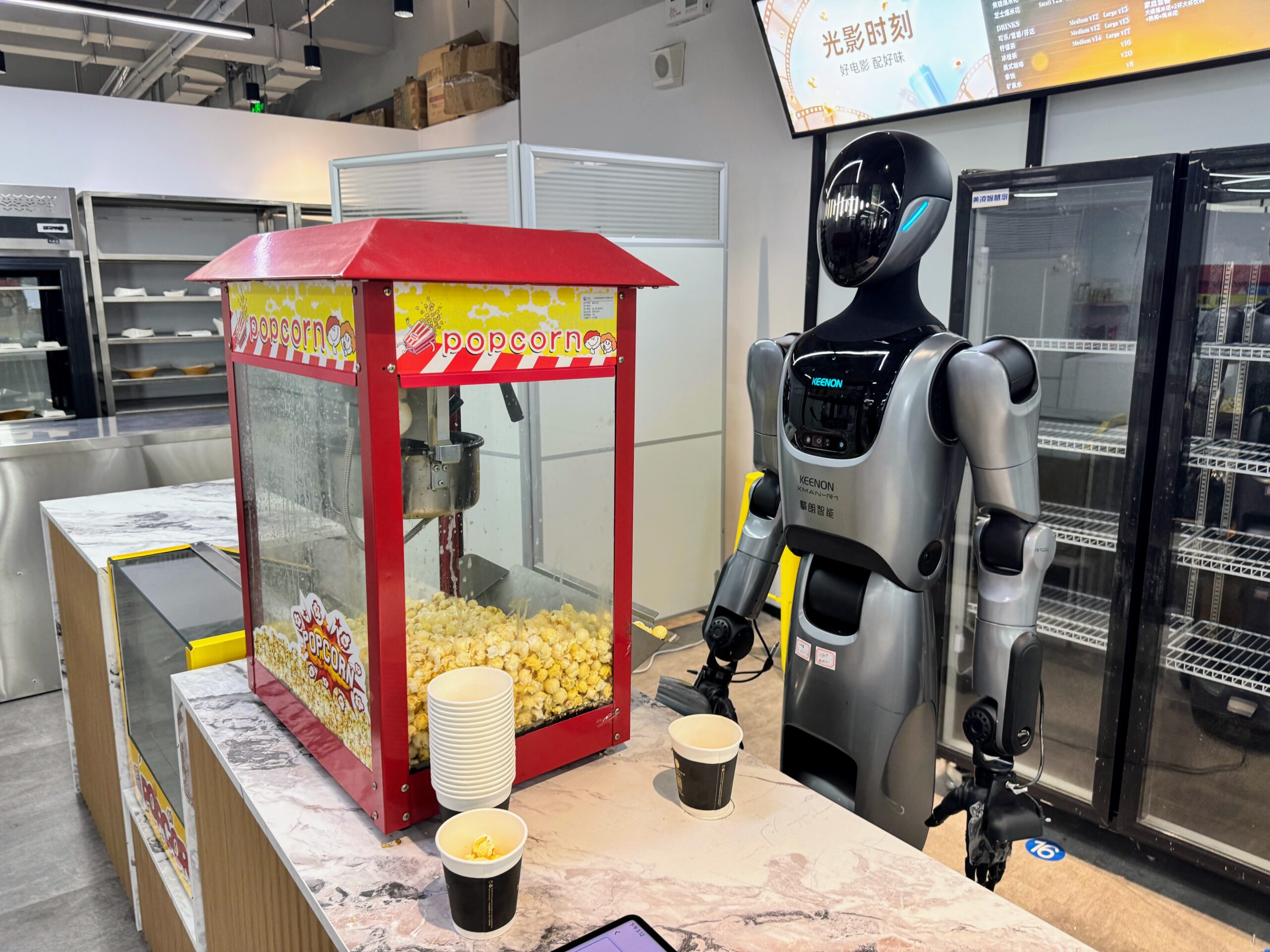
I ask Keenon’s Chief Operating Officer how long he thought it would be before these generalized robots could do all of the tasks on their production lines. He snickered a little bit and said it was at least 5 years away in his estimation.
Key takeaways
- The most recent coverage shows that humanoid robots are moving from laboratory demos to commercial deployment across several sectors.
- Chinese EV maker BYD announced plans to place humanoid robots in every car showroom, joining rivals such as Tesla, which expects to start producing its Optimus model this summer, while the Chinese market already accounts for more than 80 % of global humanoid shipments.
- In the United States, Agility Robotics is heading to Wall Street through a SPAC merger that values the company at $2.5 billion, and it has begun installing its Digit robots in nine customer facilities, including Amazon and Toyota, marking the first commercial use of humanoids in U.S. warehouses.
- Nvidia is supporting the safety side of the industry with its Halos software, derived from autonomous‑vehicle technology, to give robots better situational awareness when operating around people.
- Meanwhile, delivery‑robot startup Robot.com is expanding its product line with “R‑noid,” a wheeled humanoid designed for order‑picking, packaging and workstation preparation in logistics, food service and healthcare.
I ask Keenon’s Chief Operating Officer how long he thought it would be before these generalized robots could do all of the tasks on their production lines. He snickered a little bit and said it was at least 5 years away in his estimation.
The key barrier to bringing generalized humanoid robots into the workforce in a wide range of differentiated applications is primarily intelligence. Much like the journey to fully autonomous robotaxis has been a long and arduous journey fraught with seemingly never-ending edge cases, humanoid robots face an even more complicated road ahead to navigate. The second thing needed is what Keenon calls the embodied mind. This is the artificial intelligence neural network needed to command these robots. This is the most difficult deliverable, but as noted, the scope can be refined to allow humanoid robots to accomplish a smaller set of tasks much faster than delivering a truly generalized humanoid robot.
Finally, these robots need to have what Keenon calls embodied motion. This is the ability to perceive the world around them and navigate it seamlessly. A truly generalized robot will not be confined to buildings, sidewalks, city streets, or trails. They must be able to navigate the entire world in all of its varied formats. ### Specialized vs generalized
Robots being built today fall into two categories. Specialized robots are designed and built to do one or two specific tasks. This could be something like delivering a meal to a room or bringing drinks to a customer across town. They can identify obstacles and navigate a route within a certain geofenced area.
Generalized humanoid robots blow the fence right off of traditional “dumb” robots with powerful onboard compute that give them far more capability, and thus, utility. They will come in a range of form factors, but the primary differentiator is that these robots can do a wide range of tasks depending on how they are programmed and what level of artificial intelligence they possess.
New robots, funding, and signals. Every Thursday.
Unsubscribe anytime.
Mentioned in this article