Trends and outlook for actuators: The muscles behind ...
Read the article and explore its original source.
Article
by David Edwards
The humanoid robotics industry is transitioning from prototype development and demonstrations toward structured pilot deployments and early commercial adoption.
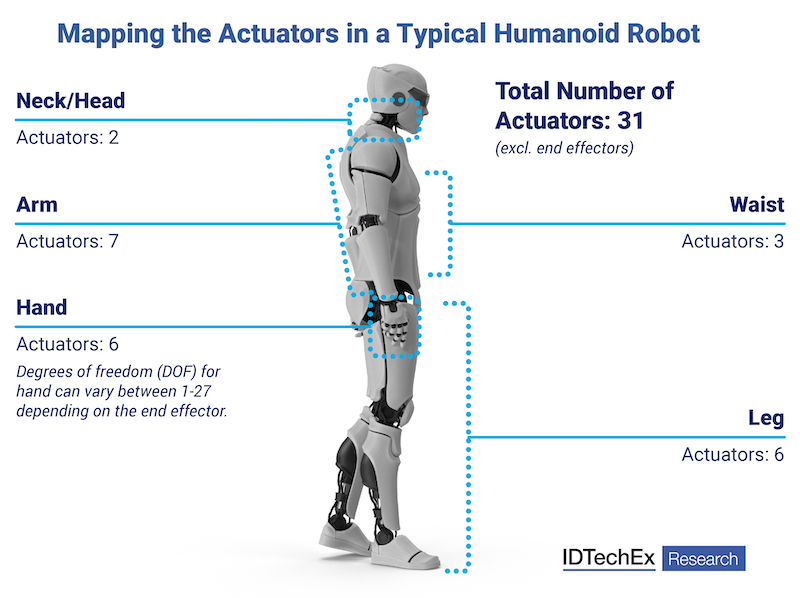
The new IDTechEx report Materials for Humanoid Robots 2026-2036: Technologies, Players, Forecasts expects 2026-2027 to represent key transition years, with more players moving from pilot testing toward production readiness and early-scale rollout. A major component at the heart of humanoid hardware is the actuator, which is responsible for the physical motion of the humanoid robot, allowing humanoids to walk, lift objects, handle tools, and interact with the environment.
With a 47 percent CAGR for humanoid unit sales expected over the next decade, there are emerging opportunities for materials manufacturers and component suppliers to enter the supply chain of this rapidly growing market.
Current state of humanoid actuators
Actuators can be linear and rotary, and use pneumatic, electric or hydraulic power to generate movement, with electric actuators being the most popular among current humanoid robots.
Evidence and editorial ownership
Request a correctionOriginal source
Roboticsandautomationnews · roboticsandautomationnews.com
Published August 5, 2026
New robots, industry moves, and funding in your weekly robotics briefing.
Unsubscribe anytime.