Trump administration bans new Chinese humanoid robots
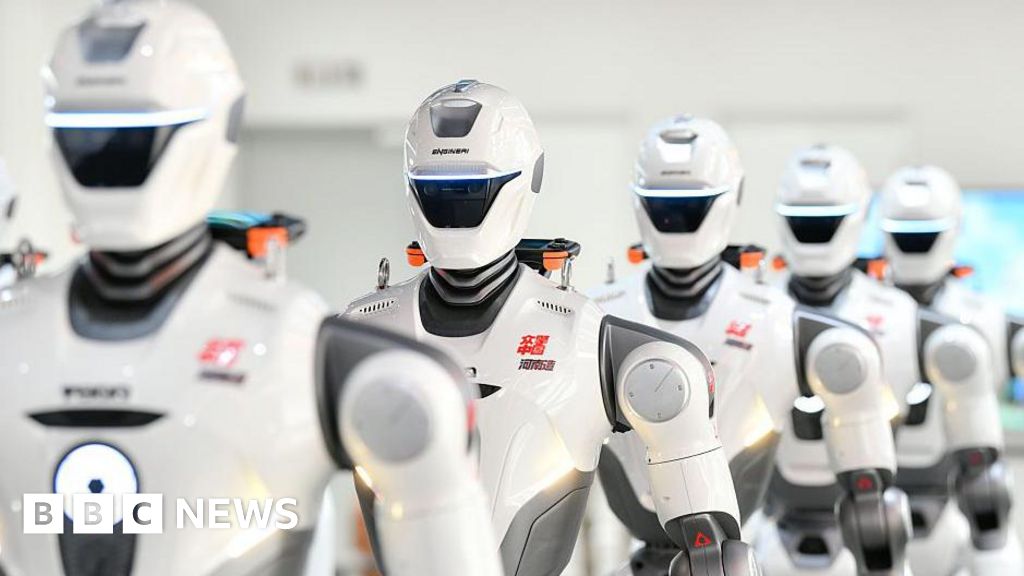
# Trump administration bans new Chinese humanoid robots VCG via Getty Images A row of humanoid robots are on display after rolling off the production line at a production facility in China The Trump administration on Tuesday announced a ban on new foreign-m...
Key takeaways
- The United States has enacted a comprehensive ban on new imports of foreign‑made humanoid robots, with the Trump administration citing national‑security risks and concerns that Chinese robots could gather sensitive data and supply it back to Beijing.
- The ban, announced on July 28, 2026, also covers four‑legged robots and foreign power inverters used in data centres, reflecting fears that such components could undermine U.S.
- In the wake of the ban, Chinese robot makers—particularly Unitree, which has partnered with Nvidia to use the Blackwell chip—are preparing to go public, while other firms like UBTech, AgiBot, Leju Robotics, and DEEP Robotics have filed for listings on Hong Kong and mainland exchanges.
- Meanwhile, the industry’s rapid pace continues: a Chinese humanoid robot won a Beijing half‑marathon in early 2026, and the World AI Conference in Shanghai showcased a fleet of Chinese humanoid robots, underscoring the country’s dominant 85 % share of the global market.
- U.S. investors are taking notice; Morgan Stanley and Barclays have projected that the humanoid sector could reach $5 trillion by 2050 and $200 billion by 2035, with Hightower’s chief strategist encouraging clients to explore opportunities, especially as Amazon’s 2025 shareholder letter hinted at the company’s deployment of a million robots.
VCG via Getty Images A row of humanoid robots are on display after rolling off the production line at a production facility in China
The Trump administration on Tuesday announced a ban on new foreign-made humanoid robot imports to the US over "unacceptable risks" to America's national security.
The move applies to advanced robots - including humanoid and four-legged machines. Many of them are made in China, which is competing with the US to develop robotics and artificial intelligence (AI).
The Federal Communications Commission (FCC) also banned imports of power inverters - devices used in data centres and solar panels - which it said could also pose a risk to the US economy. US Treasury Secretary Scott Bessent has also warned that Chinese AI firms could face sanctions over allegations that they have stolen American intellectual property.
In response the Chinese government has said its country's development of AI was "the result of its own dedication and effort as well as international cooperation".
The US will be keen to avoid a repeat of the squeeze on supply chains that was triggered last year when China tightened export controls on rare earths - critical for electronics.
Chinese technology firms have rapidly developed humanoid robots to be used in settings including factories and homes.
Companies have also been quick to market their machines to businesses and the public ahead of US humanoid robot rivals like Elon Musk's Tesla and Boston Dynamics.
New robots, funding, and signals. Every Thursday.
Unsubscribe anytime.
Mentioned in this article