UT To Lead NSF Center That Will Study How Robots and ...
Read the article and explore its original source.
Article
Beyond the research itself, the center will build open-source AI and robotics curricula, expand undergraduate research opportunities, and collaborate with high school teachers to launch a Co-Adaptive Robotics for All Learners (CORAL) program.
“Success would mean creating robotics education that is easy to teach, reproduce and adapt from university classrooms to high schools and communities with very different resources,” Biswas said. “As we establish a new field of human-robot co-adaptation, we also want to leave a legacy of making robotics and human-technology education more accessible to all.”
Latest News
Research
UT To Lead NSF Center That Will Study How Robots and People Learn To Live and Work Together
Academics Skip to content
The University of Texas at Austin formal wordmark in white August 27, 2026
August 27, 2026
UT News
UT News
Research
UT To Lead NSF Center That Will Study How Robots and People Learn To Live and Work Together
A 5-Year Collaboration Between 6 Universities and Industry Partners Will Place Assistive Robots in Everyday Human Environments.
6 minutes
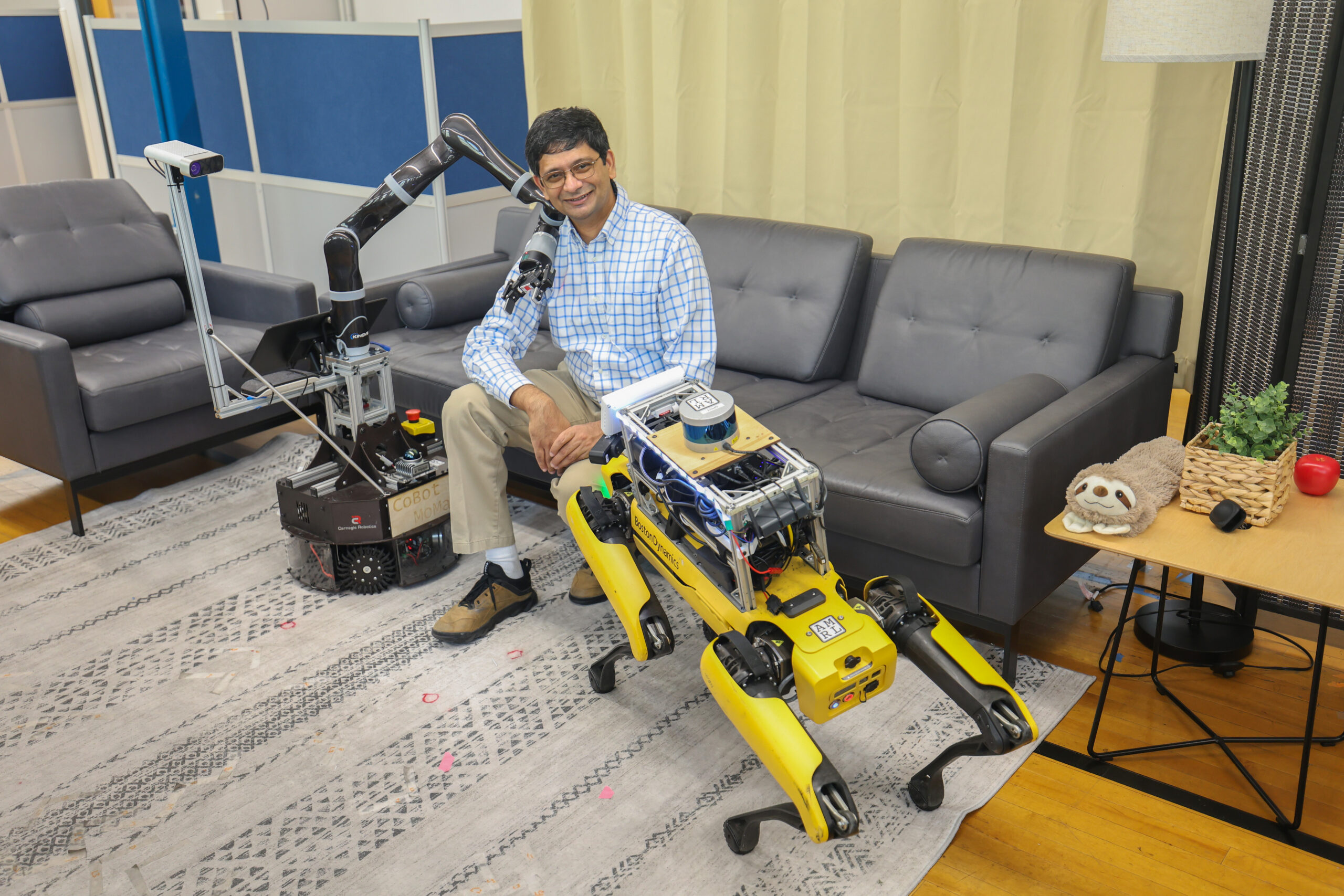
Joydeep Biswas, an associate professor of computer science at UT, will lead the team awarded the NSF grant and will serve as the director of the Center for Human and Robot Co-Adaptation.
The University of Texas at Austin will lead a new National Science Foundation Science and Technology Center to study what happens when assistive robots leave the lab and move into the real world to live and work alongside humans.
Evidence and editorial ownership
Request a correctionOriginal source
News Utexas Edu · news.utexas.edu
Published September 1, 2026
New robots, industry moves, and funding in your weekly robotics briefing.
Unsubscribe anytime.