What are Humanoid Robots and Why do They Matter? | NVIDIA Glossary
Humanoids are general-purpose, bipedal robots modeled after the human form factor and designed to work alongside humans to augment productivity. Humanoid robots are learning and adapting faster than ever before, using artificial intelligence models to perce...
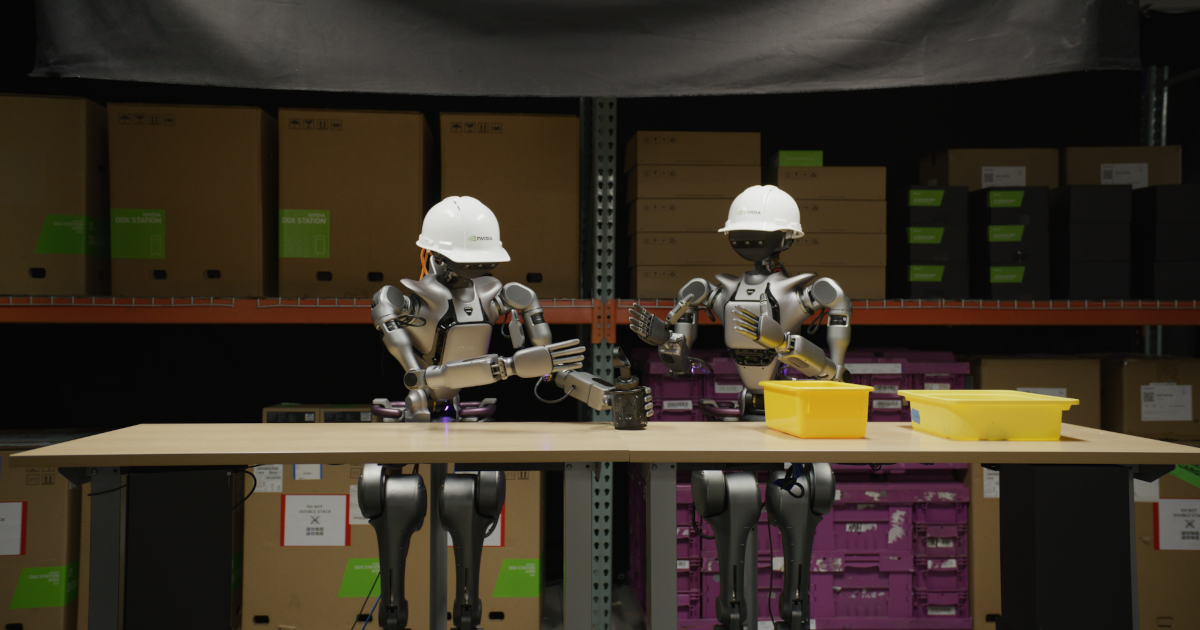
Humanoids are general-purpose, bipedal robots modeled after the human form factor and designed to work alongside humans to augment productivity.
Humanoid robots are learning and adapting faster than ever before, using artificial intelligence models to perceive, sense, plan, and autonomously perform complex tasks in wide range of settings. These robots are equipped with sophisticated actuators, sensors, and on-robot compute and software that help them move and interact to mimic human dexterity, and even self-navigate.
After rigorous AI training, optimized models and software workflows are deployed on the robot’s onboard computing systems. The combination of effective on-chip compute, AI, actuators, sensors, manipulation, dexterity, and locomotion policies makes humanoid robots highly versatile with the potential of taking on a variety of tasks.
Robot learning is driven by adaptive algorithms and comprehensive training in both virtual and real-world settings. This lets humanoid robots acquire and refine intricate skills like bipedal locomotion, object manipulation, and social interactions.
Once the robot’s skills are adequately refined in the digital world, the models can be deployed on the real robot. In some cases, training continues with the robot operating and practicing in the real world. Important emerging humanoid robot training techniques include:
New robots, funding, and signals. Every Thursday.
Unsubscribe anytime.
Mentioned in this article