Overview
Humanoid robotics is an evolving frontier in technology, blending artificial intelligence and advanced engineering to create robots capable of replicating human behavior and movement. These robots are being designed to assist in various sectors, including healthcare, manufacturing, and personal service, with the ultimate goal of enhancing human lives.
From Tesla’s Optimus to Boston Dynamics' Atlas, humanoid robots are no longer science fiction—they are becoming practical tools for real-world applications. This blog explores the core technologies behind humanoid robotics, their impact on industries, and what lies ahead for this transformative field.
Technology Breakdown
Humanoid robots are marvels of engineering and AI integration. Here are the key components that make them function:
1. AI-Powered Motion Control
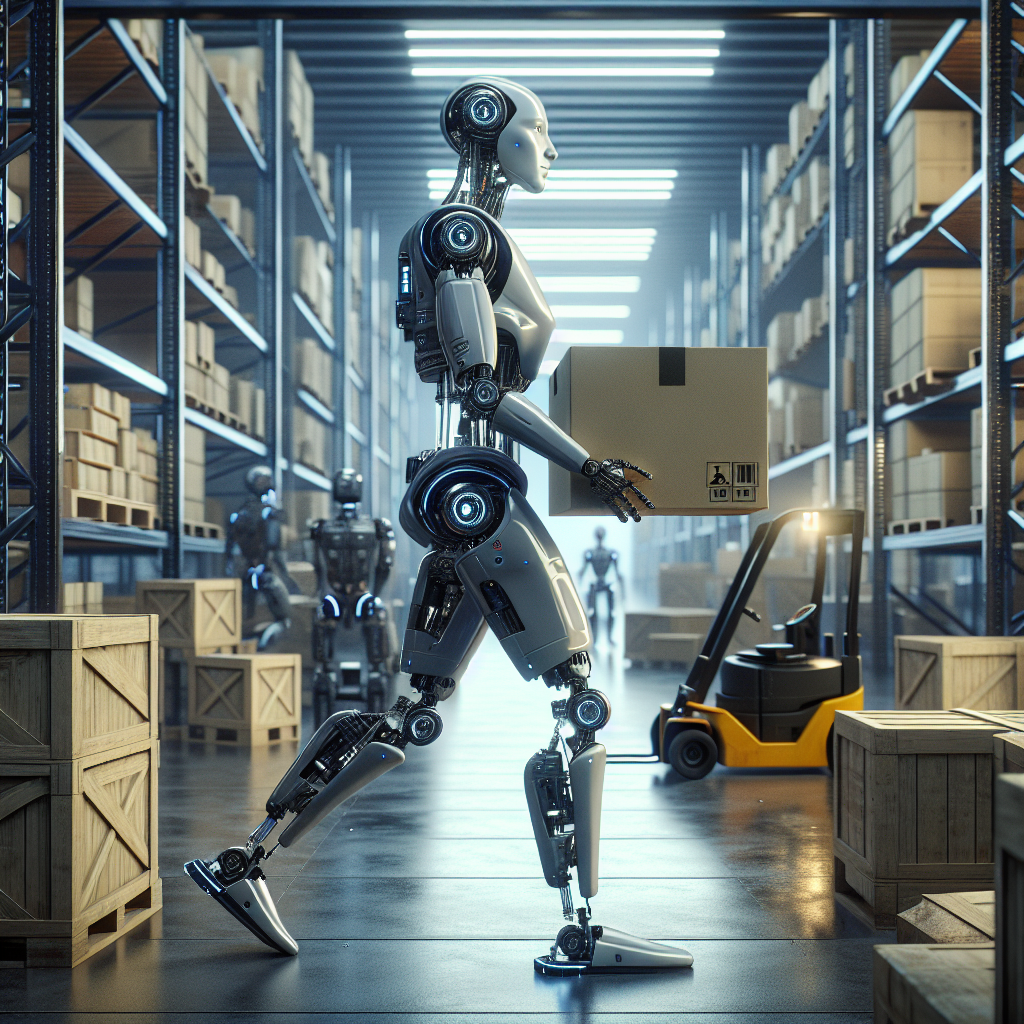
Advanced artificial intelligence enables humanoid robots to process environmental data and make precise movements. For instance, Boston Dynamics' Atlas uses deep learning algorithms to perform dynamic tasks like running, jumping, and carrying objects. AI-powered motion control allows robots to adapt to unpredictable scenarios, making them versatile in diverse environments.
2. Bipedal Locomotion
Bipedal locomotion is one of the most challenging aspects of humanoid robotics. Unlike wheeled robots, humanoid designs mimic human walking patterns, requiring sophisticated balance systems. Tesla’s Optimus, for example, utilizes actuators and sensors to maintain stability and ensure energy-efficient movement.
3. Human-Machine Interaction
Humanoid robots are designed to interact seamlessly with humans. This involves speech recognition, facial expression interpretation, and even emotional intelligence. Companies like Figure AI are developing robots capable of understanding human gestures and providing intuitive responses.
4. Advanced Materials
Modern humanoid robots often use lightweight yet durable materials like carbon fiber and high-strength polymers for their exoskeletons. These materials ensure agility while maintaining structural integrity during complex maneuvers.
Industry Impact
Humanoid robotics is reshaping industries by enabling automation and improving efficiency. Let’s examine some key areas:
1. Healthcare
Robots like SoftBank’s Pepper are being deployed to assist patients and healthcare workers. They can provide companionship to elderly individuals, monitor vital signs, and even help with physical rehabilitation exercises.
2. Manufacturing and Logistics
In factories, humanoid robots are taking over repetitive tasks, freeing up human workers for more strategic roles. Tesla’s Optimus aims to revolutionize assembly lines by performing precise, repetitive motions at high speed.
3. Public Service
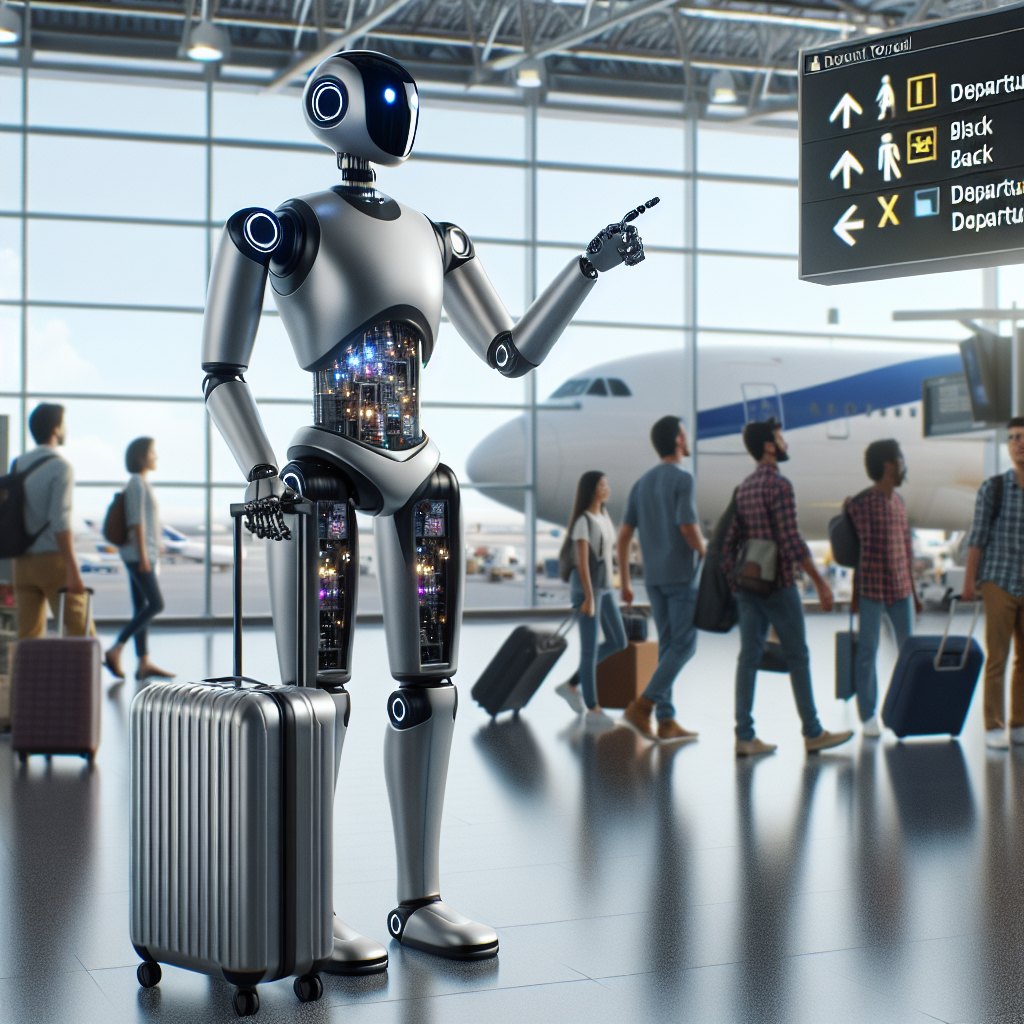
Humanoid robots are being trialed in customer service roles, from guiding passengers in airports to assisting customers in retail stores. Their ability to understand and respond to queries makes them valuable assets in service-oriented environments.
4. Space Exploration
NASA’s Valkyrie robot exemplifies how humanoid designs can be adapted for space missions. These robots can perform maintenance tasks in extreme conditions where human presence is risky.
Visual Highlights
To fully appreciate the capabilities of humanoid robots, imagine the following scenarios:
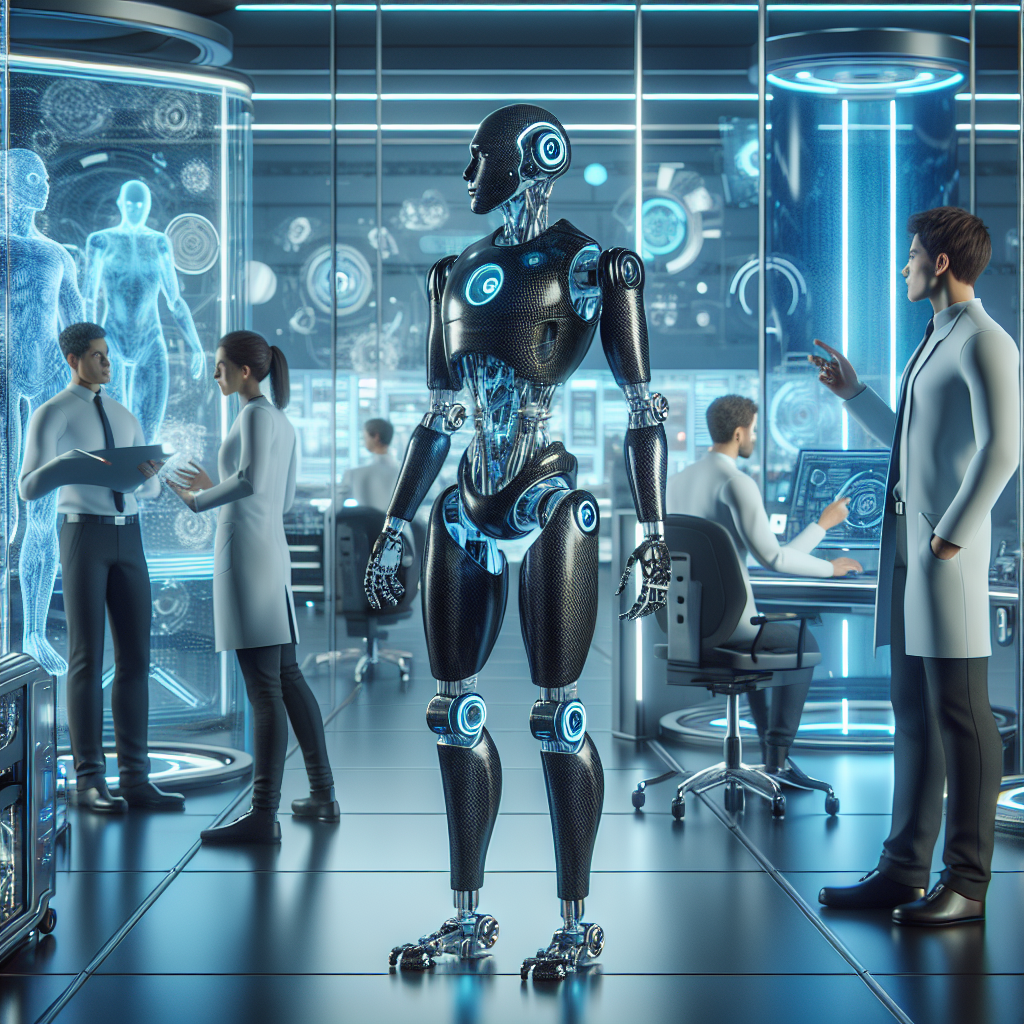
- A sleek humanoid robot walking beside humans in a lab, showcasing its fluid, human-like motion.
- Engineers collaborating with a robot to test advanced AI algorithms for adaptive learning.
- A humanoid robot demonstrating fine motor skills by assembling intricate machinery components.
These images highlight the versatility and potential of humanoid robotics as they integrate deeper into society.
Conclusion
Humanoid robotics is no longer a distant dream—it is a rapidly advancing field that promises to redefine how humans and machines coexist. From healthcare assistance to industrial automation, these robots are becoming indispensable tools for solving complex problems and enhancing productivity.
As innovation continues, the future of humanoid robotics holds exciting possibilities, including greater human-like adaptability and broader applications across industries. At HumanoidHub.ai, we aim to keep you informed about these advancements, empowering both enthusiasts and professionals to navigate this transformative era.
Related Topics
- Tesla Optimus
- AI-powered motion control
- Bipedal locomotion technology