The most honest thing in humanoid robotics this month wasn't said in a press release. It was visible in the background of a tour video.
Quick answer
The "janitor gap" is the gap between humanoid robots that can run narrow, structured tasks for long stretches and humanoid robots that can handle messy, general-purpose work in normal human spaces. Figure's 24/7 robot operations at headquarters show real progress in hardware scale and autonomous routines. The human janitors visible in the same environment show the field's remaining software problem: generalization. For buyers, the 2026 takeaway is simple: procure for narrow, repetitive, structured workflows, not open-ended office or home help.
Key takeaways
- Figure 03 is running autonomous tasks 24/7 inside Figure's San Jose headquarters. Same building, human janitors are still cleaning the floors.
- This isn't a contradiction. It's the actual state of the field. Humanoid hardware has crossed the manufacturing scale threshold. Humanoid software has not crossed the general-purpose threshold.
- Buyers should treat 2026 as the year of "narrow autonomy at scale." A robot that loads a tote into a conveyor for eight hours is closer than a robot that empties a trash can in an unfamiliar office.
What Actually Happened
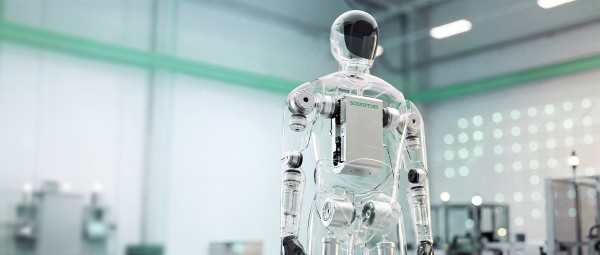
In late April 2026, Figure CEO Brett Adcock gave the publication Sourcery the first full public tour of Figure's headquarters: the BotQ manufacturing floor, the Helix AI team, the system integration lab, and the home-environment testing room where a Figure 03 tidies a living room without teleoperation. Figure has roughly 500 employees and several hundred robots on campus at any given time. Adcock stated his explicit goal for the building: more humanoid robots than humans walking around.
Inside the same building, human janitors clean. That's the observation Humanoids Daily flagged this week: Figure runs autonomous robots performing demonstrations of "useful work" 24/7, while the unstructured cleaning of an office, from wiping a coffee spill to navigating around a chair pulled out at an unusual angle, is still being done by people.
This is not a knock on Figure. It is the cleanest summary of where the entire humanoid industry actually is.
The Gap That Matters
Two things are simultaneously true in May 2026:
Hardware has scaled. Figure has built 350+ Figure 03 units and ramped BotQ production to one robot per hour. Apptronik Apollo is in named programs with Mercedes-Benz and GXO Logistics. Agility Robotics' Robofab capacity has been discussed publicly at 10,000 units annually. Tesla and Boston Dynamics are also under pressure to translate humanoid programs into industrial-scale deployments. Five years ago, none of this existed at any meaningful scale.
Software has not scaled with the hardware. The same robots demoed running 24/7 cannot reliably handle the long tail of unstructured environments where humans actually work. Figure has framed extended runtime as the way to encounter the failure modes that only emerge at thousands of cumulative operating hours. A robot that runs a structured loop in a controlled space is a different machine, computationally, from one that adapts to a mop bucket left in a hallway.
This is not unique to Figure. It is the field. A Bloomberg piece this week framed humanoids as the next phase of the AI hype cycle and emphasized how difficult it remains to turn impressive machines into useful workers. The dexterity gap is real. But the deeper gap is generalization: the ability to do a useful task in a place the robot has never seen, without reprogramming, retraining, or a human in the loop.
Why This Matters for Buyers
Three signals to take from the janitor gap:
- 2026 deployments will be narrow, repetitive, and structured. Tote handling, parts moving, kitting, basic palletization: these are tasks where the environment can be controlled around the robot. Anything resembling "general help" is still pilot-stage. If a vendor pitch positions a robot as a flexible generalist, ask for the structured-task substitute they actually deploy today.
- The right metric to ask for is cumulative hours in a customer environment, not demo-reel capability. BMW says Figure 02 assisted in production for roughly 1,250 operating hours and moved more than 90,000 components at Plant Spartanburg. That's a more useful procurement signal than any 30-second demo of a new task. Demand it.
- Budget for the integration and supervision layer, not just the unit cost. A robot at $50K that needs an engineer babysitting it for the first six months can have a much higher real deployment cost once supervision, safety work, training, and integration are included. The economics of humanoid deployment in 2026 are still about the system around the robot, not the robot in isolation.
If you're trying to figure out which of these robots is closest to a real procurement timeline, HumanoidHub's comparison tool shows availability, payload, and runtime side by side. The full catalog covers every manufacturer in this article. For procurement-stage conversations, start an inquiry.
What We're NOT Concluding
- This isn't a prediction that humanoids won't get there. The janitor gap exists today. It existed for self-driving cars in 2015. It does not exist forever. The question is the slope of the curve, not the destination.
- Figure isn't doing anything wrong. Running fleets continuously in a controlled environment is exactly how you collect the data needed to close the gap. The contradiction with the human janitors isn't a marketing failure. It's an honest snapshot of an industry mid-transition.
FAQ
What is the "janitor gap" exactly? The janitor gap is the observable gap between humanoid robots performing structured demonstrations of useful work 24/7 and the same robots not yet handling the unstructured, dynamic environment of a typical office or home that human cleaners navigate without formal setup. It is a useful shorthand for the broader gap between humanoid hardware readiness and humanoid software generalization.
Are any humanoid robots actually doing general-purpose work in 2026? No. Public deployments are still narrow and structured. Examples include Figure 02 at BMW, Digit in logistics-oriented programs, and Apollo in manufacturing and warehouse pilots. Home and office "general help" remains demo-stage.
What should procurement teams ask vendors right now? Ask for cumulative hours in a customer environment, failure rate on the specific task being pitched, integration timeline, engineering hours required, and total cost of ownership including supervision. If a vendor can't answer those directly, the robot may not be ready for your facility.
Is this a Figure-specific problem? No. Figure is named because its HQ tour made the gap visible. Every humanoid manufacturer is wrestling with the same gap right now, with different framing around it.
When does the janitor gap close? Limited home and office tasks may improve over the next few years, but genuinely general-purpose work remains a harder problem. Procurement teams should bet on slower timelines and validate capability against specific tasks, not broad promises.
Sources
- Humanoids Daily: Hardware First, Brains Later?
- Sourcery: First-Ever Full Tour of Figure's Humanoid HQ
- Figure: Ramping Figure 03 Production
- Figure 03 product page
- Bloomberg: Humanoid Robots and the AI hype cycle
- Apptronik Apollo
- Apptronik and Mercedes-Benz commercial agreement
- GXO and Apptronik humanoid program
- Agility Robotics
- BMW Group: Humanoid robot in Leipzig