Basics of Robotics
You will learn what defines a robot, how different robot types are classified, and how they are used in industrial environments. The course covers robot kinematics, motion strategies (PTP, CP, CIRC), drive systems, end effectors, and measurement technologies. Special focus is placed on human-robot collaboration, progra

Before you start
- Basic Python familiarity
- Comfort with algebra or calculus basics
- Interest in robotics systems
About this guide
You will learn what defines a robot, how different robot types are classified, and how they are used in industrial environments. The course covers robot kinematics, motion strategies (PTP, CP, CIRC), drive systems, end effectors, and measurement technologies. Special focus is placed on human-robot collaboration, programming principles, and practical safety in accordance with international standards such as the EU Machinery Directive and ISO 10218. Each module includes real-world examples, [...]
Common questions
What will I learn in Basics of Robotics?
You will learn what defines a robot, how different robot types are classified, and how they are used in industrial environments. The course covers robot kinematics, motion strategies (PTP, CP, CIRC), drive systems, end effectors, and measurement technologies. Special focus is pla
Is Basics of Robotics free?
HumanoidHub has not verified public pricing for this guide. Open Coursera for the current access terms before enrolling.
Do I need any prerequisites?
Recommended prep: Basic Python familiarity; Comfort with algebra or calculus basics; Interest in robotics systems.
How long does it take?
Self-paced (provider defined). Most learners complete this guide in self-directed sessions over a few weeks.
Does it offer a certificate?
This guide does not include a formal certificate. Focus is on the learning material itself.
Related guides

ROS For Beginners (ROS Noetic, Melodic, Kinetic)
Last updated 11/2025 ## What you'll learn Master ROS basics Create, build, run, and debug your ROS program Master ROS core functionalities Learn ROS best practices to make your application readable and scalable Create reusable code for any robot powered by ROS Write ROS code with both Python

Industrial Robotics
Image 3Preview this course # Industrial Robotics Mathematical models and practical applications Created byFabrizio Frigeni Last updated 9/2019 English Image 4Preview this course Purchase options Subscribe and save From$13.00/month Access to 28,000+ top-rated courses Cancel anytime
What are Robotics? | Stanford HAI
Robotics is the field that combines engineering and computer science, and now often artificial intelligence, to design and build machines capable of performing physical tasks. When integrated with AI, robots can perceive their surroundings, make decisions, and adapt to new situations without explici

Learn Robotics | AIoT, Sensor Fusion & Embedded Systems
Explore robotics, AIoT, sensor fusion, and embedded systems. Build smart, connected machines that adapt, learn, and drive the future of autonomous technology.
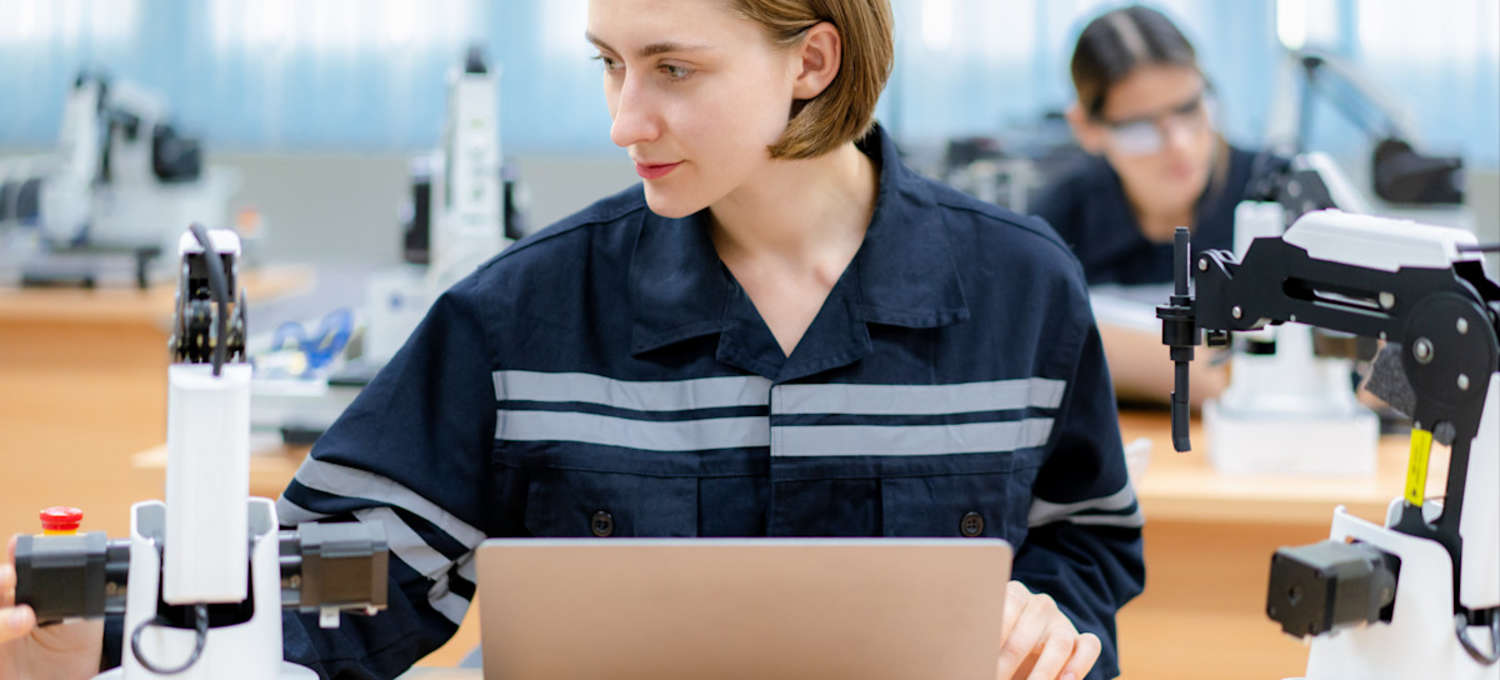
What Is Robotics?
Get a clear answer to the question, “What is robotics?” Then, learn more information about robots and robotics, including how you can turn robotics into a career.
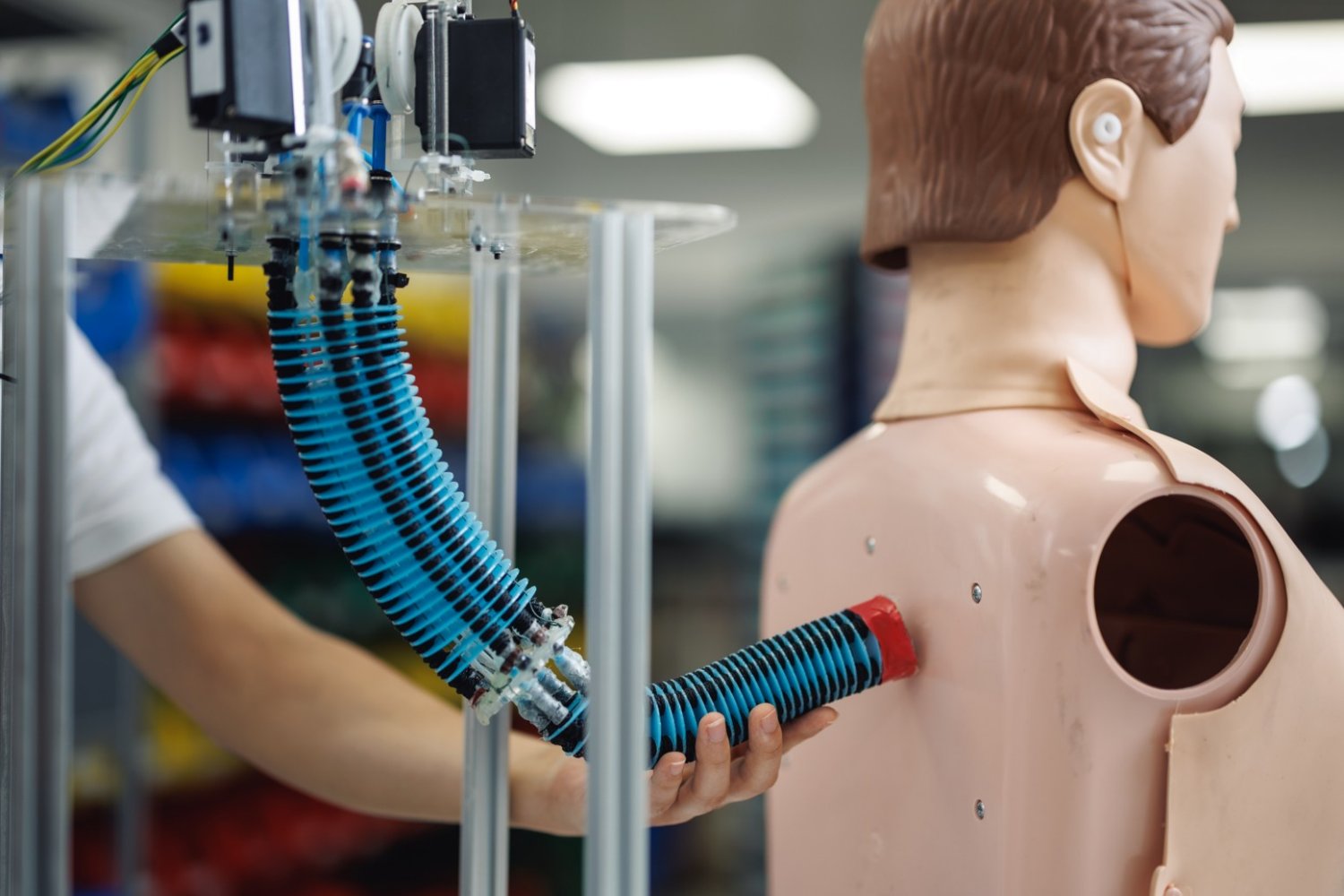
A neural blueprint for human-like intelligence in soft robots
A new AI control system enables soft robotic arms to learn a wide repertoire of motions and tasks once, then adjust to new scenarios on the fly without needing retraining or sacrificing functionality. The work was co-led by researchers at the Singapore-MIT Alliance for Research and Technology (SMART
Robots that use these skills

1X EVE
1X Technologies
1X EVE is a wheeled humanoid robot from 1X Technologies aimed at mobile service work in institutional and industrial settings.
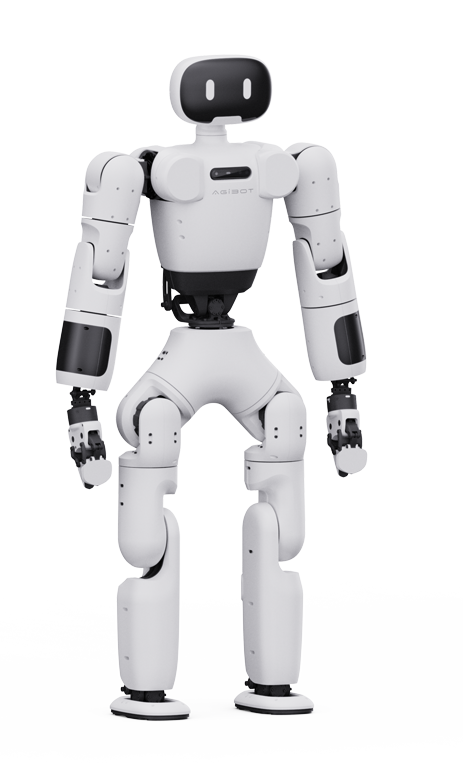
AgiBot X1
AgiBot
AgiBot X1 is a 130 cm, 33 kg open-source humanoid platform with 34 DOF for research and education.

AiNex ROS Education AI Vision Humanoid Robot
Hiwonder
AiNex is a compact ROS-enabled educational humanoid robot from Hiwonder with an HD camera for AI vision experiments.
Refer a learner and get early access to our paid pathways and 1:1 mentorship pilot.
Join referral listNew robots, funding, and signals. Every Thursday.
Unsubscribe anytime.