ROS For Beginners (ROS Noetic, Melodic, Kinetic)
Last updated 11/2025 What you'll learn Master ROS basics Create, build, run, and debug your ROS program Master ROS core functionalities Learn ROS best practices to make your application readable and scalable Create reusable code for any robot powered by ROS Write ROS code with both Python

Before you start
- Basic Python familiarity
- Comfort with algebra or calculus basics
- Interest in robotics systems
About this guide
Last updated 11/2025
What you'll learn
Master ROS basics Create, build, run, and debug your ROS program Master ROS core functionalities Learn ROS best practices to make your application readable and scalable Create reusable code for any robot powered by ROS Write ROS code with both Python and C++ Learn by doing, not just watching
Explore related topics
Robot Operating System (ROS) Robotics Software Engineering Development
Course content
9 sections • 69 lectures • 5h 51m
Common questions
What will I learn in ROS For Beginners (ROS Noetic, Melodic, Kinetic)?
Last updated 11/2025 What you'll learn Master ROS basics Create, build, run, and debug your ROS program Master ROS core functionalities Learn ROS best practices to make your application readable and scalable Create reusable code for any robot powered by ROS Write ROS code with bo
Is ROS For Beginners (ROS Noetic, Melodic, Kinetic) free?
HumanoidHub has not verified public pricing for this guide. Open Udemy for the current access terms before enrolling.
Do I need any prerequisites?
Recommended prep: Basic Python familiarity; Comfort with algebra or calculus basics; Interest in robotics systems.
How long does it take?
1 hours total. Most learners complete this guide in self-directed sessions over a few weeks.
Does it offer a certificate?
This guide does not include a formal certificate. Focus is on the learning material itself.
Related guides

Industrial Robotics
Image 3Preview this course # Industrial Robotics Mathematical models and practical applications Created byFabrizio Frigeni Last updated 9/2019 English Image 4Preview this course Purchase options Subscribe and save From$13.00/month Access to 28,000+ top-rated courses Cancel anytime

Free Robotics Tutorial - Robotics Computer Programming - PTZ Camera Control Course | Udemy
This course reviews computer programming languages used to control the robotic movements of PTZOptics cameras. Students will learn multiple methods of remotely controlling robotic actions with a sample IP connected PTZ camera. This course reviews computer programming languages used to control the ro

Machine Learning | Blog Archives | Page 6 Of 6 | Udacity
Udacity transforms talent and changes lives through digital upskilling. Learn to overcome digital talent gaps with our resources on Machine Learning
What are Robotics? | Stanford HAI
Robotics is the field that combines engineering and computer science, and now often artificial intelligence, to design and build machines capable of performing physical tasks. When integrated with AI, robots can perceive their surroundings, make decisions, and adapt to new situations without explici

Learn Robotics | AIoT, Sensor Fusion & Embedded Systems
Explore robotics, AIoT, sensor fusion, and embedded systems. Build smart, connected machines that adapt, learn, and drive the future of autonomous technology.
ROS 2 for Beginners (ROS Jazzy - 2026)
I have created this course so you can properly learn ROS 2 from the beginning, with no prior knowledge in Robot Operating System, and without having to waste weeks, or even months, trying to find what to do. You can say goodbye to this big learning curve everyone faces when learning ROS 2. The cour
Robots that use these skills

AiNex ROS Education AI Vision Humanoid Robot
Hiwonder
AiNex is a compact ROS-enabled educational humanoid robot from Hiwonder with an HD camera for AI vision experiments.
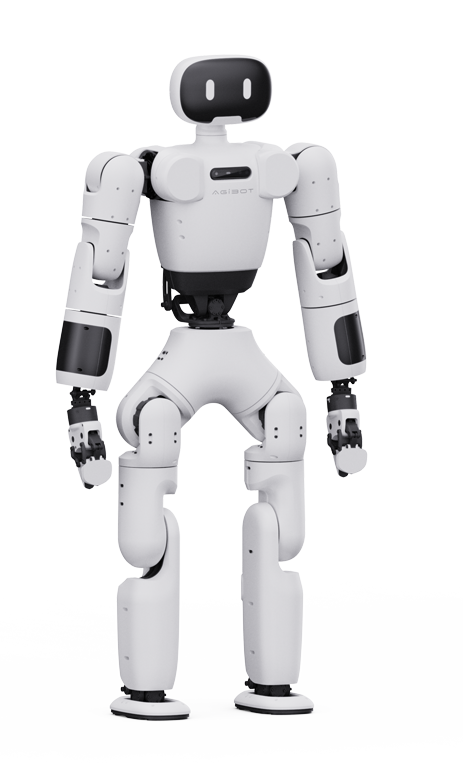
AgiBot X1
AgiBot
AgiBot X1 is a 130 cm, 33 kg open-source humanoid platform with 34 DOF for research and education.

Ami Desktop
Engineered Arts
Ami Desktop is a stationary, desktop-sized expressive robot head from Engineered Arts for HRI and conversational AI research and education.
Refer a learner and get early access to our paid pathways and 1:1 mentorship pilot.
Join referral listNew robots, funding, and signals. Every Thursday.
Unsubscribe anytime.