Learning ROS for Beginners: Basics, Motion, and OpenCV
Become an expert and learn robotics with Robot Operating System (ROS) in little time and don't be lost in broad docs.

Before you start
- Basic Python familiarity
- Comfort with algebra or calculus basics
- Interest in robotics systems
About this guide
Become an expert and learn robotics with Robot Operating System (ROS) in little time and don't be lost in broad docs.
Common questions
What will I learn in Learning ROS for Beginners: Basics, Motion, and OpenCV?
Become an expert and learn robotics with Robot Operating System (ROS) in little time and don't be lost in broad docs.
Is Learning ROS for Beginners: Basics, Motion, and OpenCV free?
HumanoidHub has not verified public pricing for this guide. Open Udemy for the current access terms before enrolling.
Do I need any prerequisites?
Recommended prep: Basic Python familiarity; Comfort with algebra or calculus basics; Interest in robotics systems.
How long does it take?
Self-paced (provider defined). Most learners complete this guide in self-directed sessions over a few weeks.
Does it offer a certificate?
This guide does not include a formal certificate. Focus is on the learning material itself.
Related guides
Advancing Continual Learning for Robotics Applications
With engaging videos, interactive presentations, detailed notes, hands-on tutorials, and quizzes after every section to evaluate the learned concepts, this course is designed to help you master the topic and their real-world applications. Whether you’re new to CL or looking to expand your knowledge
Robotics: Fundamentals and Kinematic Modeling (Part 1) - Udemy
By integrating theory with practical applications, this course equips learners with the essential skills to model robotic manipulators mathematically, understand their kinematic behavior, and prepare for more advanced topics such as robot dynamics, control, and motion planning. It is ideal for engin

[PDF] An accessible, hands-on tutorial system for image-guided therapy ...
potential cases of breast or prostate cancer) on a phantom created out of standard LEGO pieces. In this way, tutorial participants work with both hardware and software while being exposed to all of the typical steps of an IGT or medical robotics procedure, including imaging, preoperative planning, t

Industrial Robotics
Image 3Preview this course # Industrial Robotics Mathematical models and practical applications Created byFabrizio Frigeni Last updated 9/2019 English Image 4Preview this course Purchase options Subscribe and save From$13.00/month Access to 28,000+ top-rated courses Cancel anytime
Programming and ZR IDE Tutorials
| For Loops | Learn to use a for loop to repeat an action a set number of times–in this case, to find the position of the second satellite and program your satellite to move toward the second satellite, but stop halfway | | Hints About SPHERES Loop Dynamics | See the effect of motion on your satel
Tutorials
| | | | --- | More SPHERES Controls | setAttitudeTarget, Revisited | Write code to control the SPHERE's direction | | Hints about SPHERES Loop Dynamics | Get a better understanding of SPHERES dynamics and Newton's first law. | | setVelocityTarget | Use setVelocityTarget for efficiency | | Force
Robots that use these skills
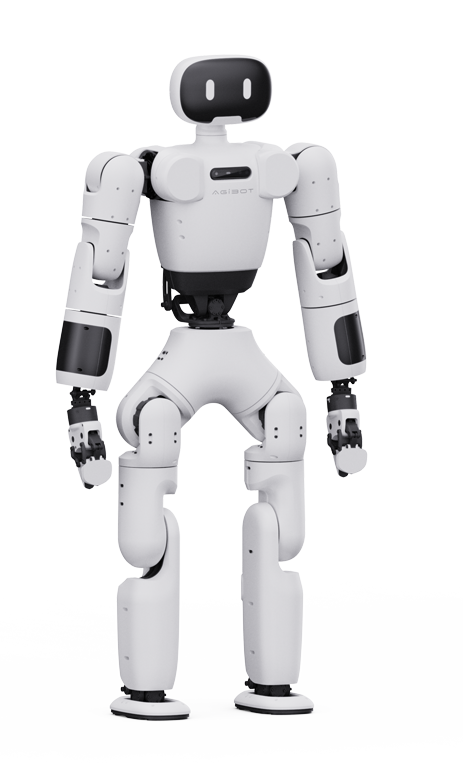
AgiBot X1
AgiBot
AgiBot X1 is a 130 cm, 33 kg open-source humanoid platform with 34 DOF for research and education.

Ami Desktop
Engineered Arts
Ami Desktop is a stationary, desktop-sized expressive robot head from Engineered Arts for HRI and conversational AI research and education.

ARI
PAL Robotics
ARI is a human-size wheeled service robot from PAL Robotics for human–robot interaction in public spaces and labs.
Refer a learner and get early access to our paid pathways and 1:1 mentorship pilot.
Join referral listNew robots, funding, and signals. Every Thursday.
Unsubscribe anytime.