Modern Robotics, Course 1: Foundations of Robot Motion
learn about configuration space (C-space), degrees of freedom, C-space topology, implicit and explicit representations of configurations, and holonomic and nonholonomic constraints. You will also learn how to represent spatial velocities and forces as twists and wrenches. This material is at the core of the study of an

Before you start
- Basic Python familiarity
- Comfort with algebra or calculus basics
- Interest in robotics systems
About this guide
learn about configuration space (C-space), degrees of freedom, C-space topology, implicit and explicit representations of configurations, and holonomic and nonholonomic constraints. You will also learn how to represent spatial velocities and forces as twists and wrenches. This material is at the core of the study of anything that moves (e.g., robots). This course follows the textbook "Modern Robotics: Mechanics, Planning, and Control" (Lynch and Park, Cambridge University Press 2017). You can [.
Common questions
What will I learn in Modern Robotics, Course 1: Foundations of Robot Motion?
learn about configuration space (C-space), degrees of freedom, C-space topology, implicit and explicit representations of configurations, and holonomic and nonholonomic constraints. You will also learn how to represent spatial velocities and forces as twists and wrenches. This ma
Is Modern Robotics, Course 1: Foundations of Robot Motion free?
HumanoidHub has not verified public pricing for this guide. Open Coursera for the current access terms before enrolling.
Do I need any prerequisites?
Recommended prep: Basic Python familiarity; Comfort with algebra or calculus basics; Interest in robotics systems.
How long does it take?
1 hours total. Most learners complete this guide in self-directed sessions over a few weeks.
Does it offer a certificate?
This guide does not include a formal certificate. Focus is on the learning material itself.
Related guides

Advancing Continual Learning for Robotics Applications
With engaging videos, interactive presentations, detailed notes, hands-on tutorials, and quizzes after every section to evaluate the learned concepts, this course is designed to help you master the topic and their real-world applications. Whether you’re new to CL or looking to expand your knowledge
Robotics: Fundamentals and Kinematic Modeling (Part 1) - Udemy
By integrating theory with practical applications, this course equips learners with the essential skills to model robotic manipulators mathematically, understand their kinematic behavior, and prepare for more advanced topics such as robot dynamics, control, and motion planning. It is ideal for engin

Expanding on Tutorials | MIT Learn
<p>Kyle Keane talks about the logistics and purpose of expanding on tutorials, and how this is related to creating, inventing, and learning.

Industrial Robotics
Image 3Preview this course # Industrial Robotics Mathematical models and practical applications Created byFabrizio Frigeni Last updated 9/2019 English Image 4Preview this course Purchase options Subscribe and save From$13.00/month Access to 28,000+ top-rated courses Cancel anytime
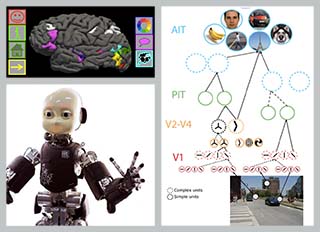
Large-Scale Incremental Learning for Robotics | Brains, Minds and Machines Summer Course | Brain and Cognitive Sciences
This resource contains information regarding brains, minds and machines summer course: Lec8-6.
Lecture 8.4: Stefanie Tellex - Human-Robot Collaboration | Brains, Minds and Machines Summer Course | Brain and Cognitive Sciences
MIT OpenCourseWare is a web based publication of virtually all MIT course content. OCW is open and available to the world and is a permanent MIT activity
Robots that use these skills
.jpg)
Hubo (KHR-2 based platform)
HUBO
HUBO (KHR-2 based) is a full-size biped humanoid research platform developed at KAIST. It is reported at 41 DOF, ~125 cm tall, and ~55 kg.
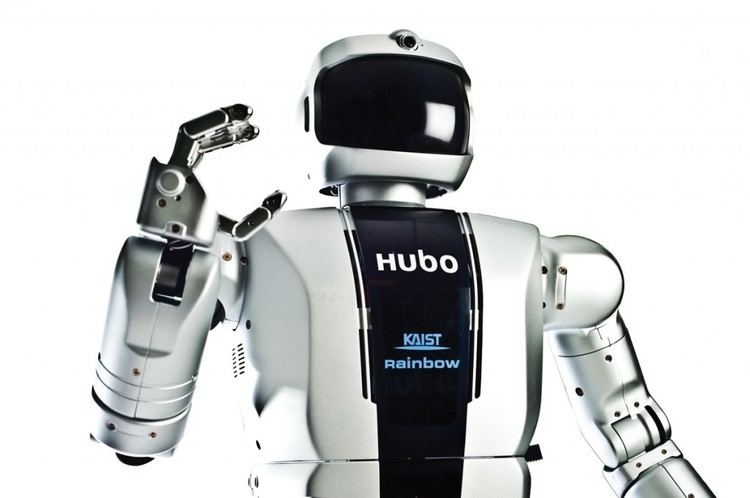
Hubo 2
HUBO
HUBO 2 is a KAIST Hubo Lab humanoid research robot focused on bipedal locomotion for walking and stair traversal studies.
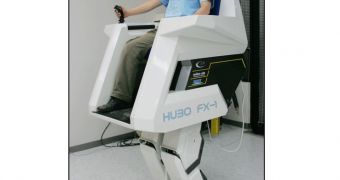
Hubo FX-1
HUBO
HUBO FX-1 is an early HUBO humanoid robot platform from KAIST used for biped locomotion and human-carrying mobility research.
Refer a learner and get early access to our paid pathways and 1:1 mentorship pilot.
Join referral listNew robots, funding, and signals. Every Thursday.
Unsubscribe anytime.