AGIBOT rolls out 10,000th humanoid robot
However, U.S. lawmakers have proposed prohibiting federal purchase or use of certain Chinese-made robots with the American Security Robotics Act. The senators and representative sponsoring the legislation expressed concern about cybersecurity vulnerabilities.
Key takeaways
- The most recent coverage shows the humanoid‑robot sector moving quickly toward large‑scale commercialisation.
- In China, the Ministry of Industry and Information Technology rolled out its first national “Humanoid Robot and Embodied Intelligence Standard System (2026 Edition)” in late February, establishing six pillar standards that cover everything from neuromorphic computing to safety and ethics; the new rulebook is expected to streamline certification and accelerate market adoption.
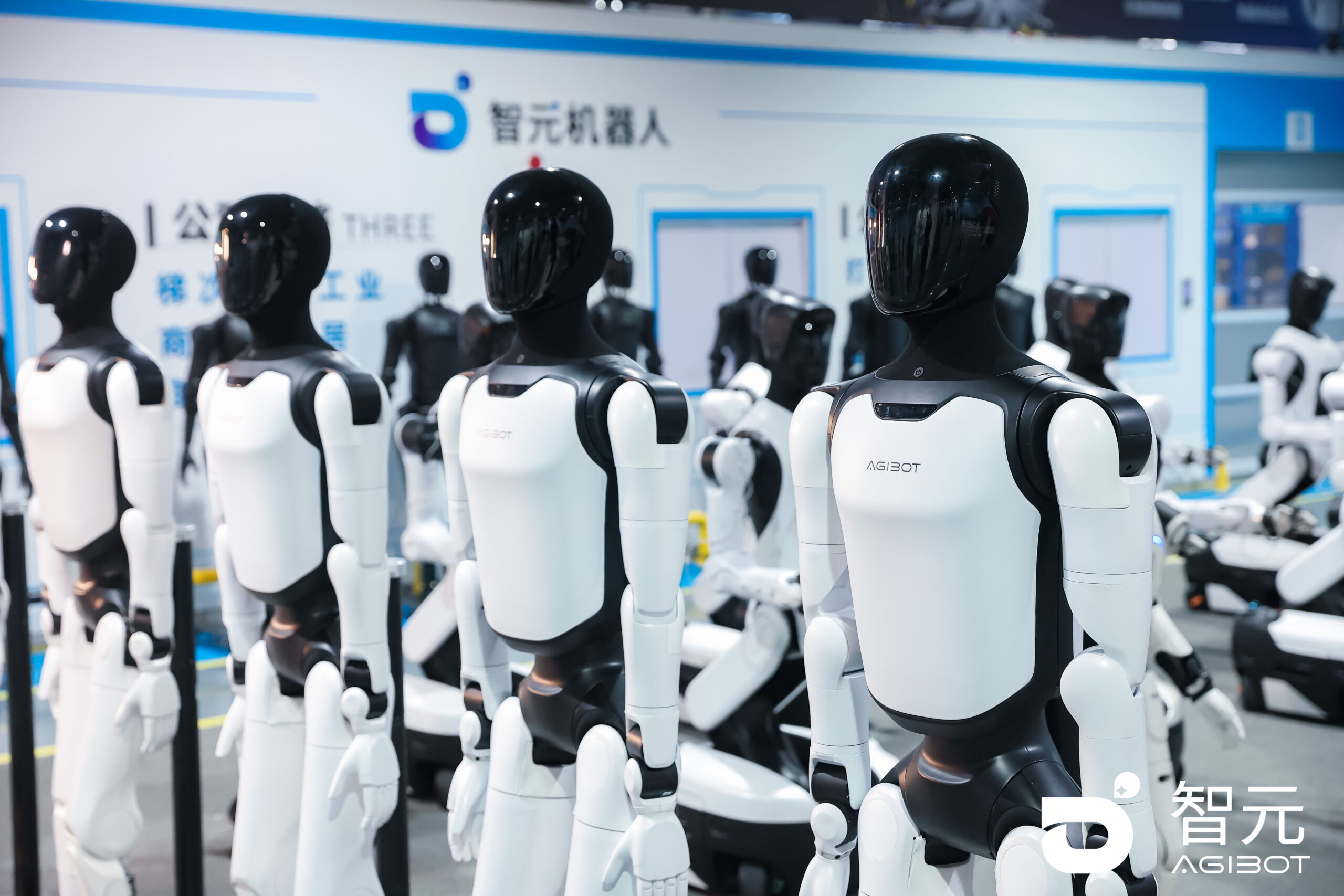
- At the same time, Shanghai‑based Agibot announced on 30 March that it has produced its 10,000th humanoid unit, a milestone reached after tripling output in just three months, while rival UBTech is targeting 5,000 units in 2026 and 10,000 in 2027.
- Prices are falling sharply as well: Unitree Robotics reported that its average humanoid price dropped from about $85,000 in 2023 to roughly $25,000 in 2025, and broader market data now show a tiered price range from $16,000 for basic platforms up to $250,000 for advanced industrial models.
- Major manufacturers are also testing deployment in real‑world settings—BMW began piloting Hexagon’s wheeled humanoid at its Leipzig plant, and Amazon disclosed an acquisition of Fauna Robotics, a New York‑based developer of the Sprout research platform, signaling interest in personal‑robot applications.
Buyer next steps
Compare source-backed options on HumanoidHub
Use HumanoidHub catalog records and buyer guides to verify robot availability, source links, and shortlist fit before contacting manufacturers.
However, U.S. lawmakers have proposed prohibiting federal purchase or use of certain Chinese-made robots with the American Security Robotics Act. The senators and representative sponsoring the legislation expressed concern about cybersecurity vulnerabilities.
AGIBOT said it is continuing to refine system performance, reliability, and application capabilities. In January 2026, it launched the Genie Sim 3.0 robot simulation platform and was recognized with “Best of CES” awards. The company is also conducting the AGIBOT World Challenge at ICRA 2026 in Vienna in June.
Tell Us What You Think! Cancel reply
This site uses Akismet to reduce spam. Learn how your comment data is processed.
Humanoid completes live HMND PoC with SAP and Martur Fompak “Reaching 10,000 units is not simply about producing more robots; it reflects a fundamental shift in our ability to scale,” stated Peng Zhihui, chief technology officer of AGIBOT. “As our supply chain matures and manufacturing standardizes, we are seeing a pivot from small-scale, niche applications to robust, large-scale commercial demand. The widespread deployment of AGIBOT’s robots is no longer about seeking technical viability, but about delivering scalable value and driving the adoption of embodied AI.” The company said that a “significant portion” of its humanoids are operating in real-world environments in sectors such as logistics, retail, hospitality, and education. It also claimed that its robots have begun entering industrial workflows.
Partnerships help AGIBOT robots scale globally
AGIBOT also noted that deployments of its humanoids are growing beyond the Chinese market, from Europe and North America to Japan, South Korea, Southeast Asia, and the Middle East. The company last month launched its full robot portfolio with Minth Group in Germany, and it recently signed its first operator agreement with Singtel Enterprise in Singapore.
New robots, funding, and signals. Every Thursday.
Unsubscribe anytime.
Mentioned in this article