Gartner predicts fewer than 20 companies will deploy humanoids at scale by 2028
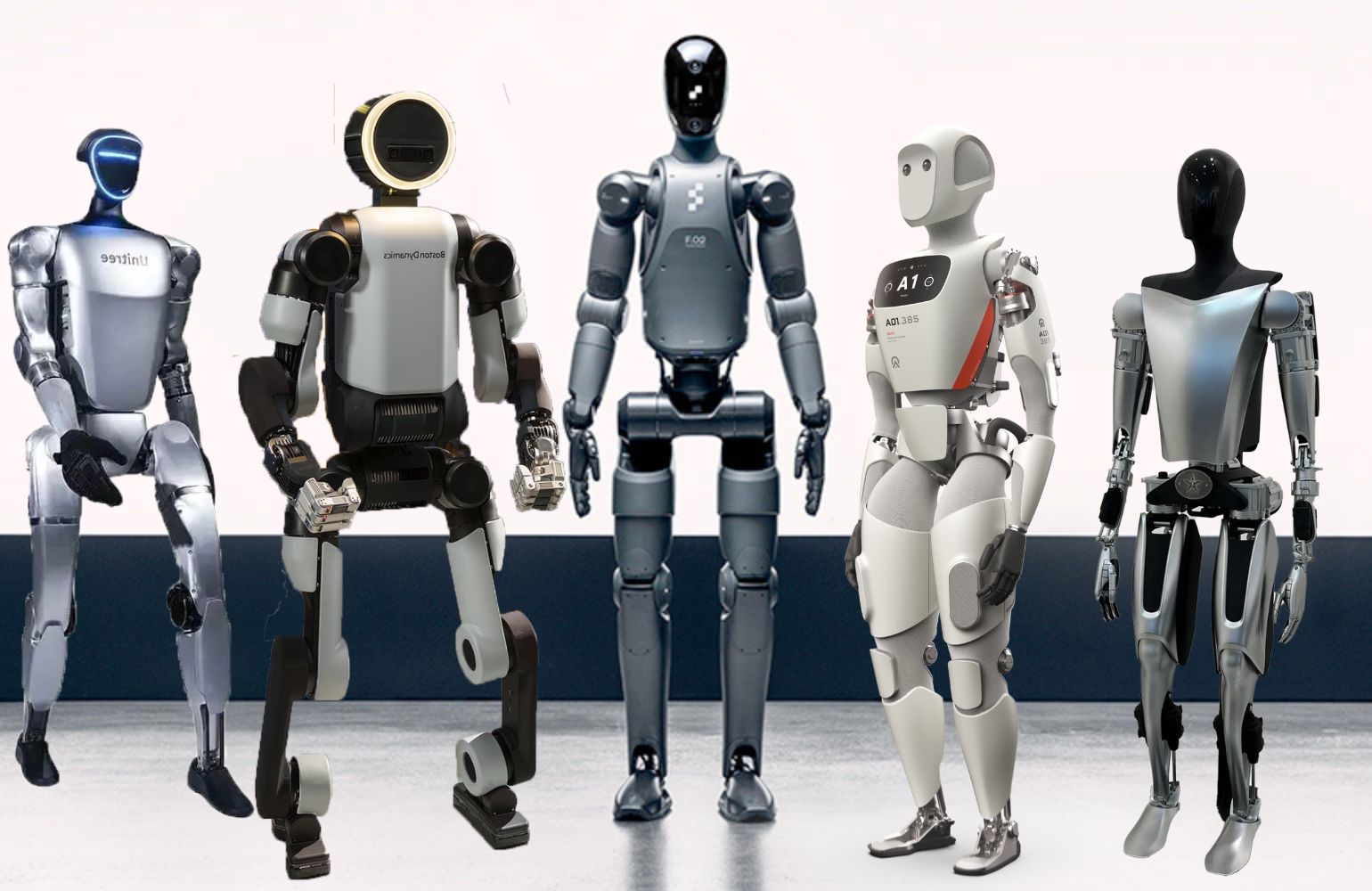
The Robot Report # Gartner predicts fewer than 20 companies will deploy humanoids at scale by 2028 By The Robot Report Staff | From left to right: Unitree’s G1, Boston Dynamics’ Atlas, Figure AI’s Figure 02, Apptronik’s Apollo, and Tesla’s Optimus robot.
Key takeaways
- The most recent coverage shows that humanoid robots are moving from prototype hype toward modest commercial roll‑out, but significant technical and economic hurdles remain.
- A McKinsey report cited in January 2026 notes that public demos still fall short of delivering reliable, cost‑effective performance, citing safety, limited battery life, dexterity and price as key barriers, and warns that even if Tesla reaches its goal of a million Optimus units by the end of 2027, the robots must prove they can work alongside humans for less than a human wage.
- Meanwhile, global installations of humanoid robots hit 16,000 units in 2025, with Chinese firms leading the market: Shanghai‑based AgiBot topped the list with over 5,000 units and a 31 % share, Unitree held 27 % and is pushing lower‑cost platforms, while UBTech, Leju and Tesla each hold roughly 5 % of installations.
- New business models such as robot‑as‑a‑service are gaining traction, especially for entertainment and retail deployments.
- At CES 2026, the British startup Humanoid displayed its HMND 01 biped, reporting about 25,000 pre‑orders and pilot programs with six Fortune 500 firms, while Boston Dynamics demonstrated its Atlas robot operating on Hyundai’s Georgia plant, underscoring a “sea change” in how the industry talks about physical AI.
Buyer next steps
Compare source-backed options on HumanoidHub
Use HumanoidHub catalog records and buyer guides to verify robot availability, source links, and shortlist fit before contacting manufacturers.
The Robot Report
Gartner predicts fewer than 20 companies will deploy humanoids at scale by 2028
By The Robot Report Staff |
From left to right: Unitree’s G1, Boston Dynamics’ Atlas, Figure AI’s Figure 02, Apptronik’s Apollo, and Tesla’s Optimus robot. | Source: Unitree, Boston Dynamics, Figure, Apptronik, and Tesla
In recent years, humanoid robots have dominated headlines, and the companies developing them have raised hundreds of millions of dollars to get them working in the real world. Despite these efforts, actual humanoid deployments are few and far between, noted Gartner Inc. Home
News
Technologies
- Batteries / Power Supplies
- Cameras / Imaging / Vision
- Controllers
- End Effectors
- Microprocessors / SoCs
- Motion Control
- Sensors
- Soft Robotics
- Software / Simulation
Development
- Artificial Intelligence
- Human Robot Interaction / Haptics
- Mobility / Navigation
- Research
Robots
- AGVs
- AMRs
- Consumer
- Collaborative Robots
- Drones
- Humanoids
- Industrial
- Self-Driving Vehicles
- Unmanned Maritime Systems
Business
- Financial
- Investments
- Mergers & Acquisitions
- Earnings
- Markets
- Agriculture
- Healthcare
- Logistics
- Manufacturing
- Mining
- Security
- RBR50
- RBR50 Winners 2025
- RBR50 Winners 2024
- RBR50 Winners 2023 “The promise of humanoid robots is compelling, but the reality is that the technology remains immature and far from meeting expectations for versatility and cost-effectiveness,” said Abdil Tunca, senior principal analyst in Gartner’s Supply Chain practice. “CSCOs [chief supply chain officers] must carefully evaluate readiness and avoid overcommitting resources to solutions that cannot yet deliver on their potential.”
Robots designed to mimic the human body in shape, function, and locomotion are attracting attention from CSCOs seeking solutions to workforce challenges and rising labor costs. These humanoids feature AI-enabled systems, advanced sensors, and machine learning algorithms intended to dynamically adapt to multiple tasks.
Barriers persist for humanoid progress
New robots, funding, and signals. Every Thursday.
Unsubscribe anytime.
Mentioned in this article