Shares in humanoid robot firm Unitree surge 600% on ...
The Chinese company’s robots have gained global fame via viral videos of them performing martial arts, running at Olympic speeds and serving as backup dancers for pop stars.
Key takeaways
- Unitree Robotics continues to dominate headlines with its latest “Superman” humanoid, which can leap 2 metres vertically and run at 12.66 m/s—surpassing both the standing‑high‑jump and sprint records of human athletes despite having legs only 0.85 m long.
- The robot, developed in just over three months, is the company’s third major performance breakthrough this year, following the H1 model that previously hit a 10 m/s running speed.
- On the same week that the robot was unveiled, Unitree’s Shanghai IPO surged more than 460 % above the offering price, propelling the firm into a landmark market debut and underscoring investor enthusiasm for China’s burgeoning humanoid sector, which analysts expect to ship 50,000 units in 2026, up from 12,000 in 2025.
- Despite the rapid hardware advances, founder Wang Xingxing cautioned that a “ChatGPT moment” for humanoid robots—where they can generalise across tasks and execute precise movements—may still be a decade away.
- In parallel, U.S. startup Foundation is promoting its Phantom humanoid for border‑security patrols, claiming the robot can navigate rugged terrain and flag potential crossings, although the Department of Homeland Security says no formal contracts are in place.
Buyer next steps
Compare source-backed options on HumanoidHub
Use HumanoidHub catalog records and buyer guides to verify robot availability, source links, and shortlist fit before contacting manufacturers.
The Chinese company’s robots have gained global fame via viral videos of them performing martial arts, running at Olympic speeds and serving as backup dancers for pop stars.
Two Unitree robots in a fighting demonstration at the World Robot Conference in Beijing on Wednesday. Photograph: Adek Berry/AFP/Getty Images
Shares in the business, officially known as Yushu Technology Co, rose to as high as 1,100 yuan (£120.39) on Wednesday, up from an IPO price of just 150.8 yuan. Its gains were later pared back to a rise of nearly 500%.
Investors are searching for winners in robotics development, which has emerged as one of the key battlegrounds in the AI race.
Unitree, which was founded in 2016, shipped more than 5,500 humanoid robots last year. The market for human-like robots is expected to grow rapidly, with analysts projecting that sales could rise from around $2bn (£1.5bn) in 2025 to $300bn by 2035.
There was exceptional demand from Chinese retail investors in Unitree’s IPO, with the tranche of shares dedicated to non-professional stockpickers oversubscribed by thousands.
Unitree is one of the few listed humanoid robot makers in the world. Its biggest competitor, AgiBot, is private and its smaller rival UBTech is listed in Hong Kong.
However at least half a dozen other Chinese humanoid robotic businesses are preparing to go public, including Deep Robotics and Leju Robotics. Skip to navigation
Print subscriptions
Search jobs
Sign in
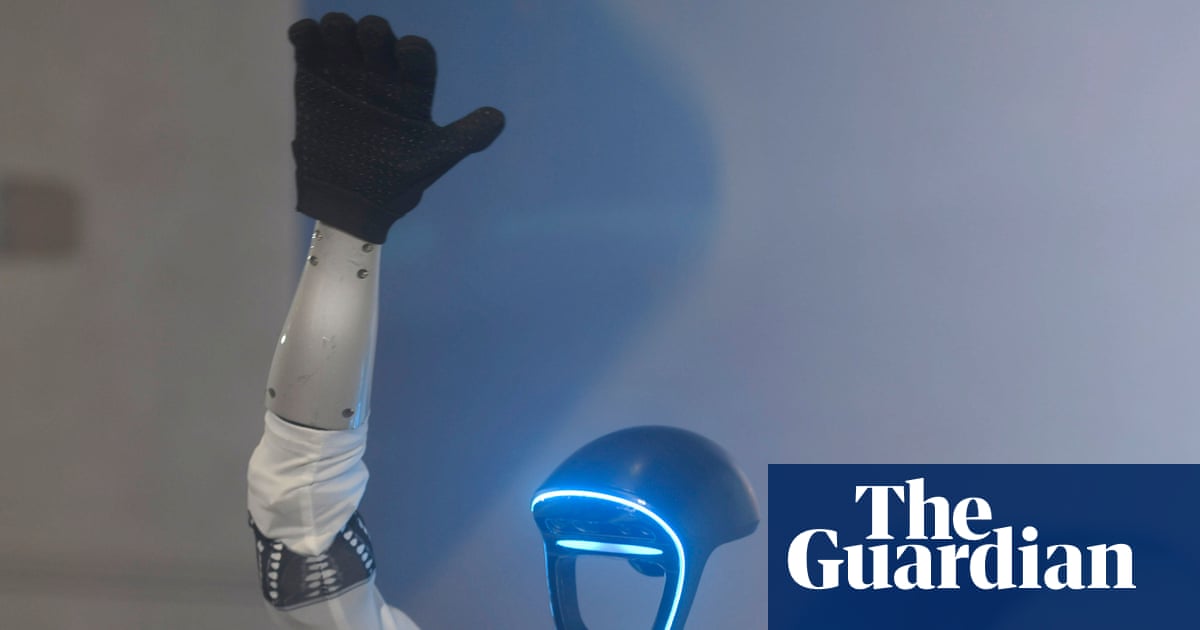
A Unitree G1 humanoid robot. Analysts project sales of humanoid robots could rise from $2bn in 2025 to $300bn in 2035. Photograph: VCG/Getty Images
A Unitree G1 humanoid robot. Analysts project sales of humanoid robots could rise from $2bn in 2025 to $300bn in 2035. Photograph: VCG/Getty Images
Shares in humanoid robot firm Unitree surge 600% on Chinese stock market debut
Company’s robots have gained global fame via videos of them performing martial arts and as dancers for pop stars
Unitree, the world’s biggest humanoid robot maker, has made a spectacular entry on to China’s stock market, with its shares surging by more than 600%.
New robots, funding, and signals. Every Thursday.
Unsubscribe anytime.
Mentioned in this article