Humanoid robotics technology is shifting from impressive demos toward early industrial pilots—but the gap between a staged capability and a repeatable production process is still where most risk sits. In February 2026, BMW Group announced it will deploy humanoid robots in production in Germany for the first time, starting with a pilot at Plant Leipzig and a new “Center of Competence for Physical AI in Production.” (Source: BMW press release)
This post is an operator-facing brief: what happened, what matters technically and commercially, what’s not yet disclosed, and how to pressure-test a humanoid “deployment” claim.
Quick answer
BMW Group says it will pilot humanoid robots in production at its Leipzig plant in Germany and has created a “Center of Competence for Physical AI in Production” to accelerate AI/robotics integration across manufacturing. That matters for humanoid robotics because BMW is signaling intent to evaluate humanoids for real shop-floor tasks—not just R&D—while also highlighting the practical reality: pilots depend on safety cases, task selection, uptime, and integration details that are often not public. The announcement is a meaningful validation signal, but it is not yet evidence of scaled, economically stable humanoid operations.
What happened (and what’s confirmed)
From BMW’s own announcement (dated 27.02.2026), the confirmable points are:
- BMW plans a first German production deployment of humanoid robots via a pilot at BMW Group Plant Leipzig. (Source: BMW press release)
- BMW says it is bringing “Physical AI” to Europe and establishing a “Center of Competence for Physical AI in Production” to speed integration of AI and robotics in production. (Source: BMW press release)
- BMW states a first pilot deployment was successfully completed at Plant Spartanburg (USA). (Source: BMW press release)
What BMW’s press release excerpt (as provided) does not clearly specify—and therefore we cannot assume:
- Which humanoid robot model/vendor BMW is using.
- How many units were used in Spartanburg or will be used in Leipzig.
- The exact tasks (e.g., kitting, bin picking, torque operations, inspection, material handling).
- Whether the robots operated autonomously vs. teleoperated, or the share of each.
- Safety certification approach, cell design, and the human-robot interaction model.
- Any ROI claim (cost per hour, uptime, MTBF/MTTR, or productivity deltas).
Context: what “humanoid robotics technology” actually implies
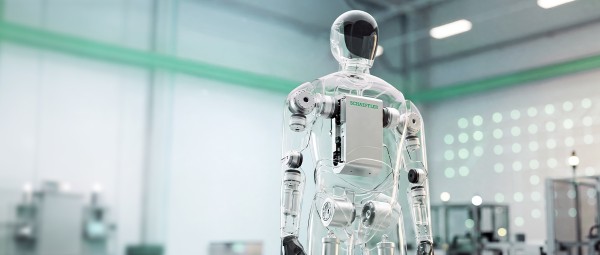
A “humanoid robot” generally refers to a robot with a human-like body plan (typically torso, head, two arms, and two legs), designed to operate in environments built for humans. That form factor is often justified by compatibility with existing tools, aisles, stairs, ladders, and human workstations. (Source: Wikipedia—Humanoid robot; also see KUKA overview)
In 2026, the practical technology stack that determines whether a humanoid can do real work usually comes down to:
- Actuation and transmission (torque density, backdrivability, efficiency, thermal limits). Component suppliers emphasize actuators as a major cost and performance driver—Schaeffler highlights actuators as a large portion of the bill of materials in many humanoids. (Source: Schaeffler humanoid robots page)
- Perception + manipulation (robust 3D perception, force control, grasp planning, tool use).
- Whole-body control (balance, disturbance rejection, fall management, constrained motion).
- System reliability (upline/downline recovery, safe-stop behavior, and service workflows).
- Data engine (how the robot learns tasks: scripted, imitation, reinforcement, teleop data, etc.).
BMW’s “Physical AI” language is directionally consistent with an industry push to fuse learned policies with classical controls and industrial integration—but the press release alone does not tell us what architecture or training approach they are using.
Why this matters (operators, buyers, and investors)
1) A Tier-1 manufacturer is treating humanoids like a production engineering problem
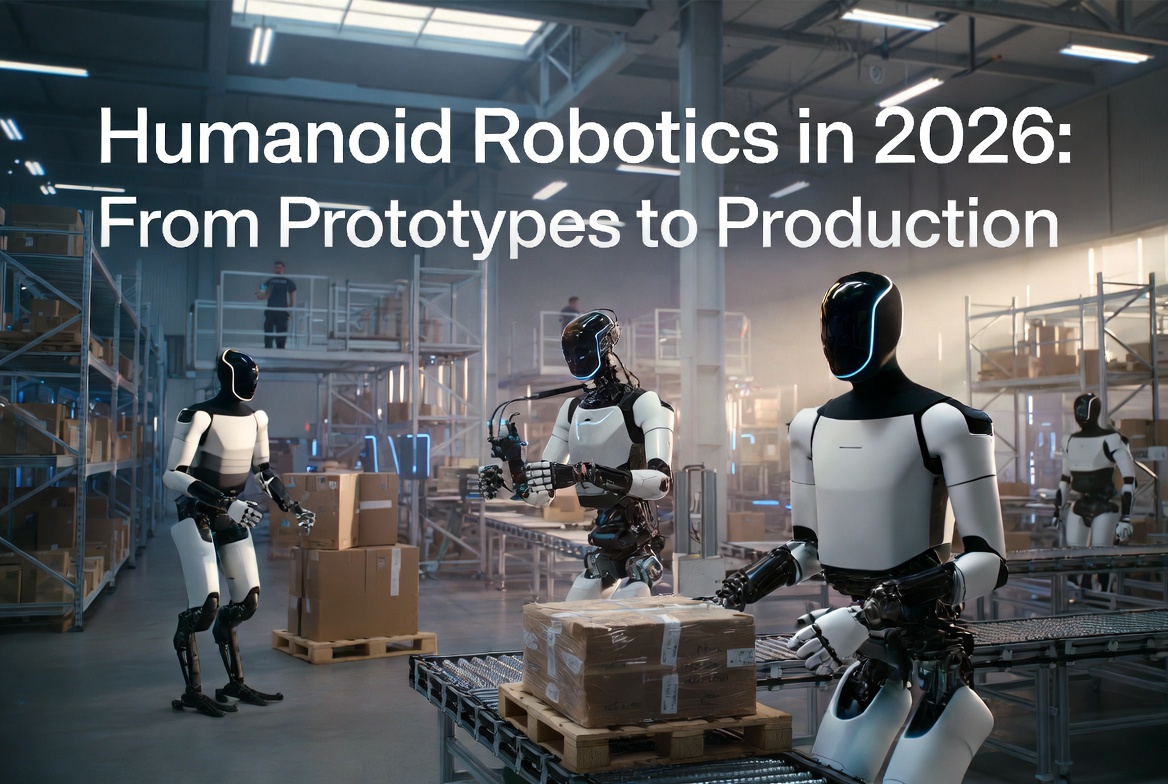
BMW putting a pilot into Leipzig suggests an intent to evaluate humanoids against production constraints: cycle time, ergonomic objectives, safety zoning, changeover frequency, and maintenance. That’s different from a lab demo, and it tends to flush out the bottlenecks (end-effectors, perception edge cases, and recovery from failure).
2) “Center of Competence” is an integration signal, not a scaling proof
Creating a dedicated competence center can mean BMW expects cross-plant learnings and standardized deployment patterns (simulation, safety templates, task libraries, vendor management). But it does not itself prove broad rollouts, headcount replacement, or near-term unit volumes. (Source: BMW press release)
3) The industry narrative is ahead of the audit trail
Market and commentary pieces increasingly list many humanoid programs and claim readiness across domains. For example, the DROIDS newsletter stresses that “ready to deploy” depends heavily on environment and expectations, and highlights teleoperation as a practical bridge for early home/field use cases. (Source: DROIDS—Are Humanoid Robots Really Ready to Deploy?)
In other words: pilots are happening, but operators still need proof of repeatable performance in messy settings.
The numbers, in plain English (and what’s missing)
BMW’s press release (as captured in the provided excerpt) includes dates and site names, but it does not provide key quantitative metrics that would allow outsiders to judge operational maturity.
Here’s what you’d want if you were qualifying this as a production technology:
- Unit count: How many robots were deployed in Spartanburg, and how many are planned for Leipzig?
- Task definition: What specific stations/tasks were attempted? What are the success criteria?
- Operating hours: Total hours run, hours between interventions, and shift coverage.
- Autonomy ratio: How much was autonomous vs. teleoperated/supervised?
- Uptime metrics: MTBF/MTTR, number of safety stops, and common fault modes.
- Economics: Fully loaded cost per robot-hour (including maintenance and supervision) vs. the baseline.
Without these, the safest interpretation is: BMW is validating feasibility and integration, not yet proving cost-effective scale.
Practical implications: how to evaluate a “humanoid in production” pilot
If you run operations, engineering, or procurement, treat a humanoid pilot like a structured industrialization gate. A practical checklist:
-
Pick tasks with clear boundaries
- Start with high-variance, low-force logistics tasks (e.g., moving totes, kitting, simple pick/place) before precision fastening or deformable materials.
-
Demand a recovery plan, not just a success demo
- What happens when grasp fails, a part is missing, a pallet is skewed, lighting changes, or a person walks through the workspace?
-
Audit safety beyond “it has perception”
- Define the safety-rated stops, speed/force limits, human presence detection, and whether it runs in a fenced area, a shared zone, or a time-sliced zone.
-
Measure supervision load
- If a robot requires frequent remote help, your bottleneck becomes operator attention, not robot capability.
-
Plan maintenance like an industrial asset
- Spares, field-replaceable units, calibration steps, and a documented service workflow matter more than a new feature roadmap.
Competitive context (careful, source-backed)
Public sources show multiple humanoid efforts spanning industrial and consumer ambitions, but the comparability is limited because many claims are not published with consistent metrics.
- BMW’s signal: an automotive manufacturer describing plant pilots in the US and planned deployment in Germany, plus an internal competence center. (Source: BMW press release)
- Industry lists and “top robots” roundups: these compile programs and aspirations, but often blend prototypes, announced concepts, and availability claims without operational data. (Example source: Humanoid Robotics Technology—Top 12 Humanoid Robots of 2026)
- Component and manufacturing ecosystem messaging: suppliers like Schaeffler emphasize enabling technologies (notably actuators) and integration into broader motion systems. (Source: Schaeffler)
What we cannot verify from the provided sources:
- Which humanoid platform BMW is using, and whether it outperforms other platforms.
- Whether any vendor has achieved stable “lights-out” humanoid labor at meaningful scale.
- A consistent ranking of humanoid capability across vendors.
What we are not concluding (uncertainty and anti-hype)
- A BMW pilot announcement is not proof that humanoids are broadly “ready” for automotive production lines.
- A “successful” pilot at one site is not evidence of generalization across plants, SKUs, and shift patterns.
- The announcement does not confirm commercialization terms (pricing, procurement model, or vendor commitments).
- Without disclosed metrics, we cannot infer cost effectiveness, headcount impact, or deployment scale.
What to watch next
For BMW specifically, the next meaningful data points would be:
- Vendor disclosure (who built the humanoid) and task scope at Leipzig.
- Unit count and timeline: how many robots, over what period, and on which stations.
- Operational metrics: hours run, safety events, intervention rate, and uptime.
- Integration pattern: how “Physical AI” is implemented—simulation, task programming tools, and learning loops.
For the broader humanoid robotics technology landscape:
- Evidence that actuator reliability and thermal performance can support long duty cycles without frequent derates (a recurring limiter in high-torque compact joints).
- Standardized safety cases for shared spaces—especially if humanoids move beyond fenced pilots.
- Demonstrations that reduce the need for teleoperation while preserving robustness (a theme in readiness commentary). (Source: DROIDS)
Where to go next (HumanoidHub)
- Browse humanoid robotics coverage and operator briefs: https://www.humanoidhub.ai/blog
- Start vendor/model discovery and shortlisting: /explore
- Compare platforms and requirements side-by-side: /compare
- Browse manufacturers and ecosystem players: /brands
FAQ
What did BMW announce about humanoid robots in 2026?
BMW Group announced on 27 Feb 2026 that it will deploy humanoid robots in production in Germany for the first time via a pilot at Plant Leipzig, and that it has launched a “Center of Competence for Physical AI in Production.” (Source: BMW press release)
Does BMW’s Leipzig pilot mean humanoid robots are already scaled in automotive manufacturing?
BMW’s Leipzig pilot does not by itself prove scale; a pilot indicates evaluation in a controlled scope, and BMW has not publicly provided unit counts, uptime, intervention rates, or economics in the provided materials. (Source: BMW press release)
What is “Physical AI” in the context of humanoid robots?
“Physical AI” is commonly used to describe AI methods applied to embodied systems—robots that must perceive, move, and manipulate safely in the real world—often combining learned policies with controls and safety constraints; BMW uses the term in describing its production-focused competence center, but the press release excerpt does not specify implementation details. (Source: BMW press release)
What should factory operators verify when evaluating a humanoid robot pilot?
Factory operators evaluating a humanoid robot pilot should verify the exact task scope, autonomy vs. teleoperation, safety approach, uptime/MTBF/MTTR, intervention rates, maintenance workflow, and fully loaded cost per robot-hour compared with the baseline process.
Why do actuators matter so much for humanoid robotics technology?
Actuators (motors, gears/transmissions, and joint modules) heavily influence humanoid robot performance and reliability because they determine torque density, efficiency, thermal limits, and backdrivability; Schaeffler emphasizes actuators as a major share of the bill of materials in many humanoid robots. (Source: Schaeffler)
Sources
- BMW Group press release (27.02.2026): https://www.press.bmwgroup.com/global/article/detail/T0455864EN/bmw-group-to-deploy-humanoid-robots-in-production-in-germany-for-the-first-time?language=en
- Humanoid robot overview: https://en.wikipedia.org/wiki/Humanoid_robot
- DROIDS commentary on deployment readiness: https://droids.substack.com/p/are-humanoid-robots-really-ready
- Schaeffler on humanoid robotics components (actuators): https://www.schaeffler.com/en/technology-innovation/technology/humanoid-robots
- KUKA explainer: https://www.kuka.com/en-us/knowledge/humanoid-robot
- HumanoidHub blog index (navigation): https://www.humanoidhub.ai/blog