A cluster of 2026 updates suggests humanoid robotics is being pushed beyond one-off demos toward repeatable, factory-facing programs. The headlines are big—“thousands of robots,” “mass-produced,” “live production”—but the operational proof operators care about (hours, uptime, safety envelope, staffing, economics) is still mostly missing in public.
This brief focuses on what is actually stated in sources, what it implies for operators/buyers, and what we should not conclude yet.
Quick answer
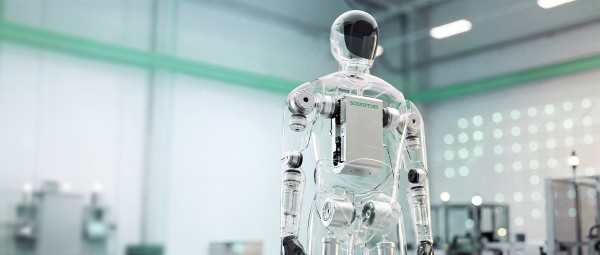
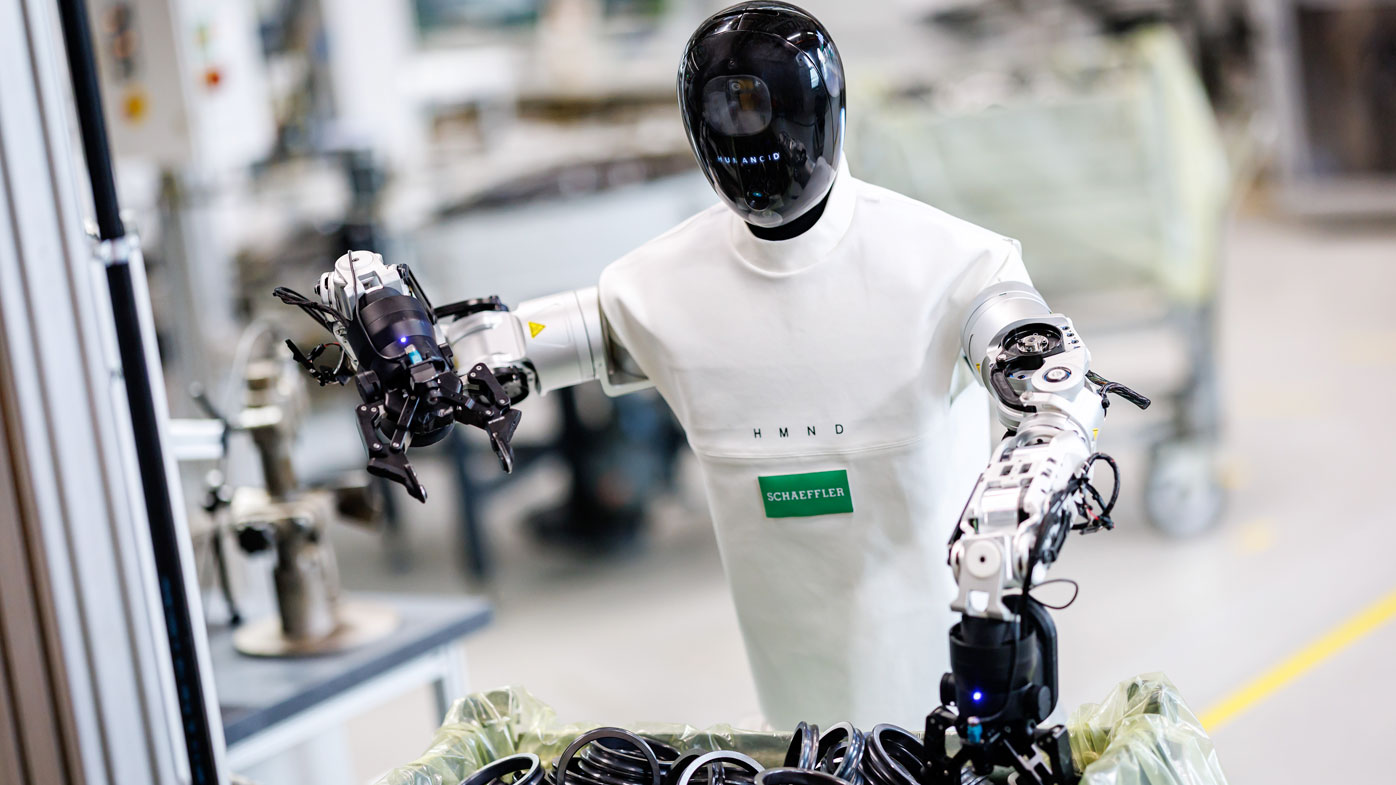
What happened: In May 2026, Humanoid (UK) announced a binding, phased deployment and supply agreement with Schaeffler that aims to introduce Humanoid robots into live German production environments before the end of 2026, and targets a four-digit number of wheeled units across Schaeffler’s global facilities by 2032. In a separate report, AGIBOT was said to have rolled out its 5,000th “mass-produced” humanoid robot, with a partial breakdown including 1,742 full-size A‑Series units.
Why it matters for humanoid robotics: These announcements are early public signals that the market is shifting from “can it move?” to “can it be deployed repeatedly?”—with the competitive battleground moving to integration, safety engineering, service logistics, and software operations. However, none of the sources disclose the most decision-relevant data (task KPIs, validated uptime/MTBF, cost-per-task-hour), so these are scale-intent signals, not proof of mature industrial autonomy.
What’s new (and what each source actually claims)
Humanoid × Schaeffler: a disclosed factory customer, a disclosed start window, and a long ramp
Humanoid states it has signed a binding, phased deployment and supply agreement with Schaeffler to integrate humanoid robots into live manufacturing operations, with the first systems live in Germany before end of 2026, and a target deployment of a four-digit number of wheeled units across Schaeffler’s global facilities by 2032. Humanoid also says Schaeffler becomes a preferred actuator supplier.
Primary sources:
- Humanoid’s announcement (dated May 13, 2026): thehumanoid.ai
- News coverage that repeats the same core claims: Robotics 24/7
What is not disclosed publicly: unit counts by year, exact tasks, site list, commercial terms (CapEx vs RaaS), acceptance criteria, uptime targets, staffing model, or the safety case details.
AGIBOT: a “5,000th mass-produced” milestone with partial product-line counts
Humanoid Robotics Technology reports that AGIBOT “rolled out” its 5,000th mass-produced humanoid robot and includes product-line detail, including that 1,742 units of its full-size A‑Series have achieved mass production (as reported in that article).
Source: humanoidroboticstechnology.com
Operator caveat: the report does not fully define whether “deployed/rolled out” means shipped, installed, or running continuously in customer operations. Without that definition (and without third-party operating-hour disclosure), this is best treated as a manufacturing/throughput signal rather than an operations-at-scale proof point.
The “pilot to platform” framing is spreading
KraneShares frames 2026 as a race “from pilot to platform,” emphasizing the transition from isolated trials to scalable deployment frameworks.
Source: KraneShares
This is market commentary (not an audit of deployments), but it’s useful context for why vendors are now emphasizing repeatability, ecosystem, and scaling narratives.
Real debate persists: is humanoid form factor practical?
A LinkedIn discussion highlights a recurring industry argument: humanoid form can be suboptimal for many jobs compared with purpose-built automation, even if a standardized humanoid SKU could scale manufacturing volume.
Source: LinkedIn post
Treat this as a viewpoint and debate prompt, not a quantified market forecast.
The numbers, in plain English (no hype)
“Four-digit units by 2032”
Humanoid’s Schaeffler target is described as a four-digit number of wheeled units by 2032. Plain-English translation: at least 1,000 robots across Schaeffler sites by that date—possibly more—but the public statement does not specify the exact total (1,000 vs 2,500 vs 9,000), nor the ramp curve.
What is concrete is the near-term milestone: first live systems in Germany before end of 2026. (Source: Humanoid announcement)
“5,000th mass-produced humanoid robot”
AGIBOT’s reported milestone is a unit-count claim that suggests progress on manufacturing and supply chain. The report also states 1,742 full-size A‑Series units as part of AGIBOT’s portfolio.
The missing context for buyers: how many units are (a) revenue-generating, (b) operating in production, (c) operating hours per week, and (d) maintained under what SLA. (Source: Humanoid Robotics Technology)
Context: what “pilot” vs “platform” means operationally
In factory automation, a “pilot” can succeed while still being operationally fragile. A “platform-style rollout” implies repeatability:
- Standard SKU deployed across multiple sites with minimal re-engineering
- Integration surface (WMS/MES, safety PLCs, QA logging, change control)
- Commissioning playbook (site survey → cell design → safety validation → training)
- Service model (spares, remote diagnostics, technician workflow, scheduled maintenance)
This is why “thousands of robots” matters less than how fast each new site goes live and how many human touches per shift the fleet requires.
Why it matters (for operators, buyers, and investors)
-
Factory buyers are starting to appear by name. Named customers (like Schaeffler in the Humanoid announcement) are a higher signal than generic “enterprise interest,” even when task details remain undisclosed.
-
Actuator supply is a strategic bottleneck. Humanoid’s statement that Schaeffler becomes a preferred actuator supplier highlights how scaling humanoids is as much about components and reliability engineering as it is about perception and planning. (Source: Humanoid announcement)
-
The market is forcing a shift to operational metrics. Announcements like AGIBOT’s “5,000th” and Humanoid’s “four-digit by 2032” invite the next question: show the logs. The next 12–24 months will likely be defined by who can publish believable evidence: uptime, interventions, and cost-per-task-hour.
Practical implications: what to ask vendors now
If you’re running operations, procurement, or integration, use these announcements to tighten your due diligence checklist.
Deployment readiness questions
- Task scope: Which tasks are contractually in scope (kitting, tote handling, machine tending, inspection), and what constitutes completion?
- Acceptance metrics: What KPIs define “pilot success” (throughput, defect rate, mean interventions/hour, % autonomy time)?
- Operating hours: How many hours/week can the robot run without on-site engineering support?
Safety and compliance questions
- Safety concept: What is the proposed safety architecture (safety-rated monitored stop, speed/separation monitoring, zone control)?
- Cell assumptions: Is it fenced, semi-collaborative, or fully open-floor? What changes between those modes?
Service and fleet operations questions
- Maintenance: What is the planned preventive maintenance interval, and what parts are considered consumables?
- Spares: Where are spares stocked, and what is the target mean-time-to-repair?
- Software ops: How are updates validated and rolled back, and how is behavior drift monitored?
NVIDIA’s humanoid robotics page is a reminder that simulation/training and compute are part of the stack, but it does not substitute for deployment KPIs. (Source: NVIDIA use case page)
Competitive/context: what can be compared from these sources (and what cannot)
Comparable (supported by sources):
- Humanoid is disclosing a specific industrial partner (Schaeffler), a start window (before end of 2026), and a long-term scale target (four-digit by 2032). (Humanoid)
- AGIBOT is being positioned (via a third-party report) as emphasizing manufacturing output with a “5,000th mass-produced” milestone and at least one line-item count (1,742 A‑Series). (Humanoid Robotics Technology)
Not comparable from provided sources:
- True autonomy level, task performance, safety certification posture, operating cost, or ROI—because the public materials do not provide standardized benchmarks.
What we are not concluding (uncertainty section)
Based on the cited sources, we are not concluding that:
- Thousands of humanoid robots are already operating on Schaeffler factory floors today.
- The Humanoid × Schaeffler program has proven economics, high uptime, or validated safety performance at scale.
- AGIBOT’s “5,000th mass-produced” means 5,000 robots are deployed in revenue-generating, continuous industrial use.
- Humanoids are the optimal form factor for most automation tasks; the form-factor debate remains open. (See: LinkedIn discussion)
What to watch next (concrete checkpoints)
- Named tasks + measurable KPIs in public: even one disclosed use case with throughput and intervention rates.
- Safety disclosure maturity: a detailed risk assessment approach and operational envelope (where humans can be, at what speed/force).
- Ramp reporting: periodic updates that distinguish shipped vs installed vs operating hours.
- Service realities: spare parts pipeline, field technician model, and fleet monitoring discipline.
Where to go next (HumanoidHub)
- Explore humanoid robots and adjacent systems: /explore
- Compare platforms and key specs/claims side-by-side: /compare
- Browse companies building humanoid stacks: /brands
FAQ
What is confirmed about the Humanoid–Schaeffler humanoid robot deployment timeline?
Humanoid states that the first systems are expected to go live in Germany before the end of 2026 as part of a binding, phased deployment and supply agreement with Schaeffler. The public announcement does not disclose exact sites, tasks, or performance KPIs. Source: https://thehumanoid.ai/humanoid-secures-landmark-deal-with-schaeffler-to-deploy-thousands-of-humanoid-robots/
What does “four-digit number of units by 2032” mean in the Humanoid–Schaeffler agreement?
In the Humanoid–Schaeffler announcement, “four-digit number of wheeled units” means at least 1,000 humanoid robots across Schaeffler facilities by 2032, but the statement does not specify whether the target is 1,000 or several thousand, nor how the ramp is scheduled. Source: https://thehumanoid.ai/humanoid-secures-landmark-deal-with-schaeffler-to-deploy-thousands-of-humanoid-robots/
What is AGIBOT claiming with its “5,000th mass-produced humanoid robot” milestone?
A report by Humanoid Robotics Technology says AGIBOT rolled out its 5,000th mass-produced humanoid robot and mentions a breakdown that includes 1,742 units of the full-size A‑Series. The report does not fully define whether “rolled out/deployed” means shipped, installed, or operating continuously in customer environments. Source: https://humanoidroboticstechnology.com/industry-news/agibot-announces-the-deployment-of-its-5000th-mass-produced-humanoid-robot/
Why do operators still treat humanoid “deployment” announcements cautiously?
Operators treat humanoid deployment announcements cautiously because headlines rarely include the metrics that determine real ROI: validated uptime/MTBF, intervention rates, safety envelope constraints, staffing per shift, and cost-per-successful-task-hour. Without those numbers, scale targets indicate intent but not proven performance.
Are humanoid robots the best form factor for factory work?
Whether humanoid robots are the best form factor for factory work remains debated; some practitioners argue humanoids are suboptimal compared with purpose-built automation for many tasks, while others argue a standardized humanoid platform could win in human-built environments. A public example of this debate appears in this LinkedIn discussion: https://www.linkedin.com/posts/superkinz_all-the-work-being-done-in-humanoid-robotics-activity-7359234801519808514-eY1j
Sources
- https://thehumanoid.ai/humanoid-secures-landmark-deal-with-schaeffler-to-deploy-thousands-of-humanoid-robots/
- https://www.robotics247.com/article/humanoid-to-deploy-thousands-of-its-humanoid-robots-on-schaeffler-factory-floors
- https://humanoidroboticstechnology.com/industry-news/agibot-announces-the-deployment-of-its-5000th-mass-produced-humanoid-robot/
- https://kraneshares.com/humanoid-robotics-in-2026-the-race-from-pilot-to-platform/
- https://www.nvidia.com/en-us/use-cases/humanoid-robots/
- https://www.linkedin.com/posts/superkinz_all-the-work-being-done-in-humanoid-robotics-activity-7359234801519808514-eY1j