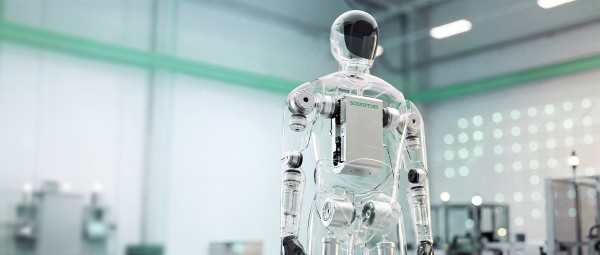
BMW Group says it will deploy humanoid robots in production in Germany for the first time, starting with a pilot at Plant Leipzig and supported by a new “Center of Competence for Physical AI in Production.” The announcement matters because BMW is framing humanoids not as a demo, but as something to be evaluated inside existing series production workflows—where safety cases, cycle time, uptime, and change control determine whether robots graduate from pilot to procurement.
Quick answer
BMW Group announced (Feb 27, 2026) a pilot project to integrate humanoid robots into existing series production at its Leipzig plant in Germany, and a new internal “Center of Competence for Physical AI in Production” to accelerate AI-and-robotics integration globally. BMW also stated a first pilot deployment of humanoid robots was successfully completed at its Spartanburg plant in the U.S.
Why it matters for humanoid robotics: this is a high-signal automotive manufacturer treating humanoids as a production technology to be tested and operationalized—implying real constraints like safety validation, line integration, maintainability, and ROI, not just lab performance. The announcement does not disclose the robot vendor, unit count, task list, or performance metrics, so it should be read as “serious pilot intent,” not proof of scaled deployment. (Source: BMW Group press release)
What BMW announced (and what it didn’t)
What is explicitly stated
From BMW’s press release:
- BMW is “bringing Physical AI to Europe” via a humanoid-robot pilot at BMW Group Plant Leipzig. (BMW source)
- The goal is to integrate humanoid robotics into existing series production of cars, and to explore additional applications in battery and component production. (BMW source)
- BMW is launching a new “Center of Competence for Physical AI in Production” intended to accelerate global integration of AI and robotics in production. (BMW source)
- BMW states a first pilot deployment of humanoid robots was successfully completed at BMW Group Plant Spartanburg (USA). (BMW source)
What remains unclear (and therefore shouldn’t be assumed)
The press release, at least as summarized in the provided excerpt, does not provide:
- Which humanoid robot(s) BMW is using (vendor/model).
- How many units are involved in Leipzig or Spartanburg.
- Which tasks are being performed (e.g., parts kitting, tote handling, machine tending, inspection).
- Performance data: takt impact, cycle time, mean time between failures, uptime, error rates, learning time, or required human supervision.
- Procurement model: purchased vs. Robotics-as-a-Service, pilot duration, or expansion criteria.
Operationally, those are the details that separate a meaningful deployment from an extended evaluation.
Context: why “Physical AI” is becoming the adoption frame
BMW’s wording—“Physical AI,” and “symbiosis of engineering expertise and artificial intelligence”—is consistent with a broader industry shift: humanoids are increasingly pitched as AI-driven general-purpose mobile manipulators that can be trained in simulation and improved via software updates, rather than fixed automation engineered one cell at a time. (Source: BMW press release; also see NVIDIA’s overview of humanoid robotics enabling technologies: https://www.nvidia.com/en-us/use-cases/humanoid-robots)
Two contextual signals worth noting:
- Factories are already structured around human work envelopes, which is a recurring argument for humanoid form factors. That doesn’t make humanoids automatically optimal—but it does explain why automakers are willing to run pilots on real floors.
- “Pilot to platform” thinking is replacing one-off demos. Investors and operators increasingly look for reusable stacks: perception + manipulation + fleet ops + safety toolchains. (Source for the framing: https://kraneshares.com/humanoid-robotics-in-2026-the-race-from-pilot-to-platform)
Why this matters for operators and buyers
1) Automaker pilots pressure-test the hard parts
A production pilot at an automaker tends to surface the constraints that matter most for procurement:
- Safety case and human-robot interaction (especially if humanoids share aisles and staging areas).
- Integration into existing material flows (MES/WMS hooks, barcode/vision, handoffs).
- Maintainability (service intervals, spare parts strategy, recovery from falls or faults).
- Operational accountability (who owns uptime—automation engineering, vendor, or operations?).
BMW’s announcement is a signal that humanoid vendors will be evaluated against those real constraints, not just “can it pick up a box.”
2) “Center of Competence” suggests institutionalization
Standing up a dedicated internal center implies BMW expects repeated evaluations and reuse of lessons learned across plants. That can accelerate adoption—if the center produces repeatable standards (task selection, risk assessment templates, acceptance tests, rollout playbooks).
The numbers—what we can and can’t infer
The provided sources include market-style numbers, but they vary in evidentiary strength.
BMW: no unit counts or KPI benchmarks disclosed
BMW did not publish unit counts, pilot duration, or throughput targets in the excerpt provided. So we cannot translate this into “X robots deployed” or “Y% productivity gains.” Treat it as a named site pilot + organizational commitment, not an evidence-backed scale-up.
Industry pricing claims: treat as directional unless independently verified
A third-party “Humanoid Robot Industry Report 2026” claims it tracks 26 robots and provides a pricing range, including examples such as Unitree R1 at $4,900 and Unitree G1 at $16,000, and it asserts other pricing is estimated or from mixed sources. (Source: https://blog.robozaps.com/b/humanoid-robot-industry-report-2026)
Plain-English interpretation:
- Low-end consumer humanoid pricing can be in the single-digit thousands (per that report), but this does not imply factory readiness.
- Industrial humanoids are typically far more expensive and require deployment engineering, spares, and support—often dwarfing the robot sticker price.
Because the report itself notes only some prices are verified from official sources, operators should use it for market scanning, not procurement-grade budgeting.
Practical implications: how to evaluate a “humanoid in production” claim
If you are an operator, integrator, buyer, or investor, BMW’s announcement is a prompt to ask the questions that determine whether a pilot becomes a platform:
A. Task selection (the adoption hinge)
Humanoids are most likely to succeed first in tasks that are:
- Physically bounded (known source/target locations)
- Material-handling oriented (totes, cartons, kitting)
- Low dexterity relative to human hands
- Tolerant of slower cycle times early on
If BMW targets high-variability tasks (e.g., complex assembly) in early pilots, expect longer iteration cycles.
B. Metrics that matter more than a demo video
Ask for:
- Hours of autonomous operation per shift and reset frequency
- Intervention rate (how often a human must step in)
- Uptime and MTTR (mean time to repair)
- Safety incidents / near misses and mitigation approach
- Impact on takt time (even if only in a shadow mode)
BMW did not provide these metrics publicly in the excerpt; absence of data is normal at pilot stage, but it limits conclusions.
C. Fleet operations and change management
Even a small pilot becomes “real” when:
- The robot is enrolled in a fleet management process (updates, logs, rollback)
- There is a defined SOP for faults (who responds, how fast, with what tools)
- Maintenance is integrated into planned downtime schedules
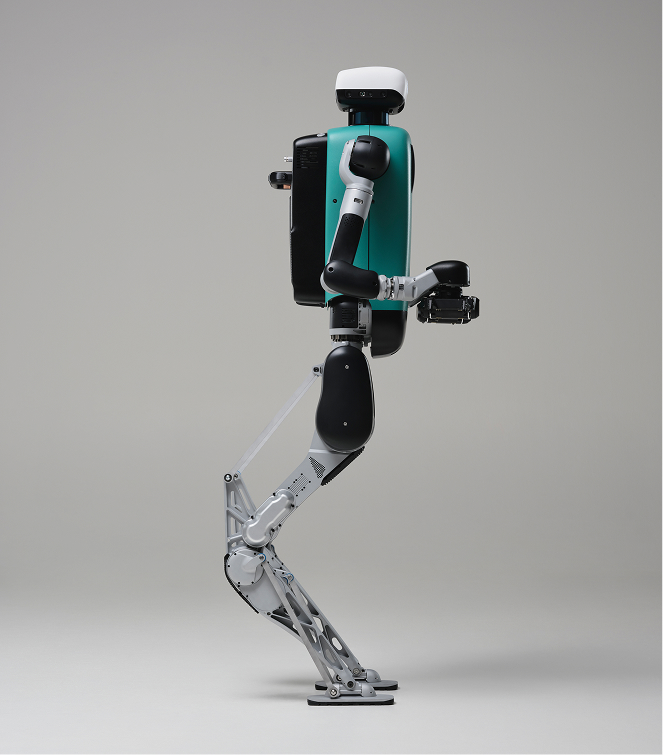
Agility Robotics, for example, positions “Arc” as a cloud platform that runs Digit alongside a deployment process aimed at derisking adoption—an example of the platform approach vendors are converging on. (Source: https://www.agilityrobotics.com)
Competitive and ecosystem context (what’s verifiable)
- Verifiable from sources here: BMW is piloting humanoids in Leipzig and previously piloted in Spartanburg; Agility Robotics markets Digit as “in production deployment” (vendor claim on its site); NVIDIA markets a humanoid robotics enabling stack (positioning on its use-case page).
- Not verifiable from the provided sources: which specific humanoid vendors are inside BMW plants, how they compare head-to-head on task performance, and whether BMW has procurement timelines.
If you need a defensible comparison, anchor it on publicly disclosed deployments with unit counts and tasks—which BMW has not disclosed in this announcement.
What we are not concluding (yet)
To avoid overreading the news:
- This does not prove BMW has standardized humanoids for production across Germany.
- This does not indicate humanoids are replacing large portions of the workforce; pilots often begin with narrow, assistive material flows.
- This does not validate a particular vendor’s technical leadership, since the vendor and metrics are undisclosed.
The strongest conclusion supported by the source is: BMW is formally testing humanoids in European series-production context and building internal capability to scale robotics + AI integration if pilots succeed.
What to watch next
For BMW specifically, the next informative disclosures would be:
- Robot partner identity (vendor/model) and scope of work at Leipzig.
- Task details (what exactly is being moved/handled, where in the line).
- Pilot gates (criteria for expanding from pilot cell to larger area).
- Safety and standards approach (risk assessments, HRI constraints, training).
- Unit count and run time (even rough ranges are meaningful).
For the broader sector, watch whether more OEMs publish procurement frameworks for humanoids (qualification tests, data requirements, service SLAs) rather than one-off pilots.
Where to go next
- Browse vendors and platforms: /brands
- Explore humanoid categories and use cases: /explore
- Compare robots (when you have shortlists): /compare
FAQ
What did BMW announce about humanoid robots in Germany?
BMW Group announced a pilot deployment of humanoid robots at its Leipzig plant in Germany, with the goal of integrating humanoids into existing series production and exploring additional applications in battery and component production. (Source: https://www.press.bmwgroup.com/global/article/detail/T0455864EN/bmw-group-to-deploy-humanoid-robots-in-production-in-germany-for-the-first-time?language=en)
Did BMW say which humanoid robot vendor it is using?
BMW Group’s press release (as provided) does not name a humanoid robot vendor or model for the Leipzig pilot, so the specific platform cannot be verified from that source.
What is “Physical AI” in BMW’s announcement?
In BMW Group’s framing, “Physical AI” refers to combining artificial intelligence with real machines and robots so that intelligent systems such as humanoid robots can be integrated into real-world production processes. (Source: BMW press release)
Does BMW’s announcement mean humanoid robots are already scaled in automotive factories?
BMW Group’s announcement supports that pilots are underway (including a completed pilot in Spartanburg and a new pilot in Leipzig), but it does not provide unit counts, performance metrics, or rollout timelines; therefore it does not prove scaled adoption.
What should operators measure in a humanoid factory pilot?
Operators evaluating a humanoid factory pilot should measure intervention rate, uptime, MTTR, safety events/near misses, integration effort with material flows, and impact on takt time, because these metrics determine whether a pilot can become a repeatable deployment.
Sources
- BMW Group PressClub: https://www.press.bmwgroup.com/global/article/detail/T0455864EN/bmw-group-to-deploy-humanoid-robots-in-production-in-germany-for-the-first-time?language=en
- RoboZaps (industry report / pricing compilation): https://blog.robozaps.com/b/humanoid-robot-industry-report-2026
- KraneShares (market framing): https://kraneshares.com/humanoid-robotics-in-2026-the-race-from-pilot-to-platform
- NVIDIA humanoid robotics use case overview: https://www.nvidia.com/en-us/use-cases/humanoid-robots
- Agility Robotics (Digit / Arc positioning): https://www.agilityrobotics.com