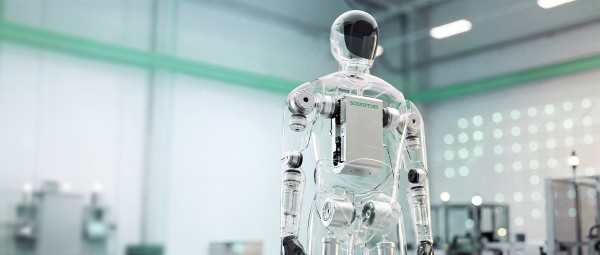
BMW Group has announced plans to deploy humanoid robots in production in Germany for the first time, framing the effort as part of a broader push to integrate AI and robotics into manufacturing (“Physical AI”). The company also says it completed a first pilot deployment of humanoid robots at its Plant Spartanburg in the U.S. and will run a pilot project at Plant Leipzig in Germany. Source: BMW Group press release, 27 Feb 2026.
This matters because automotive manufacturing is a high-throughput, high-safety bar: if BMW is willing to pilot humanoids in a live production environment (even in a limited scope), it’s a meaningful real-world testbed for reliability, integration, and safety cases—well beyond lab demos.
Quick answer
BMW Group says it will deploy humanoid robots in production in Germany for the first time via a pilot at BMW Plant Leipzig, supported by a new “Center of Competence for Physical AI in Production,” and notes a previous pilot deployment at Plant Spartanburg (USA). This matters for humanoid robotics because it is a public, operator-led commitment to evaluate humanoids in an industrial setting—where cycle time, uptime, safety validation, and integration with existing automation typically determine whether a robot is deployable at scale. What remains unclear (from the announcement alone) is which humanoid robot is being used, how many units, what tasks, and what performance targets or safety standards are in scope.
What BMW actually announced (and what is not specified)
From BMW’s press release (27 Feb 2026), the concrete claims are:
- BMW will deploy humanoid robots in production in Germany for the first time (pilot at Plant Leipzig). (Source)
- BMW is establishing a “Center of Competence for Physical AI in Production” to accelerate integration of AI and robotics in manufacturing. (Source)
- BMW states that a first pilot deployment of humanoid robots was successfully completed at Plant Spartanburg (USA). (Source)
The press release excerpt in the brief also references collaboration with Hexagon (sensor technology and software), but the exact scope and technical architecture (perception stack, digital twin, metrology, safety monitoring, etc.) requires reading the full release and/or technical follow-ups. For now, treat “collaboration” as a stated relationship, not proof of a specific integration outcome.
What’s not specified (important for operators)
The announcement, as provided, does not include several details that determine whether this is a narrow pilot or a precursor to scaled deployment:
- Robot make/model (vendor is not identified in the provided excerpt)
- Unit count (one robot vs. a small fleet)
- Tasks and tooling (material handling, kitting, machine tending, inspection, rework, etc.)
- Operating mode (caged, collaborative, supervised autonomy, teleoperation fallback)
- KPIs (cycle time, mean time between failures, uptime, recovery behaviors)
- Safety case (standards, risk assessment approach, incident reporting)
- Timeline and gating criteria (what “success” means and what happens next)
Until those are public, the safe read is: BMW is validating feasibility and integration, not guaranteeing production-scale humanoid labor.
Context: why “Physical AI” is a manufacturing integration story
“Physical AI” is increasingly used to describe AI systems that can perceive, plan, and act in the physical world through robots. In manufacturing terms, it’s less about a single model and more about an end-to-end system:
- robust perception in cluttered environments
- closed-loop control and compliant manipulation
- error detection and recovery
- integration with MES/SCADA/line controls
- safety validation
- maintainability (spares, diagnostics, service)
NSF’s overview of robotics emphasizes robotics’ role in improving productivity, precision, and safety across sectors, while highlighting sustained investment as a driver of real-world impact. (NSF) That’s relevant here because BMW’s move signals an operator’s attempt to convert research-grade capabilities into production outcomes.
Humanoid robots, specifically, are often motivated by the idea that a human-shaped platform can work in human-designed spaces with human tools. But the humanoid form factor also introduces complexity: bipedal locomotion, whole-body control, balance margins, and a larger safety envelope. General references (e.g., definitions and history) can be found in summaries like Wikipedia, but they don’t answer the core factory question: can the system meet uptime and safety requirements at a competitive total cost? (Wikipedia)
Why this matters for the humanoid robotics market (without over-reading it)
A BMW pilot is not, by itself, proof that humanoids are “ready.” But it is a meaningful signal because:
- Operator pull, not vendor push: OEM-led pilots tend to be driven by concrete pain points (labor availability, ergonomics, flexibility) and internal integration teams.
- Manufacturing realism: Automotive plants are unforgiving environments for downtime and unpredictable behaviors.
- A pathway to standardization: A “Center of Competence” suggests BMW expects multi-site learning and reusable integration patterns (safety, training, workflow design).
Market sizing claims should be handled carefully: MarketsandMarkets, for example, states the humanoid robot market was valued at USD 2.92B in 2025 and projects USD 15.26B by 2030 (CAGR 39.2%). That is a third-party estimate and inherently model-driven, not a measurement of deployed robots. It’s best used as a directional indicator of investor interest and expected adoption rather than as proof of near-term deployments. (MarketsandMarkets)
The numbers, in plain English
Because the BMW press release excerpt does not provide unit counts, run-hours, or productivity metrics, the only “numbers” we can treat as hard facts are dates and locations:
- BMW’s press release is dated 27.02.2026.
- BMW names Plant Leipzig (Germany) as the pilot site and Plant Spartanburg (USA) as a completed pilot site.
What you should not infer from this announcement:
- Not a commitment to “thousands of robots” (no unit figures are provided).
- Not proof of ROI (no cost, productivity, or labor substitution numbers are provided).
- Not proof of unsupervised autonomy (no autonomy level is specified).
Practical implications for operators and buyers
If you run operations, engineering, or procurement and you’re evaluating humanoids, BMW’s announcement reinforces a set of practical diligence questions:
1) Define the task in industrial terms
Humanoid pilots succeed when the first tasks are tightly scoped:
- pick/place with known SKUs
- tote or bin transport between fixed points
- kitting and replenishment
- simple inspection or gauge placement (if validated)
Ask vendors to specify: payload at reach, grasp set, tool changing, recovery behaviors, and acceptable object variability.
2) Plan for integration more than mechanics
Even if the humanoid body is capable, deployment often hinges on:
- perception reliability under factory lighting and occlusion
- interaction with racks, carts, conveyors, and fixtures
- IT/OT connectivity, audit logs, remote diagnostics
The BMW mention of Hexagon (sensors/software) is a reminder that “humanoid deployment” frequently includes a metrology/perception + workflow component, not just a robot. (BMW press release)
3) Treat safety as a product requirement, not paperwork
For any pilot, require clarity on:
- hazard analysis approach and responsibility split
- speed/force limiting strategy
- emergency stop architecture
- fall detection and controlled stop behaviors (if bipedal)
- operator training and incident reporting
Academic and roadmap-oriented literature on humanoids consistently frames safety, robustness, and human interaction as central challenges; use that as a cue to demand concrete evidence rather than slideware. (Example roadmap-style discussion: PMC article)
Competitive / ecosystem context (careful, source-limited)
It is tempting to compare BMW’s signal to other public narratives about ramping humanoid production highlighted in industry coverage (e.g., IEEE Spectrum’s recurring “Video Friday” roundups). But those items often compile vendor videos and announcements that vary widely in verification level. Treat them as awareness sources, not deployment evidence. (IEEE Spectrum)
Likewise, general thought pieces (e.g., investment-bank explainers or security think pieces) can be useful for framing risks and adoption drivers, but they typically do not provide the deployment-grade details (unit counts, hours, uptime) that operators need. (Barclays IB; Recorded Future)
What we are not concluding (uncertainty section)
Based on the sources provided, we are not concluding that:
- BMW has approved a production-scale rollout of humanoid robots across multiple plants.
- The pilot has demonstrated superior economics vs. conventional automation (fixed robots, AMRs, lifts, or re-fixturing).
- The humanoid robots are operating autonomously without supervision or teleoperation.
- A specific vendor has “won” BMW as a long-term supplier (the vendor is not named in the excerpt).
We are concluding that BMW is publicly committing to structured evaluation and integration capability (“Center of Competence”), which is often a prerequisite for scaling any new automation category.
What to watch next
If BMW and partners publish follow-up detail, the most decision-useful disclosures would be:
- named humanoid platform(s) and end-effectors
- task list and cell/line integration diagram
- unit count and operating hours achieved
- failure modes observed and mitigation strategies
- safety assessment approach and any standards cited
- economic framing: what cost bucket they’re targeting (ergonomics, labor shortage, flexibility, changeover time)
Until then, treat this as a credible pilot signal—not a guarantee of near-term widespread humanoid adoption in automotive.
Where to go next (HumanoidHub)
- Browse humanoid robotics landscape and vendors: /explore
- Compare robots (when specs are available): /compare
- Explore brands and manufacturers: /brands
- If you’re evaluating deployments, start with requirements and integration planning: /solutions
FAQ
What did BMW announce about humanoid robots in Germany?
BMW Group announced it will deploy humanoid robots in production in Germany for the first time through a pilot project at BMW Group Plant Leipzig, according to its 27 Feb 2026 press release.
Did BMW say humanoid robots are already running in a U.S. plant?
BMW Group stated that a first pilot deployment of humanoid robots was successfully completed at BMW Group Plant Spartanburg (USA), but it did not provide unit counts, tasks, or performance metrics in the excerpted announcement.
What is BMW’s “Center of Competence for Physical AI in Production”?
BMW described a new “Center of Competence for Physical AI in Production” intended to accelerate integration of AI and robotics in manufacturing; the announcement does not specify staffing, budget, or detailed technical scope.
Does BMW’s pilot mean humanoid robots are ready for mass deployment in factories?
BMW’s pilot does not, by itself, prove humanoid robots are ready for mass deployment, because the announcement does not disclose unit counts, uptime, safety validation details, or ROI; it is best interpreted as a structured feasibility and integration effort.
What should manufacturers ask before piloting humanoid robots?
Manufacturers should ask for clear task scope, autonomy level, safety case approach, integration requirements (IT/OT), expected uptime and recovery behaviors, and evidence from run-hours in environments similar to their own.
Sources
- BMW Group press release (27 Feb 2026): https://www.press.bmwgroup.com/global/article/detail/T0455864EN/bmw-group-to-deploy-humanoid-robots-in-production-in-germany-for-the-first-time?language=en
- NSF overview on robotics impact and investment: https://www.nsf.gov/science-matters/robotics-engineering-future-intelligent-machines
- Humanoid robots roadmap-style literature (PMC): https://pmc.ncbi.nlm.nih.gov/articles/PMC12783740/
- Humanoid robotics & neuroscience (NCBI Bookshelf): https://www.ncbi.nlm.nih.gov/books/NBK299034
- Market estimate (model-based): https://www.marketsandmarkets.com/ResearchInsight/humanoid-robot-market-analysis.asp
- Industry roundup (contextual, not deployment proof): https://spectrum.ieee.org/video-friday-humanoid-robot-production
- Additional context and perspectives: https://www.ib.barclays/our-insights/10-things-you-need-to-know-about-humanoid-robots.html , https://www.recordedfuture.com/research/future-humanoid-robotics , https://en.wikipedia.org/wiki/Humanoid_robot