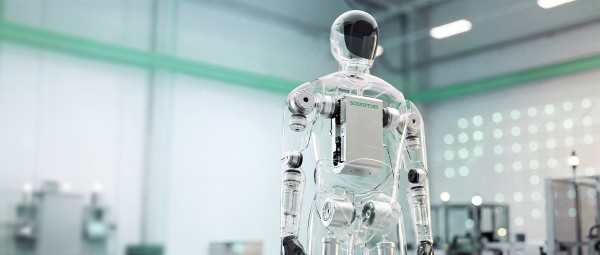
Humanoid robotics technology is starting to look less like a collection of impressive demo videos and more like a set of early operational experiments in real production environments.
The most concrete, dateable signal in the sources provided is BMW Group’s announcement of a humanoid-robot pilot in series production at Plant Leipzig in Germany, framed under its “Physical AI” push and supported by a production IT/data model and digital-twin tooling already used in BMW’s system. At the same time, pricing “signals” are appearing publicly for some robots—though verification quality varies widely by model and vendor.
Quick answer
Humanoid robotics in 2026 is shifting from prototype showcases toward early commercial pilots and clearer (but uneven) pricing. The key operational implication is that the decision criteria are moving to factory realities—safety case, uptime, integration effort, and task economics—not just mobility demos. A major example is BMW Group’s pilot project deploying humanoid robots at Plant Leipzig and its creation of a “Physical AI” competency focus for production integration, which puts humanoids into a context where repeatability and risk management matter most. (Source: BMW Group press release)
What happened (dateable signals)
BMW: humanoids move onto a real production site in Germany
BMW Group says it is launching a pilot project with humanoid robots at its Leipzig plant—positioning it as the first time it is bringing “Physical AI” to Europe in this way. BMW also references a prior pilot in Spartanburg (US) and states it intends to leverage those insights to further develop and scale “Physical AI” applications. (Source: BMW Group press release)
What’s notable for operators is not the word “humanoid,” but the framing:
- Integration into existing series production (not a lab)
- Alignment with digital twins, AI-enabled quality controls, and intralogistics systems already in BMW’s production stack
- A stated intent to explore applications beyond car assembly, including battery and component production
BMW does not disclose the unit count, the robot vendor/model in the excerpted source, pilot duration, targeted tasks, or KPI thresholds (cycle time, success rate, MTBF/MTTR, supervised vs autonomous operation). Those are the missing details that matter for buyers.
Pricing: more public numbers, mixed verification
A 2026 “Humanoid Robot Industry Report” from Robozaps claims it tracks 26 humanoid robots across 7 countries, with $5B+ total industry investment (including acquisitions) and $4B+ VC raised by humanoid-focused startups since 2020. It also claims 14 robots are commercially available (purchase or pre-order with confirmed pricing) and highlights consumer humanoids priced below $25,000. (Source: Robozaps report)
Important nuance: the Robozaps page itself warns that only some prices are verified from official sources and others are estimated. Treat it as a lead list for diligence, not a definitive price sheet.
Context: what “humanoid robotics technology” means in 2026
Across the sources, “humanoid robotics technology” is increasingly discussed as a stack:
- Embodied intelligence / autonomy software: policy learning, task planning, perception
- Simulation + digital twins: speeding iteration and reducing on-robot trial time (BMW explicitly references virtual factory/digital twins in its production system) (BMW Group)
- Manipulation + actuation: hands/arms that can execute stable industrial tasks, not just pick up props
- Safety + cybersecurity: connected robots operating around humans create safety and security requirements; Recorded Future flags cyber risk as a serious consideration for humanoids broadly (Recorded Future)
Market research publishers also describe a shift from pilots to task-specific industrial deployment, but most of those pages are table-of-contents level and do not provide enough public numbers in the provided excerpts to validate specific forecasts. (Example: BIS Research humanoid robot market page)
The numbers, in plain English (what they do—and don’t—tell you)
Here’s how to interpret the numerical claims that appear in the sources:
- “26 humanoid robots tracked” / “14 commercially available” (Robozaps)
- What it might mean: there is a growing catalog of named platforms and some vendors are willing to publish pricing or accept pre-orders.
- What it does not prove: that these robots are shipping at scale, achieving reliable uptime, or that total cost of deployment is close to list price.
- Operator takeaway: use lists like this to shortlist vendors, then demand evidence: deployment logs, safety documentation, spares plans, and integration scope.
- Public price points under ~$25k (Robozaps)
- What it might mean: entry-level humanoids are approaching “equipment purchase” territory for labs, education, and some controlled pilots.
- What it does not prove: that an operator can deploy an industrial-use humanoid for ~$25k. Industrial deployments often add integration engineering, safety systems, service contracts, spare parts, and facility modifications.
- “$4B+ VC since 2020 / $5B+ total investment” (Robozaps)
- What it might mean: sustained investor interest and more funded teams building hardware + autonomy.
- What it does not prove: near-term commercial readiness across the category.
- BMW pilot announcement
- What it proves: a top-tier manufacturer is willing to publicly attach its name to a humanoid pilot in a real plant.
- What it does not prove: success, scale-out, or that humanoids beat conventional automation for the target tasks.
Why it matters (for operators, buyers, and investors)
1) The evaluation standard is shifting to operations
When a pilot moves into a production site (as BMW describes), the “win condition” becomes:
- Can the robot do the task reliably?
- How many interventions per shift?
- What is the safety case and the change-management burden?
- Can it be maintained like other equipment (spares, MTTR, training)?
2) Pricing visibility changes procurement—but not TCO
If more vendors publish prices (even partially), procurement conversations become easier to start. But for humanoids, list price is rarely the cost driver. Buyers should model:
- Integration engineering (tools, end effectors, fixtures)
- Safety validation and site acceptance
- Autonomy/software licensing and updates
- Operator training, remote support, and spares
3) Security becomes part of the robotics stack
Recorded Future highlights humanoids as likely cyber targets (hijacking, data leaks, botnets). Even if you disagree with the long-range forecasts in that report, the security point is practical: humanoids are mobile, sensor-rich, and networked—treat them as critical connected systems, not “just robots.” (Source: Recorded Future)
Practical implications: questions to ask before a pilot
Use these as an operator-ready checklist when evaluating a humanoid vendor or planning a site trial:
- Task definition
- What exact work instruction is targeted (inputs/outputs, tolerances, cycle time, allowed variance)?
- Is the task “humanoid-shaped” for a reason (space constraints, tool access), or would a simpler robot work?
- Reliability evidence
- Ask for run logs: success rate over time, failure modes, mean time between interventions.
- Separate demo success rate from shift-length repeatability.
- Safety case
- What standards and risk assessment approach are used?
- What sensors and limits enforce safe speed/force near humans?
- Integration scope
- Who owns the PLC/MES integration and how is data logged?
- What fixtures, tooling, and changeovers are required?
- Support model
- Spares lead times, field service response, remote monitoring, software update cadence.
Competitive / ecosystem context (what can be compared from these sources)
From the provided sources, the most defensible comparison is not “best humanoid,” but “most verifiable public signals”:
- Most concrete enterprise signal: BMW’s public pilot announcement with explicit production framing and references to plant systems (digital twins, unified IT/data model). (BMW Group)
- Most explicit pricing catalog (with caveats): Robozaps’ report compiling prices and claiming monthly updates—but acknowledging that only some prices are verified from official sources. (Robozaps)
- Cybersecurity framing: Recorded Future’s report emphasizes humanoids as cyber-physical risk surfaces. (Recorded Future)
What we cannot verify from the excerpts provided:
- Comparative uptime across vendors
- Real installed base by model
- True industrial TCO across deployments
- Benchmark-quality manipulation metrics across tasks
What we are not concluding (to avoid over-reading the signals)
- We are not concluding that humanoids are now broadly “production ready.” A pilot announcement is a starting line, not a finish line.
- We are not concluding that low listed prices imply low deployment cost or suitability for industrial environments.
- We are not concluding that market forecasts (especially long-range) will materialize; the provided public pages do not include enough methodology or full datasets to validate the numbers.
What to watch next (2026–2027 proof points)
- BMW pilot specifics: vendor identity, task list, safety approach, and whether Leipzig expands beyond a small pilot cell.
- Standardized reporting: operators should push for common metrics—interventions per hour, mean time to recover, and shift-length success rates.
- Procurement packaging: watch whether vendors move from “robot price” to clearer offers (robot + service + spare kits + integration playbooks).
- Security posture: expect more explicit guidance on network segmentation, logging, and update signing as humanoids enter production networks.
Where to go next (HumanoidHub)
- Explore robots and vendors: /explore
- Browse brands and manufacturers: /brands
- Side-by-side evaluation framing: /compare
- Read more on 2026 pilots and what’s verifiable: HumanoidHub’s 2026 pilots/pricing reality check
FAQ
Are humanoid robots actually being used in car factories in 2026?
BMW Group says it is launching a pilot project deploying humanoid robots in production at its Leipzig plant in Germany, with the aim of integrating humanoid robotics into existing series production and exploring additional applications. (Source: https://www.press.bmwgroup.com/global/article/detail/T0455864EN/bmw-group-to-deploy-humanoid-robots-in-production-in-germany-for-the-first-time?language=en)
Do humanoid robots cost under $25,000 now?
Some publicly listed humanoid robot prices appear under $25,000 in the Robozaps “Humanoid Robot Industry Report 2026,” but the same source notes that verification quality varies and not all prices are confirmed by official vendor sources. List price also typically excludes integration and support costs. (Source: https://blog.robozaps.com/b/humanoid-robot-industry-report-2026)
What is the biggest operational risk when deploying a humanoid robot?
For most operators, the biggest deployment risk is not whether a humanoid robot can perform a task once, but whether it can do it repeatedly across shifts with acceptable intervention rate, safety constraints, and maintainability. Public pilot announcements rarely disclose those metrics, so operators must demand logs and acceptance criteria.
Why does cybersecurity matter for humanoid robots?
Cybersecurity matters for humanoid robots because they are mobile, sensor-rich, and connected systems that can be targeted for hijacking or data leakage. Recorded Future argues humanoids will “almost certainly” face cyber threats, which implies operators should treat them like other critical connected assets with strong security controls. (Source: https://www.recordedfuture.com/research/future-humanoid-robotics)
What should a buyer ask a humanoid robot vendor before running a pilot?
A buyer should ask a humanoid robot vendor for the exact task definition, safety case approach, run logs showing reliability over time, integration scope (PLC/MES/data logging), and a support plan covering spares, response times, and software update cadence. These determine total cost and operational feasibility more than headline specs.
Sources
- BMW Group: “BMW Group to deploy humanoid robots in production in Germany for the first time” https://www.press.bmwgroup.com/global/article/detail/T0455864EN/bmw-group-to-deploy-humanoid-robots-in-production-in-germany-for-the-first-time?language=en
- Robozaps: “Humanoid Robot Industry Report 2026: Prices, Funding & Market Data” https://blog.robozaps.com/b/humanoid-robot-industry-report-2026
- HumanoidHub: “Humanoid robotics in 2026: from pilots to production (what’s real, what’s not)” https://www.humanoidhub.ai/blog/humanoid-robotics-2026-pilots-production-what-s-real-what
- Recorded Future: “The Future of Humanoid Robotics” https://www.recordedfuture.com/research/future-humanoid-robotics
- BIS Research: “Humanoid Robot Market” (TOC/overview page) https://bisresearch.com/industry-report/humanoid-robot-market.html