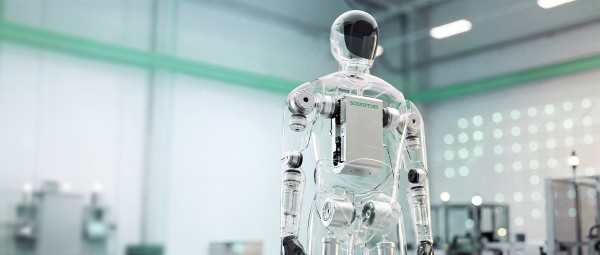
Humanoid robotics is entering a more operational phase: not “everywhere,” but increasingly present in pilots where factories and operators can measure safety, uptime, and task fit. The shift matters because humanoids promise flexibility in human-built environments—yet the bar for deployment is far higher than a staged demo.
One of the clearest recent public signals is BMW Group’s announcement that it will run a humanoid-robot pilot at its Leipzig plant in Germany, after a prior pilot at Spartanburg (USA), alongside a new internal “Center of Competence for Physical AI in Production.” That is a concrete industrial buyer describing a structured evaluation path rather than a concept video. (BMW press release, 27 Feb 2026)
Quick answer
What happened and why does it matter for humanoid robotics? In 2026, industrial end users (notably BMW) are publicly describing humanoid-robot pilot deployments inside real production environments, signaling a shift from primarily R&D or PR demos to measured trials. This matters because it forces the conversation toward operator-grade requirements—safety case, integration with existing lines, repeatability, maintainability, and ROI—and away from “can it walk?”
At the same time, market and research commentary suggests accelerating interest driven by better AI and hardware convergence, but publicly verifiable data about unit counts, hours run, and performance benchmarks remains limited in many articles.
What’s actually confirmed (and what isn’t)
Confirmed: BMW is running a humanoid pilot in Germany
BMW Group says it is launching a pilot project with humanoid robots at Plant Leipzig—its first such pilot in production in Germany—and that a first pilot deployment was successfully completed at Plant Spartanburg in the United States. BMW also frames the effort under “Physical AI” and states it is setting up a “Center of Competence for Physical AI in Production” to accelerate integration. Source: BMW Group press release (27.02.2026).
What’s not confirmed from the press release (and therefore we are not asserting):
- Which humanoid robot model/vendor is used (unless explicitly named in the source).
- How many units are deployed.
- Which exact tasks are performed on the line (beyond BMW’s general framing).
- Run time, uptime, MTBF/MTTR, incident rate, or productivity deltas.
Partially supported: “2026 is the year of pilots → platforms”
Several market/investment and media pieces argue the industry is moving “from pilot to platform” and discuss deployment momentum, but they often mix reported facts with forward-looking claims. For example:
- KraneShares frames a “race from pilot to platform,” but it is an investor-oriented research narrative and may cite third-party news items. Treat it as context, not primary evidence. Kraneshares
- Technology.org publishes a “what is actually deployed” piece; without unit-level citations accessible in this brief, operators should validate any listed deployments back to original company disclosures. Technology.org
Context: why humanoids are compelling—and why deployment is hard
A humanoid robot is generally understood as a robot with a human-like body plan (head/torso/arms/legs vary), designed to operate in human environments and potentially use human tools. (See baseline definition and historical notes: Wikipedia.)
The core promise is general-purpose physical work in spaces built for people: narrow aisles, stairs, standard door widths, human-height work surfaces, and tool ecosystems.
But the deployment reality is constrained by operator-grade requirements:
- Safety and compliance: especially around human proximity, unexpected contacts, and failure modes.
- Task repeatability: “works once” is not a production metric.
- Integration: MES/SCADA interfaces, work instructions, quality checks, traceability, and line balancing.
- Maintainability: spares, field service, diagnostics, and recovery behavior.
- Cost envelope: total cost of ownership vs. fixed automation, cobots, AMRs, or manual labor.
The technology stack that’s pulling interest forward
Embodied AI is expanding what can be trialed
A recent review paper argues that advances in generative/multimodal AI have renewed interest in humanoids aimed at real-time interactive and multimodal designs, and proposes a terminology/landscape across “human-looking” to “human-like” directions. This is research framing—not a readiness certification—but it helps explain why more companies are willing to run pilots now. Source: “Humanoid Robots and Humanoid AI: Review, Perspectives and Directions” (arXiv:2405.15775v2).
Operator translation: better perception + policy learning can reduce brittle scripting for some tasks, which may lower pilot setup cost. But it does not eliminate the need for hard engineering around safety, recovery, and process capability.
Training data is becoming a gating factor
Teams preparing for deployment increasingly focus on what data is needed to train or fine-tune policies for specific environments and tasks (for example, task demonstrations, edge cases, and labeling strategy). Source: Shaip: humanoid robot training data.
Operator translation: the “robot” is not just hardware; it is also the dataset and the continuous improvement loop.
Numbers and claims, explained in plain English (without hype)
Many market reports forecast growth over long horizons, but forecasts are not deployments.
-
BIS Research publishes a “Humanoid Robot Market” report with an analysis and forecast window (2026–2035) and highlights trends like shifting from pilots to task-specific industrial deployment and convergence of humanoid hardware with “embodied AI foundation models.” This indicates how analysts frame the market, not confirmed unit sales or installed base. Source: BIS Research report page.
-
Media and investor commentary sometimes uses large “total addressable market” language. For example, CNBC discusses humanoid robots in the context of large AI markets; readers should separate market narratives from measurable operational metrics like hours worked, injuries avoided, or scrap reduced. Source: CNBC (2026-06-03).
What you should ask for when someone cites big numbers:
- Is it a forecast or an audited installation count?
- What exact tasks are included (material handling, kitting, inspection, etc.)?
- What utilization is assumed (hours/day, days/week)?
- What downtime and service model is assumed?
- What is the safety operating mode (caged, supervised, collaborative)?
Why it matters (operators, founders, investors, buyers)
For operators and integrators
BMW’s framing—pilot at a major plant and a formal competence center—signals that large manufacturers are building internal capability to evaluate humanoids. That typically leads to:
- more structured requirements,
- clearer acceptance tests,
- and pressure for vendors to provide integration and support tooling.
For founders and robotics vendors
Public pilots raise the bar on:
- documentation,
- maintainability,
- and repeatable performance under real lighting, clutter, and human variability.
Research narratives about “humanoid AI” are valuable, but buyers will still procure based on task KPIs.
For investors and distributors
The market is likely to fragment by use-case readiness. “Humanoid robot” is a form factor; the business is the validated task package, serviceability, and deployment playbook.
Practical implications: what to do if you’re evaluating humanoids now
- Start with one task and a hard success metric. Example metrics: pick success rate, cycle time distribution, recovery time, and safety incidents.
- Demand a deployment checklist. Include facility constraints, networking/security requirements, maintenance schedule, and training plan.
- Treat data as a deliverable. Require clarity on what data is collected, who owns it, retention, and how updates are validated.
- Plan a containment strategy. Early pilots often start with supervised operation or constrained zones.
- Compare against non-humanoid alternatives. Fixed automation, cobots, and AMRs may solve the same problem cheaper—especially if the environment can be modestly re-engineered.
Competitive / market context (careful and source-bounded)
The sources provided include:
- a major end-user pilot announcement (BMW),
- a research survey (arXiv),
- market/investor commentary (BIS Research, KraneShares, CNBC),
- and media commentary (New Yorker, Technology.org, IEEE Spectrum video roundups).
What we can responsibly compare from these sources is signal type, not “who is winning”:
- End-user press releases (e.g., BMW) are among the strongest publicly verifiable signals of real-world trials.
- Research surveys clarify technical direction but do not confirm deployment readiness.
- Investor/market pieces help map narratives and timelines but often lack auditable deployment metrics.
If you need vendor-by-vendor comparison, the missing piece is a standardized dataset: task, environment constraints, units installed, hours run, safety mode, and service model—rarely disclosed publicly.
What we are not concluding (uncertainty you should keep in mind)
- We are not concluding that humanoid robots are broadly deployed at scale in automotive production; the BMW disclosure is a pilot, and details like unit count and KPI outcomes are not specified in the excerpted source.
- We are not concluding that any specific humanoid model has reached “general-purpose worker” capability; the sources emphasize momentum and interest, but public metrics are limited.
- We are not concluding that market forecasts will materialize on a specific schedule; forecast reports are not operational evidence.
What to watch next (2026–2027 signals that will matter)
- BMW pilot details: vendor identity, tasks, number of robots, safety mode, and measured outcomes (cycle time, quality, uptime). Start with BMW’s own updates. BMW press release
- Procurement signals: repeat orders, multi-site rollouts, and integrator partnerships.
- Service maturity: published maintenance intervals, spare part logistics, and field support footprint.
- Security posture: Recorded Future highlights cyber risk; as humanoids become networked endpoints, cybersecurity and fleet management will become procurement gate items. Recorded Future
- Standards and community validation: conferences like IEEE-RAS Humanoids are where capabilities are scrutinized and benchmarked in research settings. IEEE-RAS Humanoids 2026 event page
Where to go next
- Explore humanoid robotics companies and platforms: /explore
- Browse manufacturers and ecosystems: /brands
- Compare robots by task fit (when specs are available): /compare
FAQ
Are humanoid robots actually being used in factories in 2026?
Yes, there are publicly described pilot deployments. For example, BMW Group announced a pilot project deploying humanoid robots at its Leipzig plant in Germany and noted a prior pilot at its Spartanburg plant in the U.S., according to BMW’s press release.
Does BMW’s announcement mean humanoids are in full-scale automotive production?
No. BMW Group describes the effort as a pilot project. A pilot indicates evaluation in a real environment, but it does not confirm large-scale rollout, unit counts, or sustained production KPIs unless BMW later publishes those details.
What is the main technical reason interest in humanoid robots is rising?
Multiple sources attribute renewed momentum to improvements in AI—especially multimodal perception and learning approaches—paired with humanoid hardware platforms. A research review on arXiv discusses how recent AI progress has reignited interest in more interactive, multimodal humanoids.
What should operators demand before approving a humanoid robot pilot?
Operators should require task-specific acceptance criteria—success rate, cycle time, recovery behavior, and safety mode—plus integration documentation, maintenance plan, and clarity on data collection and software update validation.
Are market forecasts reliable indicators of near-term deployment?
Market forecasts (such as those from BIS Research) can be useful for strategic planning, but they are not proof of deployment scale. Near-term deployment readiness is better inferred from end-user disclosures, repeat purchase orders, and published operational metrics.
Sources
- https://www.press.bmwgroup.com/global/article/detail/T0455864EN/bmw-group-to-deploy-humanoid-robots-in-production-in-germany-for-the-first-time?language=en
- https://arxiv.org/html/2405.15775v2
- https://en.wikipedia.org/wiki/Humanoid_robot
- https://bisresearch.com/industry-report/humanoid-robot-market.html
- https://kraneshares.com/humanoid-robotics-in-2026-the-race-from-pilot-to-platform
- https://www.technology.org/2026/07/18/humanoid-robots-in-2026-what-is-actually-deployed
- https://www.recordedfuture.com/research/future-humanoid-robotics
- https://www.shaip.com/blog/humanoid-robot-training-data-what-teams-need-before-deployment
- https://www.ieee-ras.org/event/2026-ieee-ras-25th-international-conference-on-humanoid-robots-humanoids-68892
- https://www.cnbc.com/2026/06/03/humanoid-robots-trillion-dollar-ai-market.html
- https://spectrum.ieee.org/video-friday-humanoid-robot-production
- https://www.newyorker.com/magazine/2026/07/06/are-humanoid-robots-ready-to-be-deployed