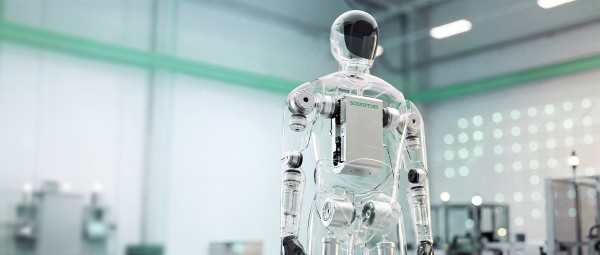
Humanoid robotics is entering a more operational phase: fewer “look what it can do” clips, more factory pilot language, and more discussion about embodied AI software stacks and safety cases. The most concrete signal in the sources provided is BMW Group’s announcement that it will run a humanoid-robot pilot in series-production context at its Leipzig plant in Germany—framed as “Physical AI” in production.
At the same time, market research and investor commentary point to a broad “pilot-to-platform” narrative. Those pieces are useful for directional context, but they often contain limited verifiable detail (units deployed, uptime, cost, safety constraints, and integration scope). This brief separates what is explicitly stated from what remains unclear.
Quick answer
BMW Group says it will deploy humanoid robots in production in Germany for the first time via a pilot at Plant Leipzig and has created a “Center of Competence for Physical AI in Production” to accelerate AI/robotics integration across plants (BMW press release). For humanoid robotics, this matters because it’s a named, location-specific production pilot at a major manufacturer—an environment where requirements (safety, cycle time, uptime, change control) are harder than staged demos.
The key operator takeaway: treat 2026 as a validation year for repeatable tasks, measurable uptime, and maintainable integration, not as proof that general-purpose humanoids are already ready for broad rollout. Market forecasts and “race to platform” narratives can inform strategy, but buyers should demand basic operational numbers (task list, run time, faults, intervention rate, and economics) before concluding the tech is deployment-ready at scale.
What happened (verifiable signals)
BMW: pilot deployment in Germany + a new internal competence center
BMW Group states it is launching a pilot project with humanoid robots at BMW Group Plant Leipzig, describing this as bringing “Physical AI” to Europe and aiming to integrate humanoid robotics into existing series production of cars, with exploration of additional applications in battery and component production. BMW also states that a “first pilot deployment of humanoid robots” was successfully completed at BMW Group Plant Spartanburg in the U.S., and that a new “Center of Competence for Physical AI in Production” will accelerate integration globally (BMW press release).
What BMW does not provide in the press release (important for operators): robot model(s), vendor(s), unit count, task cycle times, safety certification approach, uptime targets, or whether the pilot is hands-off or heavily supervised.
Market and investor research: “pilots to platform” framing
Two market-research sources provided (BIS Research and IDTechEx) position humanoids as moving from pilots toward task-specific deployments and highlight convergence between humanoid hardware and “embodied AI” software stacks.
- BIS Research’s report page describes trends including a “commercial shift from pilot programs to task-specific industrial deployment” and “rapid convergence of humanoid hardware with embodied AI foundation models” (BIS Research). The page does not, in the excerpt available here, offer auditable deployment metrics.
- IDTechEx’s humanoid-robots report page is a gateway to its paid research. The “trending context” you provided mentions production/deployment plans attributed to companies, but those specific numbers are not verifiable from the visible snippet alone without access to the underlying report text (IDTechEx).
Investor commentary similarly emphasizes a shift from pilot to platform, but it should be read as thematic rather than as ground truth for unit counts and readiness (KraneShares).
Background definitions: what “humanoid robot” includes
For readers aligning on terminology, Wikipedia’s overview is a reasonable starting point: humanoids are typically characterized by a human-like body plan and are discussed in terms of sensors, actuators (electric/hydraulic/pneumatic), and planning/control, with applications spanning research, medical, entertainment, and demonstration contexts (Wikipedia).
Context: why manufacturers keep revisiting humanoid form factors
In a factory, many tasks were designed around human reach envelopes, tool grips, ladders/stairs, narrow aisles, and workstations. A humanoid form factor is attractive when you want environment reuse (minimal retooling) and task flexibility across many “small automation” gaps.
But humanoid promise is constrained by:
- Whole-body safety (contact events, pinch points, tool use)
- Sustained uptime (not just a 60-second demo)
- Maintenance and spares (actuators, gearboxes, cables, battery packs)
- Programming and changeovers (how fast you can re-task without a PhD)
BMW’s language—“pilot project,” “integration into existing series production,” and creating a competence center—fits the pattern of organizations preparing to manage these constraints systematically, not just trialing a gadget (BMW press release).
Why it matters (operators, founders, investors)
For operators and buyers: procurement moves from “cool” to “measurable”
A major OEM publicly naming a plant and describing production integration raises expectations for what “pilot” means:
- A defined task list (e.g., kitting, bin picking, cart handling, inspection support)
- A defined operating boundary (speed limits, force limits, geofences, E-stop behavior)
- Human factors: training, interventions, SOPs
If a vendor can’t provide these, the program is closer to evaluation than deployment.
For founders and robotics teams: integration and reliability win over novelty
BMW’s “Center of Competence” framing signals that large customers will increasingly judge humanoids on:
- Safety documentation and risk assessment compatibility
- IT/OT integration (MES hooks, traceability, authentication)
- Service model (MTTR, field swaps, spare parts)
For investors: pilots are necessary but not sufficient evidence
Pilots at marquee sites can reduce perceived risk, but they don’t answer:
- Can the robot run a shift with acceptable intervention?
- Are the economics competitive with fixed automation, cobots, or human labor?
- Is the solution generalizable across sites or mostly custom integration?
The numbers, plainly explained (and what we can’t confirm)
The sources here do not provide hard operational metrics for BMW’s pilot—no unit counts, run hours, or productivity numbers in the visible press text (BMW press release). That limits what can be concluded.
Separately, the “trending context” excerpt attributes specific production/deployment plans to other companies via IDTechEx, but those figures are not verifiable from the publicly visible report landing page excerpt alone (IDTechEx). If you have the underlying report PDF or quoted passages, HumanoidHub can incorporate those numbers with proper citations.
Practical reading of “pilot” without metrics:
- A pilot may mean anything from a few supervised shifts to a constrained workcell trial.
- Without disclosed unit count and hours, you cannot infer scaling readiness.
Practical implications: how to evaluate humanoids in a production pilot
If you are an operator, integrator, or buyer setting up (or judging) a humanoid pilot, push for the following deliverables early:
- Task definition and success criteria
- What exact SKU/container/fixture set?
- What is “done”: placement tolerance, torque, scan confirmation, etc.?
- Operational reliability metrics
- Mean time between intervention (MTBI)
- Fault taxonomy (perception, grasp, locomotion, comms)
- Recovery behavior (self-recovery vs manual reset)
- Safety and compliance evidence
- Documented hazard analysis and mitigations
- Speed/force limiting strategy and validation method
- Clear rules for tool use and human proximity
- Changeover cost
- Time to re-task (hours/days)
- Who can do it (controls engineer vs line lead)
- Service model
- Spare parts list and lead times
- Swap strategy (actuator modules, hands, battery)
BMW’s framing suggests they are building internal capability to evaluate and scale such programs, which is often a prerequisite for enterprise-wide rollout (BMW press release).
Competitive / ecosystem context (careful comparison)
Within the sources provided, only BMW’s announcement is a clearly dated, primary-source statement about a specific production pilot and an internal organizational move (competence center).
Other sources in the list (market reports, investor research, social posts, and general explainers) discuss the category broadly:
- Market-report pages (BIS Research, IDTechEx) describe trends and forecasts but provide limited auditable deployment detail in the publicly visible text (BIS Research, IDTechEx).
- Social video content can show interesting demonstrations (e.g., multi-robot coordination), but without provenance on conditions, autonomy level, retakes, and safety constraints, it should not be treated as evidence of production readiness (Instagram reel).
What we can responsibly say: public messaging across manufacturers, researchers, and capital markets is converging on industrial pilots and software platforms as the next battleground. What we cannot verify from these sources alone: who is leading on uptime, cost, safety certification maturity, or scaled deployments.
What we are not concluding (uncertainties to avoid over-reading)
- We are not concluding that BMW has approved large-scale humanoid deployment in Europe; the source describes a pilot project and exploration of use cases, without scale commitments (BMW press release).
- We are not concluding that humanoids are broadly “ready” for general factory work; no uptime/cost/safety metrics are provided in the sources.
- We are not using market-forecast pages as proof of near-term unit volumes; forecasts can be useful, but they are not operational evidence (BIS Research, KraneShares).
What to watch next
- BMW follow-up disclosures: vendor name(s), task scope, and whether the Leipzig pilot is in a fenced cell vs open line work. The difference changes the safety and ROI story dramatically.
- Published performance metrics: intervention rate, run hours, shift coverage, and maintenance cadence.
- Tooling and manipulation milestones: in many factories, hands/tools and perception under harsh lighting are tougher than locomotion.
- Standardization: whether buyers converge on common interfaces for fleet management, safety logging, and changeover workflows.
Where to go next (HumanoidHub navigation)
- Explore the broader landscape of humanoid robotics companies and platforms: /explore
- Browse vendors and manufacturer pages: /brands
- Compare robots and specs where available: /compare
FAQ
What did BMW announce about humanoid robots?
BMW Group announced it will launch a pilot project deploying humanoid robots at its Leipzig plant in Germany and created a “Center of Competence for Physical AI in Production” to accelerate AI and robotics integration across production sites (BMW press release).
Does BMW’s announcement mean humanoid robots are already deployed at scale in factories?
No. BMW’s statement describes a pilot project and does not disclose unit counts, operating hours, or large-scale rollout plans, so it should be interpreted as structured evaluation rather than proof of scaled deployment (BMW press release).
Why do people want humanoid robots instead of traditional industrial robots?
Humanoid robots are often proposed because a human-like form factor could work in spaces and workflows designed around people, potentially reducing retooling and enabling more flexible task coverage; however, this comes with harder safety, reliability, and maintenance requirements (Wikipedia).
Can social media videos prove a humanoid robot is production-ready?
A social media video can demonstrate capabilities, but it usually does not provide the operational details (supervision level, retakes, safety constraints, run hours, fault rates) needed to assess production readiness, so it should be treated as a demo, not as deployment evidence (Instagram reel).
What should a factory ask for in a humanoid-robot pilot?
A factory should ask for a clear task definition, measurable reliability targets (e.g., intervention rates), documented safety/risk controls, changeover time estimates, and a service/spares plan, because these determine whether a pilot can transition into repeatable operations.
Sources
- BMW Group press release: “BMW Group to deploy humanoid robots in production in Germany for the first time” (27.02.2026) — https://www.press.bmwgroup.com/global/article/detail/T0455864EN/bmw-group-to-deploy-humanoid-robots-in-production-in-germany-for-the-first-time?language=en
- Wikipedia: “Humanoid robot” — https://en.wikipedia.org/wiki/Humanoid_robot
- BIS Research: “Humanoid Robot Market” (report page) — https://bisresearch.com/industry-report/humanoid-robot-market.html
- IDTechEx: “Humanoid Robots 2025–2035” (report page) — https://www.idtechex.com/en/research-report/humanoid-robots/1093
- KraneShares: “Humanoid Robotics In 2026: The Race From Pilot To Platform” — https://kraneshares.com/humanoid-robotics-in-2026-the-race-from-pilot-to-platform
- Instagram reel (demo-style content; interpret cautiously) — https://www.instagram.com/reel/DZqk9wEhI9Q