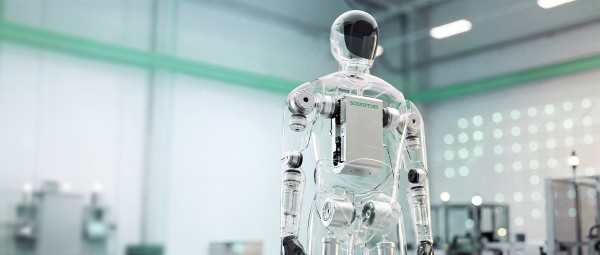
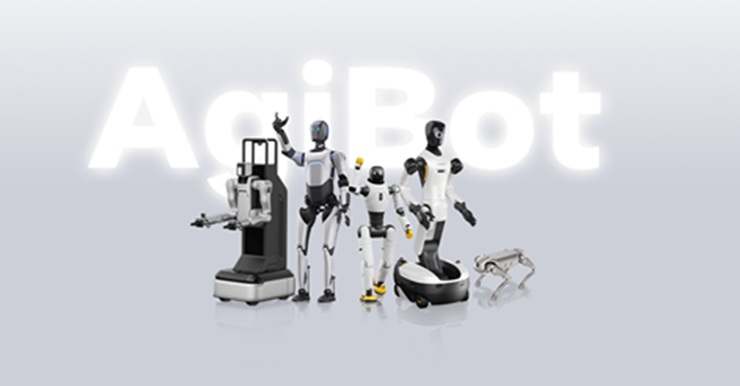
Humanoid robotics is entering a more operational phase in 2026: fewer “one-off demo videos,” more factory-floor pilots, and a widening ecosystem of platforms, simulation, and compute aimed at getting robots to do repeatable work safely.
The challenge for operators and buyers is separating public, dateable signals (press releases, published studies, verified pricing) from forward-looking claims (production targets, broad market forecasts, and implied “general-purpose” capability).
Quick answer
Humanoid robotics in 2026 is moving from prototype showcase to early commercial pilots, with large manufacturers publicly testing humanoids in production environments and market researchers projecting rapid growth. The most concrete signal in the provided sources is BMW Group’s announcement of a pilot project deploying humanoid robots in production at Plant Leipzig (Germany), alongside the creation of a “Center of Competence for Physical AI in Production.” This matters because it reframes humanoids from R&D curiosities into line-integrated automation experiments, where safety cases, uptime, and task economics become the deciding factors—not agility demos.
At the same time, publicly available pricing and market-sizing data is mixed in quality: some prices are verified from official sources, while many market numbers are forecasts with unclear assumptions. Operators should treat 2026 as the year to validate: Which tasks, under what constraints, at what reliability, and at what total cost of ownership?
What’s happening (the grounded signals)
1) OEMs are publicly trialing humanoids on real production lines
BMW Group states it will deploy humanoid robots in production in Germany “for the first time,” via a pilot project at Plant Leipzig, and notes a prior pilot deployment completed at Plant Spartanburg (USA). BMW frames this under “Physical AI” (AI combined with real machines/robots) and also announces a new “Center of Competence for Physical AI in Production.”
What we can responsibly infer from this:
- A major automaker is willing to run humanoids in series-production-adjacent conditions (even if initially limited scope). That is a step beyond typical lab testing.
- BMW is emphasizing integration into existing production processes, which usually means interfacing with current tooling, work instructions, safety zones, and quality systems.
What we cannot infer from the press release alone:
- The robot model(s), unit counts, cycle times, uptime, or the exact tasks.
- Whether the pilot is cost-justified or mainly exploratory.
Source: BMW Group press release (Feb 27, 2026)
2) Studies describe broad maturity gains—but not always with verifiable metrics
The 2026 Humanoid Robot Study (consult-ing.ag PDF) describes rapid market evolution year-over-year and claims progress across mobility, perception, manipulation, and task execution, with use cases spanning manufacturing, logistics, healthcare, services, security, education, and household scenarios.
This is directionally useful for strategy and scanning—but it’s not the same as operational proof. Unless the study provides task-level performance, safety certification detail, or deployment KPIs (not shown in the provided excerpt), operators should use it as a trend map, not a procurement spec.
Source: 2026 Humanoid Robot Study (PDF)
3) Public “market size” projections are aggressive—and should be read as scenarios
MarketsandMarkets estimates the global humanoid robot market at USD 2.92B in 2025 and projects USD 15.26B by 2030 (39.2% CAGR). These numbers can be helpful for investors and for framing supplier attention, but they are forecasts that depend heavily on category definitions (what counts as “humanoid”), ASP assumptions, and deployment pace.
Source: MarketsandMarkets humanoid robot market analysis
The numbers, in plain English (and what they do not prove)
“Market will grow fast” ≠ “your site can deploy safely next quarter”
Forecasts (like MarketsandMarkets) may reflect expected demand, capital inflows, and platform maturation. They do not confirm:
- That humanoids can meet your takt time
- That they can sustain uptime across shifts
- That your safety and compliance team can sign off quickly
“Consumer price under $25k” needs careful interpretation
Robozaps reports verified pricing for some consumer-oriented humanoids (e.g., Unitree models) and lists other prices as estimated or from announcements. The page itself flags that only certain prices are verified from official sources and others are estimates.
Operational takeaway:
- Pricing is becoming more legible publicly, but buyers still need to confirm what is included (hands, batteries, service plan, compute, teleop, warranty, training) and what autonomy level is actually delivered.
Source: Robozaps Humanoid Robot Industry Report 2026
Context: why humanoid form factor is being pushed (and why it’s still hard)
Humanoid robots are generally defined as robots that resemble the human body in form (torso/head/two arms/two legs), often to operate in human-built environments and use human tools.
In industrial terms, the promise is not “human replacement,” but environmental compatibility: stairs, narrow aisles, door handles, carts, standard fixtures, and tools that were not designed for AMRs or fixed automation.
But the humanoid stack is intrinsically coupled:
- Locomotion affects manipulation stability.
- Manipulation affects safety (pinch/crush risk) and quality (force control).
- Perception affects everything (mis-grasps, collisions, uncertainty).
Source (definition-level context): Wikipedia: Humanoid robot
Why it matters (operators, founders, investors)
For operators and buyers
BMW’s pilot announcement is a reminder that the “next step” is not another demo—it’s:
- A task selection process (high value, low ambiguity, bounded variability)
- A safety case (risk assessment, speed/force limits, e-stop, zones)
- A reliability plan (MTBF/MTTR targets, spares, maintenance)
- A data loop (teleop, logging, sim-to-real updates, QA feedback)
If large OEMs are trialing humanoids, suppliers will increasingly be asked for these artifacts—not just capability videos.
For founders and engineers
The market is pulling toward “platformization”: repeatable hardware SKUs, standardized dev tools, simulation, and deployment tooling. NVIDIA’s humanoid robotics page signals continued investment in simulation/compute tooling aimed at embodied AI and robotics development.
Source: NVIDIA humanoid robots use case page
For investors
A credible indicator of near-term value is not the most impressive motion clip; it’s who is integrating humanoids into production pilots (like BMW) and whether the ecosystem can support deployments (service, safety, updates, spare parts).
Practical implications: how to evaluate a humanoid pilot in 2026
Use this checklist to turn “pilot interest” into an operator-grade plan:
- Define the job
- One job, one station, one SKU family where possible.
- Specify: objects, weights, tolerances, target cycle time, acceptable error rate.
- Decide the autonomy level up front
- Fully autonomous vs supervised autonomy vs teleop-assisted.
- Require the vendor to state what is autonomous today vs roadmap.
- Insist on deployment metrics Ask for (and log yourself):
- Uptime by shift
- Interventions/hour
- Near-miss and safety stop counts
- Pick success rate and defect rate
- Model total cost of ownership (TCO) Include:
- Service/support contract
- Spare parts lead time
- On-site training
- Compute subscriptions (if any)
- Operator time for supervision/teleop
- Plan the safety pathway Even in pilots, align early with your EHS team on:
- Speed/force limits
- Workspace zoning
- Human presence detection
- Emergency stop and recovery procedures
Competitive / ecosystem snapshot (what can and can’t be verified from sources)
What’s verifiable in the provided sources:
- BMW Group is conducting humanoid robotics pilots in production environments and establishing internal capability around “Physical AI.” (BMW source)
- Market research firms and industry reports claim accelerating commercialization and provide market forecasts. (MarketsandMarkets, consult-ing PDF)
- Some publicly listed robot prices are “verified” while many others are estimated. (Robozaps)
What is not verifiable from the provided material (and should not be assumed):
- Which humanoid vendor(s) BMW is using, how many units, and what tasks they perform.
- Whether any specific vendor has reached “mass production” in the automotive sense.
- Cross-company benchmarks on payload, cycle time, or safety performance under comparable conditions.
What we are not concluding (to avoid overreading 2026)
- A BMW pilot is not proof that humanoids are broadly ready for automotive assembly at scale.
- A market forecast is not evidence that unit economics work at your facility.
- A low headline price for a robot is not evidence that it can perform your task without significant integration, supervision, or tooling changes.
What to watch next (signals that matter more than hype)
- Task disclosure: which station(s) are being automated (kitting, intralogistics handoffs, machine tending, inspection, etc.).
- KPIs from pilots: uptime, interventions/hour, and safety events.
- Deployment model: sold as capex, robotics-as-a-service, or managed service.
- Tooling ecosystem: end effectors, quick-change tools, and integration with MES/SCADA.
- Support maturity: regional field service, spares, and documented maintenance.
Where to go next
- Explore humanoid robots and vendors: /explore
- Browse companies/brands: /brands
- Compare robots side-by-side (when models are available in the directory): /compare
- If you’re evaluating deployments: /solutions
FAQ
What is a humanoid robot?
A humanoid robot is a robot with a human-like body form—typically a torso, two arms, and two legs—often intended to operate in human environments and interact with human tools. Source: https://en.wikipedia.org/wiki/Humanoid_robot
What did BMW announce about humanoid robots in 2026?
BMW Group announced a pilot project to deploy humanoid robots in production at its Leipzig plant in Germany, and it referenced a first pilot deployment completed at its Spartanburg plant in the USA. Source: https://www.press.bmwgroup.com/global/article/detail/T0455864EN/bmw-group-to-deploy-humanoid-robots-in-production-in-germany-for-the-first-time?language=en
Does a factory pilot mean humanoid robots are ready for mass deployment?
A factory pilot does not mean humanoid robots are ready for mass deployment; it indicates controlled testing in real workflows. Readiness depends on task performance, safety validation, uptime, and integration effort, which are often not disclosed in early announcements.
Are humanoid robot prices really dropping below $25,000?
Some humanoid robot prices are publicly listed below $25,000, but pricing data varies in verification quality and may exclude deployment costs such as service, spares, autonomy software, or integration. Robozaps notes that only some prices are verified from official sources. Source: https://blog.robozaps.com/b/humanoid-robot-industry-report-2026
How should an operator evaluate a humanoid robot for a pilot?
An operator should evaluate a humanoid robot pilot by defining a narrow task, specifying the autonomy level, logging deployment KPIs (uptime, interventions, safety stops), modeling total cost of ownership, and aligning early on safety requirements with EHS and compliance teams.
Sources
- consult-ing.ag (PDF): https://consult-ing.ag/uploads/pdfs/2026_ING.-Humanoid-Robot-Study.pdf
- BMW Group PressClub: https://www.press.bmwgroup.com/global/article/detail/T0455864EN/bmw-group-to-deploy-humanoid-robots-in-production-in-germany-for-the-first-time?language=en
- MarketsandMarkets: https://www.marketsandmarkets.com/ResearchInsight/humanoid-robot-market-analysis.asp
- Robozaps: https://blog.robozaps.com/b/humanoid-robot-industry-report-2026
- Wikipedia (definition/context): https://en.wikipedia.org/wiki/Humanoid_robot
- NVIDIA use case page: https://www.nvidia.com/en-us/use-cases/humanoid-robots