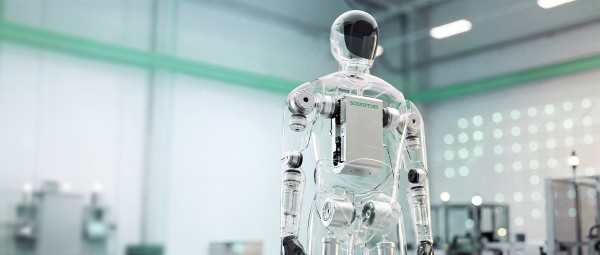
Humanoid robotics is moving from impressive videos to operator-style questions: Where will it run, under what safety rules, with what uptime, and who supports it when it breaks?
One of the clearest public signals is BMW Group’s announcement that it will launch a pilot project with humanoid robots at its Leipzig plant—its first such production pilot in Germany—positioned under the company’s “Physical AI” framing for AI connected to real machines in production environments. At the same time, industry reports and vendor messaging are converging on a similar story: early deployments are increasingly task-scoped (a small number of repeatable motions in constrained areas) rather than “general-purpose humanoids” roaming the whole facility.
Quick answer
BMW Group says it will pilot humanoid robots in series production at its Leipzig plant in Germany, building on learnings from a previous pilot at its Spartanburg plant in the US. For humanoid robotics, the significance is less about any single robot model and more about the operational pattern: large manufacturers are testing humanoids as part of existing production systems, implying rising expectations around safety cases, IT/data integration, and measurable ROI—not just capability demos.
What to do with this as an operator or buyer: treat “pilot in production” as a prompt to request task definitions, cycle times, fault handling, supervision requirements, and integration approach before you infer scale or broad readiness.
What happened (and what BMW actually said)
BMW Group’s press release states that the company is bringing “Physical AI” to Europe via a pilot project with humanoid robots at the Leipzig plant, with the aim of integrating humanoid robotics into existing series production and exploring additional applications in battery and component production. BMW also states that it ran a successful pilot with humanoid robots at its Spartanburg plant the previous year, and that insights from that work are being used to further develop and scale “Physical AI” applications. Source: BMW Group press release.
Two details matter for interpretation:
- This is a pilot, not a rollout. BMW describes evaluation and learning objectives, which is consistent with early-stage deployment.
- BMW frames humanoids as part of a broader production technology stack (digital twins, AI-enabled quality checks, intralogistics systems), suggesting integration is a first-class requirement—not optional “robot in a corner.”
Context: the industry is converging on task-first deployment
Public market research and industry commentary (from market analysts and industry associations) increasingly describe a shift from demos to deployments that are:
- Task-specific (e.g., a particular handling step, tending, or internal logistics move)
- Constrained in environment (clearly bounded work cells, defined traffic patterns)
- Integration-heavy (plant IT, data models, safety systems, and workflow software)
BIS Research’s table-of-contents preview explicitly flags a “commercial shift from pilot programs to task-specific industrial deployment” as a trend, while also calling out unresolved issues like safety and ROI validation. Source: BIS Research report page (TOC preview language).
The Association for Advancing Automation (A3/automate.org) similarly highlights hurdles to widespread humanoid adoption—useful as a checklist of why many pilots do not immediately become scaled rollouts. Source: A3 article.
Why it matters (operators, founders, investors)
For operators and buyers
BMW’s Leipzig pilot is a signal that large manufacturers are willing to test humanoids inside real production systems. That elevates the standard for vendors:
- Safety: not only “can it avoid obstacles,” but “what is the certified safety concept for people, aisles, and mixed traffic?”
- Maintainability: spares, MTTR, and operator-level recovery procedures.
- Integration: how the robot fits into work instructions, QA traceability, and production planning.
If your facility has labor gaps in repetitive tasks, the key implication is that humanoids may be evaluated the same way you evaluate other automation: by throughput, quality impact, and operational burden, not novelty.
For founders and engineering teams
The bar is moving from “capability” to “deployability.” “Deployability” tends to mean:
- Robust perception under plant lighting and occlusions
- Repeatable manipulation with measurable yield
- Instrumentation (logs, diagnostics, remote support)
- Upgradable autonomy without breaking validated workflows
BMW’s “unified IT and data model” framing implies that production customers will increasingly ask: How does your system fit into our data model and governance? Source: BMW press release.
For investors
A pilot in a major OEM context is not a guarantee of scale, but it is a meaningful indicator of:
- Budget allocation for experimentation
- Internal champions and competence centers
- A potential pathway from pilot → standardized deployment playbooks
The investment takeaway is to look for evidence of repeatable deployment patterns: same task, different site; same robot, multiple customers; reduced supervision over time.
The numbers (plain English, without hype)
Some sources in this brief contain market size, pricing, and “commercially available” claims. Here is what can be stated cautiously from what’s provided:
-
Market size forecasts: MarketsandMarkets claims the humanoid robot market was valued at USD 2.92B in 2025 and projects USD 15.26B by 2030 (with a stated CAGR). Treat this as a directional estimate; forecasts vary widely depending on definitions (what counts as a humanoid, and whether services are included). Source: MarketsandMarkets insight page.
-
Pricing ranges and “availability”: The Robozaps “Humanoid Robot Industry Report 2026” states it tracks 26 humanoid robots and includes pricing, with only some prices described as verified from official sources. Because this is a secondary compilation and the excerpt itself notes mixed verification status, treat the price index as indicative rather than definitive for procurement planning. Source: Robozaps report page.
-
BMW deployment specifics (units, cycle time, ROI): BMW’s press release (as summarized in the excerpt provided) does not publish unit counts, takt times, operating hours, or ROI. That’s normal for early pilots and proprietary production lines.
If you are evaluating a pilot, the practical “numbers” to demand are not market forecasts—they are your trial metrics: cycle time, yield, hours between interventions, and time-to-recover from common faults.
Competitive / ecosystem context (what we can and cannot verify)
What is verifiable from public sources in this brief
- BMW is doing a humanoid pilot at Leipzig and says it had a prior pilot at Spartanburg. Source: BMW.
- Multiple market and industry bodies publicly describe a shift toward task-scoped industrial deployments and identify unresolved hurdles (especially safety and ROI). Sources: BIS Research TOC preview; A3.
- Vendors like Agility Robotics publicly position their work around industrial humanoid automation and deployments (details vary by page and are not fully captured in the excerpt). Source: Agility Robotics website.
- Agile Robots has publicly announced “Agile One” as a humanoid robot “for industry” (announcement framing, not necessarily proof of broad availability or deployment scale). Source: Agile Robots news post.
What we cannot verify from the provided material
- Which specific humanoid robot model BMW is using at Leipzig, how many units are involved, or what tasks are being automated (beyond general “series production” integration aims).
- Any claims of “world-class” performance (e.g., success rates) without the underlying measurement context, test conditions, and independent validation. (The HumanoidRoboticsTechnology.com excerpt references a 99.5%+ task success rate for a Sanctuary AI wire-plugging task, but the brief does not include full measurement details; treat as a vendor-reported metric until you can review the original post and methodology.) Source: HumanoidRoboticsTechnology.com homepage excerpt.
- Claims of “commercial availability” across the industry: secondary lists often mix preorder/reservation, prototypes, limited release, and true GA.
Practical implications: how to evaluate a humanoid pilot like an operator
If you are planning a pilot or responding to internal interest, the BMW-style “Physical AI in production” framing suggests a checklist:
-
Define the task boundary
- What exact work element is the humanoid responsible for?
- What is the allowed variance (part orientation, packaging, lighting, clutter)?
-
Ask for intervention math
- How often does a human have to step in per hour/shift?
- What are the top 5 intervention reasons and recovery steps?
-
Safety case and site rules
- What standards and risk assessment approach are used?
- How is the robot separated from or coordinated with pedestrians and vehicles?
-
Integration and governance
- What systems does it need: MES/WMS, digital work instructions, QA traceability, identity/access controls?
- What data is logged, where is it stored, and who owns it?
-
Support model
- What spares are on site?
- What is the escalation path and target MTTR?
This is where many pilots succeed or fail. The “robot” is only half the project; the other half is the operational wrapper.
What we are not concluding (uncertainty and overreads to avoid)
- A BMW pilot does not mean humanoids are now a standard production tool across automotive. It means BMW is testing integration and applicability in a real plant.
- Market forecasts do not guarantee near-term demand for any specific vendor or form factor.
- A headline about “deploying humanoids in production” does not tell you: unit counts, uptime, safety certification scope, labor substitution vs. augmentation, or whether the system is economically competitive.
Until pilots publish task metrics (or operators share postmortems), the most honest stance is: the direction is promising, the operational proof is still forming.
What to watch next
- BMW follow-up disclosures: unit count, task descriptions, and whether the pilot expands beyond a constrained cell or step.
- Repeatability: the same humanoid platform successfully deployed at multiple sites, with similar KPIs.
- Safety and compliance milestones: clearer patterns for certifying humanoids in mixed human environments.
- “Physical AI” integration patterns: how OEMs standardize data models, simulation/digital twins, and QA logging for embodied systems.
Where to go next (HumanoidHub navigation)
- Explore current humanoid robots and vendors: /explore
- Browse robotics brands and manufacturers: /brands
- Compare robots by specs and intended use cases (when available): /compare
- If you’re buying for logistics, manufacturing, or warehousing, start from solution views: /solutions
FAQ
What did BMW announce about humanoid robots?
BMW Group announced it will launch a pilot project with humanoid robots at its Leipzig plant in Germany, aiming to integrate humanoid robotics into existing series production and explore additional applications in batteries and components. Source: BMW Group press release.
Does BMW’s Leipzig pilot mean humanoid robots are ready for full factory rollout?
BMW’s Leipzig project is described as a pilot, which indicates evaluation and learning rather than a confirmed full rollout. A pilot can succeed technically yet still face cost, safety, and integration constraints that slow scaling. Source: BMW Group press release.
What is “Physical AI” in manufacturing contexts?
In BMW’s framing, “Physical AI” combines digital AI with real machines and robots so intelligent systems can operate in real-world production processes. Practically, this implies tight integration with plant data systems, workflows, and operational constraints. Source: BMW Group press release.
What are the biggest hurdles to widespread humanoid robot adoption?
Industry commentary highlights hurdles including safety validation in mixed human environments, uncertain ROI at scale, and the operational burden of maintaining and supervising systems. Source: A3 (automate.org) article; BIS Research trend language.
How should an operator evaluate a humanoid robot pilot?
An operator should evaluate a humanoid robot pilot by tracking cycle time and yield, intervention frequency, fault recovery time, safety case completeness, and integration fit with MES/WMS/QA systems—rather than relying on demos or market forecasts. This approach aligns with how OEM pilots are framed around production integration. Source: BMW Group press release context.
Sources
- BMW Group press release: BMW Group to deploy humanoid robots in production in Germany for the first time
- BIS Research: Humanoid Robot Market report page (TOC preview)
- MarketsandMarkets: Humanoid robot market analysis insight
- A3 / Automate: What hurdles remain for widespread humanoid adoption
- Agility Robotics: Industrial Humanoid Automation
- Robozaps: Humanoid Robot Industry Report 2026
- Humanoid Robotics Technology (industry aggregation site): humanoidroboticstechnology.com
- Agile Robots: Agile Robots launches humanoid robot for industry “Agile One”