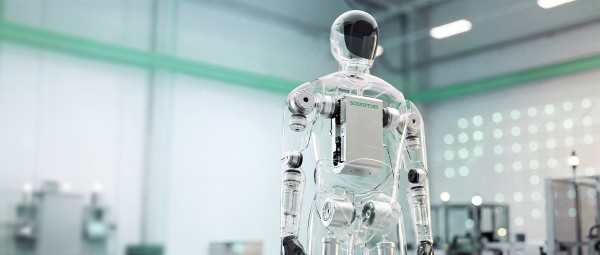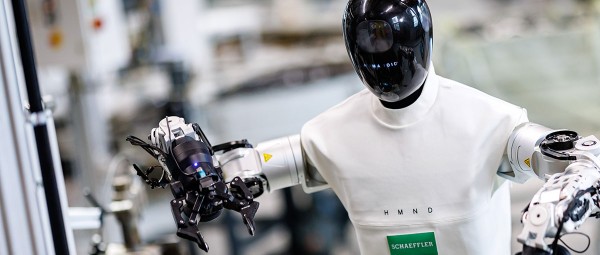
BMW Group says it will deploy humanoid robots in production in Germany for the first time, launching a pilot at Plant Leipzig and setting up a new “Center of Competence for Physical AI in Production.” The announcement is notable less for flashy demos and more because it frames humanoids as a production-integration program: evaluation, site testing, and scaling pathways across plants and processes—if the pilots hold up.
This brief focuses on what BMW actually claimed, the operational questions that matter if you run a plant, and the gaps you should not fill with assumptions.
Quick answer
BMW announced (Feb 27, 2026) a pilot project to integrate humanoid robots into existing series car production at its Leipzig plant in Germany, under a broader initiative it calls “Physical AI,” and said a first pilot deployment was already completed at its Spartanburg plant in the US. If BMW can validate safety, uptime, and task economics in real workflows—not just in fenced demos—it would be a meaningful signal that large manufacturers are preparing for humanoids as flexible automation inside human-designed facilities rather than as long-horizon R&D. The key unknowns are which robot(s), how many units, which tasks, what autonomy level, and what performance metrics BMW will publish.
What BMW announced (and what it didn’t)
From BMW’s press release, the confirmed elements are:
- A “pilot project with humanoid robots” at BMW Group Plant Leipzig in Germany, aimed at integrating humanoid robotics into existing series production and exploring additional applications in battery and component production. (BMW PressClub)
- BMW describes its approach as “Physical AI,” defined in the release as combining digital AI with real machines and robots to integrate intelligent systems (including humanoids) into real production processes. (BMW PressClub)
- BMW also states that a “first pilot deployment of humanoid robots” was successfully completed at Plant Spartanburg in the United States. (BMW PressClub)
- BMW says it is launching a new “Center of Competence for Physical AI in Production” to accelerate integration of AI and robotics in production globally. (BMW PressClub)
What BMW’s release does not clearly specify (and therefore should not be inferred):
- The humanoid robot manufacturer/model used in Leipzig or Spartanburg
- The number of robots, shift coverage, or duration of the pilot
- The tasks (e.g., kitting, line-side material handling, fastening, inspection) and whether they are safety-rated collaborative operations
- The autonomy level (teleoperation vs supervised autonomy vs task autonomy)
- KPIs: cycle time impact, uptime, mean time to recovery, incident rates, or cost per hour
For operators and buyers, those missing details are the difference between “interesting headline” and “procurement-relevant signal.”
Context: why humanoids keep getting pulled into factories
Humanoid robots are typically framed as general-purpose machines designed to operate in human environments—spaces built around human reach, stairs, doors, carts, and hand tools. The foundational idea (not unique to BMW) is that a humanoid form can reduce the need to redesign facilities compared with specialized automation. (Wikipedia overview)
But the industry is still early. Even bullish market commentary often describes today’s stage as moving from pilot projects to platform-building—standardizing hardware, software, and deployment playbooks so that robots can be rolled out repeatably across sites. (KraneShares)
That’s why BMW’s creation of a Center of Competence matters: it suggests an internal structure for turning pilots into standardized deployments—if pilots meet operational requirements.
Why this matters for operators, integrators, and buyers
1) “Series production” language raises the bar
BMW explicitly ties the Leipzig pilot to existing series production rather than a greenfield lab cell. (BMW PressClub)
In plain English: series production implies real constraints—line takt, safety systems, mixed-model variability, and strict downtime intolerance. A humanoid that only works in a staged demo does not survive here. If BMW is serious, it will need to validate:
- Safe interaction with people, carts, and fixed automation
- Recoverability (what happens when the robot fails mid-task?)
- Uptime and service model (spares, maintenance, remote support)
- Changeover performance when SKUs, bins, or routes change
2) “Physical AI” is an integration claim, not a product spec
BMW’s “Physical AI” framing emphasizes system integration: combining AI with machines/robots in production workflows. (BMW PressClub)
For a plant team, the key question is not the label—it’s whether the deployment stack includes:
- A workflow interface (work instructions, exception handling)
- Perception + localization that works with reflective surfaces, occlusions, and inconsistent lighting
- Safety case documentation suitable for industrial environments
- A simulation / validation loop to test tasks before running them near people and equipment
3) It signals budget, governance, and repetition potential
A dedicated competency center can mean:
- Centralized evaluation of vendors and platforms
- Shared safety and commissioning documentation
- Standard tooling for teleoperation, fleet monitoring, and incident review
That’s not proof of scaling, but it’s a common prerequisite.
The numbers problem: what you should ask for (because BMW didn’t publish it)
BMW did not publish unit counts, hours, or productivity measures in the provided release. That’s normal for early pilots—but it means external readers cannot compute ROI or readiness.
If you are benchmarking this announcement, the practical “numbers” questions are:
- How many robots were deployed? One robot doing demos is different from multiple robots covering multiple shifts.
- How many hours on task? “Successful pilot” can mean anything from a short evaluation to sustained operation.
- What percentage of tasks were autonomous vs teleoperated? Autonomy level is a core cost driver.
- What is the failure mode and recovery time? A robot that needs long resets can be a line-stopper.
- What is the safety setup? Full fencing vs collaborative operation changes layout and throughput.
Until BMW (or partners) publishes these, treat the announcement as an integration intent and validation milestone, not a proof of mass deployment.
Competitive and ecosystem context (verifiable vs not)
What can be said with the sources provided
- The BMW press release is a first-party confirmation that a major OEM is piloting humanoids in Germany and claims a completed pilot in the US. (BMW PressClub)
- Industry research/analysis sources describe a broader trend of moving from pilots toward platforms, especially in sectors like manufacturing and logistics. (KraneShares; IDTechEx landing page)
What cannot be verified from the provided sources
- Which humanoid vendor BMW used
- Whether the pilot is connected to a specific commercial platform (e.g., a particular robot model or AI stack)
- Comparative performance versus other OEM pilots (no common KPIs published here)
There are many “top robot” roundups and opinionated rankings online, but they often mix demos, prototypes, and commercial deployments without consistent evidence standards. If you use such lists for sourcing, cross-check each claim back to primary press releases, customer case studies, or safety/industrial documentation.
Practical implications: what to do if you’re evaluating humanoids for a facility
If BMW’s announcement has you revisiting your roadmap, here are concrete steps that don’t require waiting for more headlines:
- Identify candidate tasks that are “human-shaped,” not robot-shaped. Start with tasks where the environment is already optimized for people: moving totes, loading/unloading carts, simple pick/place, or basic inspection routes.
- Define your acceptance KPIs early. For pilots, include: hours-on-task, recoveries per shift, mean time to recovery, human interventions per hour, and safety incidents/near misses.
- Plan for the autonomy reality. Many early deployments depend on supervised autonomy or teleoperation for edge cases. Budget and staffing should reflect that.
- Demand a commissioning playbook. Ask vendors/integrators how they map tasks, validate safety, manage updates, and handle rollback.
- Treat cybersecurity as part of operations. Any connected robot with cameras and remote access expands your attack surface; plan policies accordingly. (Recorded Future highlights cyber risk as a key concern for humanoids.)
What we are not concluding (uncertainty / guardrails)
- We are not concluding that BMW has moved to full-scale humanoid deployment across plants; the release describes a pilot. (BMW PressClub)
- We are not concluding the robots are operating without fencing or without supervision; the autonomy and safety architecture are not specified.
- We are not concluding cost savings or productivity improvements; no numbers were provided.
- We are not concluding vendor selection, exclusivity, or platform standardization; the release does not name a robot partner.
What to watch next
If BMW follows through with operator-relevant transparency, the next updates that would materially change the story are:
- Robot model/vendor disclosure and integration partners
- Task details (material handling, assembly support, inspection, etc.)
- Pilot scope: number of units, number of workstations, shift coverage
- Safety approach (collaborative vs fenced), and how risk assessments were handled
- Operational metrics: uptime, interventions per hour, and learnings from Spartanburg vs Leipzig
Absent those, the most meaningful signal may be whether BMW repeats pilots across additional lines or plants under the new competency center.
Where to go next (HumanoidHub)
- Explore humanoid robotics landscape: /explore
- Browse vendors and manufacturers: /brands
- Compare platforms and deployment readiness: /compare
FAQ
What did BMW announce about humanoid robots in 2026?
BMW Group announced on Feb 27, 2026 that it will launch a pilot project deploying humanoid robots at its Leipzig plant in Germany and set up a “Center of Competence for Physical AI in Production,” while also stating a pilot deployment was successfully completed at its Spartanburg plant in the United States. (BMW PressClub)
Does BMW’s announcement mean humanoid robots are already widely used on BMW production lines?
No. BMW’s statement describes a pilot project and does not provide unit counts, operating hours, or a claim of broad rollout across production lines, so it should be interpreted as an evaluation and integration step rather than proof of wide deployment. (BMW PressClub)
What is “Physical AI” in BMW’s press release?
In BMW’s press release, “Physical AI” refers to combining digital artificial intelligence with real machines and robots so intelligent systems—such as humanoid robots—can be integrated into real-world production processes. (BMW PressClub)
What information is missing to evaluate the BMW humanoid-robot pilot as an operator?
To evaluate BMW’s humanoid-robot pilot operationally, buyers and plant teams would need details such as the robot vendor/model, number of units, tasks performed, autonomy level versus teleoperation, safety setup, uptime, and intervention rates—none of which are specified in the provided BMW release. (BMW PressClub)
Why are factories interested in humanoid robots instead of fixed automation?
Factories are interested in humanoid robots because a humanlike form factor can potentially work in spaces and workflows designed for people, reducing the need to redesign facilities compared with specialized automation; however, real viability depends on safety, uptime, and economics in production conditions. (Wikipedia)
Sources
- BMW PressClub (Feb 27, 2026): BMW Group to deploy humanoid robots in production in Germany for the first time
- Wikipedia: Humanoid robot
- KraneShares: Humanoid Robotics In 2026: The Race From Pilot To Platform
- Recorded Future: The Future of Humanoid Robotics
- Schaeffler: Humanoid robots