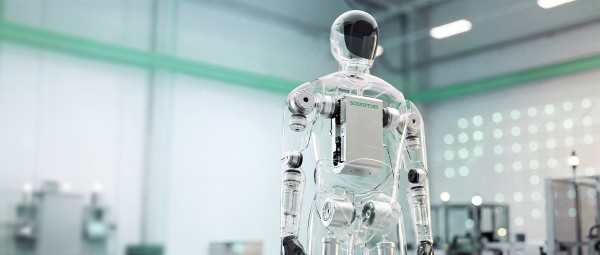
BMW Group says it will deploy humanoid robots in production at its Plant Leipzig in Germany—framing the move as a step toward integrating “Physical AI” into manufacturing—and that it has created a new “Center of Competence for Physical AI in Production” to accelerate global integration of AI and robotics in production. The announcement matters because BMW is a highly process-driven manufacturer; if a humanoid workflow can meet BMW’s safety, uptime, and quality gates, it becomes a meaningful reference point for other factories.
At the same time, the press release does not read like a purchase order with a disclosed unit count, task list, or performance metrics. So the operator question is not “are humanoids here?” but “what exactly is being piloted, under what constraints, and what evidence would justify scaling?”
Quick answer
BMW announced (Feb 27, 2026) that it will pilot humanoid robots in production at its Leipzig plant in Germany and establish a new “Center of Competence for Physical AI in Production,” following a first pilot deployment that BMW says was successfully completed at its Spartanburg plant in the U.S. (BMW press release).
Why it matters for humanoid robotics: a BMW factory pilot is a practical credibility signal, but the announcement does not disclose the most decision-driving details (robot model/vendor, unit count, tasks, cycle-time impact, hours run, incident rate, or quality yield). Treat this as a validation opportunity—not proof of broad readiness.
What BMW actually said (and what it didn’t)
From BMW’s press release, the verifiable claims are:
- A Germany pilot at BMW Plant Leipzig: BMW says it will deploy humanoid robots in production in Germany for the first time, via a pilot project at Plant Leipzig. Source: BMW press release (dated 27.02.2026).
- A new internal capability: BMW says it is creating a “Center of Competence for Physical AI in Production” to accelerate global integration of AI and robotics in production. Source: BMW press release.
- A prior U.S. pilot: BMW says a “first pilot deployment of humanoid robots” was successfully completed at BMW Plant Spartanburg (USA). Source: BMW press release.
What is not clearly disclosed in the press release (i.e., what operators should not assume):
- Which humanoid robot(s) (manufacturer/model), and whether it is an off-the-shelf platform, a customized integrator build, or a co-development.
- How many units are involved at Leipzig or how long the pilot will run.
- Which station(s) and tasks (e.g., kitting, machine tending, fastening, inspection, internal logistics), and whether tasks are single-step or multi-step.
- Operating mode: autonomy level vs. supervised autonomy vs. teleoperation.
- Performance evidence: uptime, MTBF/MTTR, cycle-time impact, quality and rework rates, ergonomics improvements, safety incidents/near-misses.
- Cost and contracting: capex vs. “robot-as-a-service,” support SLAs, training burden, and who owns the integration risk.
Those missing details are normal for an early announcement, but they are exactly what determines whether a pilot is a contained experiment or a replicable deployment pattern.
Context: why manufacturers keep testing humanoids now
Two macro forces show up repeatedly across industry commentary and research reviews:
-
The promise of “general” manipulation in human environments: Humanoids are often pitched as a way to work in spaces designed for people without rebuilding lines. That is an attractive thesis for brownfield plants, but it is still constrained by reliability, safety validation, and integration complexity.
-
Embodied AI progress vs. operational reality: Reviews like “Humanoid Robots and Humanoid AI: Review, Perspectives and Directions” highlight rapid interest in coupling modern AI with humanoid embodiments, while also underscoring that human-level capability remains distant and terminology is often fuzzy (arXiv:2405.15775v2). In parallel, operator-focused commentary continues to raise readiness questions—especially around real autonomy versus human-in-the-loop operation in early deployments (DROIDS newsletter).
BMW’s move fits this pattern: companies are exploring whether humanoids can deliver flexible labor substitution or augmentation without a bespoke fixed automation project for every micro-task.
Why it matters (operators, buyers, and investors)
1) A BMW pilot is a “process discipline” signal
BMW plants are known for standardized work, quality controls, and safety governance. If a humanoid robot can be introduced without disrupting takt time and quality gates, that’s meaningful—even if it’s only for a narrow task.
2) The Center of Competence hints at a portfolio approach
BMW’s “Center of Competence for Physical AI in Production” suggests BMW wants a repeatable internal playbook: evaluation, safety case development, integration templates, and potentially shared data/learning across plants. That matters because scaling robotics is often blocked more by organizational capability than by any single robot feature.
3) It pressures the vendor ecosystem to show evidence, not demos
A pilot in a live plant environment raises the bar for:
- Safety and risk assessment documentation
- Serviceability and spare parts logistics
- Integration with MES/quality systems
- Operator training and change management
If you’re a buyer, you can use BMW’s announcement as permission to demand the same kind of evidence from your shortlisted vendors.
The numbers, in plain English (and what’s unknown)
BMW’s announcement includes dates (Feb 27, 2026) and locations (Leipzig, Spartanburg), but does not include quantitative deployment metrics (robots deployed, hours run, throughput impact). So here’s the correct way to interpret it:
- Confirmed: BMW intends to do (or is doing) a pilot deployment at Leipzig.
- Not confirmed: That the deployment is already scaled, that it is continuous production use, or that it replaces a meaningful number of labor hours.
Market-research pages (for example, BIS Research’s humanoid robot market report landing page) discuss broad trends like a “commercial shift from pilot programs to task-specific industrial deployment,” but the publicly visible page is not, by itself, a set of verifiable market size numbers or shipment counts you can audit (BIS Research). Treat such sources as directional context rather than operational proof.
Practical implications: how to evaluate a “factory humanoid” pilot
If you are running operations, engineering, or procurement, the most useful output of BMW’s announcement is a checklist. Here is what to verify in your environment before you believe any “pilot-to-platform” narrative.
A. Define the job like a work instruction
For any claimed use case, ask:
- What are the exact pick/place geometries, part tolerances, and required forces?
- What are the success criteria (e.g., 99.5% task success, <X seconds cycle time, <Y mm placement error)?
- What are the exceptions (dropped parts, mis-grasps, jams), and who recovers them?
B. Separate autonomy from human-in-the-loop support
Operator reality: early deployments often rely on supervision, remote assist, or frequent resets.
- Is the robot fully autonomous for the task, or does it require teleoperation or scripted recovery?
- How many human support minutes per hour does it consume?
- What is the escalation path at 2 a.m. on a weekend shift?
(Industry commentary explicitly notes that some humanoid demonstrations can involve significant human guidance; buyers should treat “autonomy” as a measurable parameter, not a marketing label.) Source: DROIDS newsletter.
C. Safety case: the deployment is the product
For a humanoid working near people:
- What standards are being used (and what safety-rated functions exist)?
- What is the defined speed and separation monitoring strategy (if any)?
- What are the stop categories, safe torque limits, and protective measures?
BMW’s press release does not provide these details; you should require them in your own trials.
D. Maintenance and uptime: treat it like a production asset
Ask vendors/integrators for:
- MTBF/MTTR estimates with evidence
- Spare parts lead times
- Preventive maintenance schedule and required skill level
- On-site vs. remote support SLAs
E. Integration: the hidden work
Even “general” robots need integration:
- Material presentation (racks, totes, fixtures)
- Barcode/RFID/vision data plumbing
- Quality logging, traceability, and rework workflows
The ROI usually depends more on simplifying the station and exceptions than on the robot’s peak capability.
Competitive / ecosystem context (only what’s verifiable)
BMW’s announcement is a high-profile OEM plant pilot signal. It does not, by itself, validate any specific humanoid vendor as the leader, because the release does not name a platform or publish performance metrics.
For readers trying to triangulate broader momentum, there are multiple forms of “evidence” circulating in 2026:
- Company press releases (high confidence about intent, lower confidence about performance details unless metrics are disclosed).
- Research reviews (useful for technical directions; not proof of product readiness) مثل arXiv:2405.15775v2.
- Investor/market commentary that frames “pilot to platform” narratives (useful as sentiment indicators; not audited operational data) e.g., KraneShares.
When comparing “deployments,” only compare dateable, attributable facts: where, when, what task, how many units, and what measured performance. If those aren’t stated, the correct stance is “unclear.”
What we are not concluding (uncertainty you should keep)
Based on BMW’s press release alone, HumanoidHub is not concluding that:
- Humanoid robots are now broadly ready for automotive final assembly.
- BMW has standardized on a specific humanoid vendor for global rollout.
- The Leipzig pilot implies near-term large-scale procurement.
- The Spartanburg pilot’s “success” implies production-grade autonomy or favorable economics.
All of those could be true—or not. The announcement is an important signal, but it is not a dataset.
What to watch next
To convert this from “headline” to “operator evidence,” watch for follow-ups that answer:
- Robot identity: Which platform(s) were used at Spartanburg and Leipzig?
- Task disclosure: What station(s) and which discrete tasks? Handling what payloads?
- Performance metrics: Hours run, uptime, cycle time impact, quality impact.
- Safety case: How BMW validated safe operation near people and existing equipment.
- Scaling pathway: Whether BMW expands to additional lines/plants, and whether the Center of Competence publishes evaluation criteria.
Where to go next (HumanoidHub)
- Browse current coverage and operator briefs: https://www.humanoidhub.ai/blog
- Start vendor discovery and shortlisting: /explore
- Compare robots and procurement signals: /compare
- Explore manufacturers and integrators: /brands
FAQ
What did BMW announce about humanoid robots in 2026?
BMW announced on Feb 27, 2026 that it will deploy humanoid robots in production at its Plant Leipzig in Germany as a pilot, and that it created a “Center of Competence for Physical AI in Production” to accelerate integration of AI and robotics in manufacturing (BMW press release).
Does BMW’s Leipzig pilot prove humanoid robots are ready for full factory deployment?
No. BMW’s Leipzig pilot shows intent and experimentation in a real production context, but the announcement does not disclose robot model, unit count, tasks, autonomy level, uptime, or quality results, which are required to conclude readiness for broad deployment (BMW press release).
What should factory operators verify in a humanoid robot pilot?
Factory operators should verify the exact task definition, autonomy versus human-in-the-loop support, safety case documentation, uptime/maintenance requirements, and integration work needed for material presentation and quality traceability, because demos often omit exception handling and real shift support requirements.
Why do some analysts question whether humanoid robots are “ready”?
Readiness concerns often focus on reliability in unstructured environments, the operational burden of exception handling, and the degree of human supervision or teleoperation required for tasks that appear autonomous in demos; these issues are discussed in operator-facing commentary such as the DROIDS newsletter analysis (DROIDS).
What technical direction does current humanoid research emphasize?
A major direction in humanoid research is coupling humanoid bodies with more capable AI systems for interactive, multimodal behavior, while still acknowledging that human-level capability remains a long-term target; this framing appears in the research review “Humanoid Robots and Humanoid AI: Review, Perspectives and Directions” (arXiv:2405.15775v2).
Sources
- BMW Group press release: “BMW Group to deploy humanoid robots in production in Germany for the first time” (27.02.2026): https://www.press.bmwgroup.com/global/article/detail/T0455864EN/bmw-group-to-deploy-humanoid-robots-in-production-in-germany-for-the-first-time?language=en
- BIS Research humanoid robot market report landing page: https://bisresearch.com/industry-report/humanoid-robot-market.html
- HumanoidHub blog index (context/navigation): https://www.humanoidhub.ai/blog
- KraneShares commentary: https://kraneshares.com/humanoid-robotics-in-2026-the-race-from-pilot-to-platform
- DROIDS newsletter commentary: https://droids.substack.com/p/are-humanoid-robots-really-ready
- Research review (arXiv): https://arxiv.org/html/2405.15775v2